Most St. Louis-area adults are unaware of nitazenes — a dangerous class of synthetic opioids detected in local school wastewater — but show overwhelming support for monitoring once informed, according to researchers at the Washington University in St. Louis School of Public Health.
The findings come from iHeard St. Louis, a rapid-response public health program designed to listen to community members and identify emerging health concerns.
“We released this week’s iHeard alert early because of the significant local attention to this issue,” said Matt Kreuter, the Kahn Family Professor of Public Health at WashU. “The findings are notable, particularly the public support for testing.”
Nitazenes — synthetic opioids estimated to be five to 10 times more potent than fentanyl — were detected in about 70% of Missouri schools tested through a voluntary wastewater monitoring program conducted in 2026 by the Missouri Department of Public Safety. The agency screened 37 schools statewide, with 26 testing positive.
Nitazenes are not approved for medical use in the United States and have been increasingly found in the illicit drug supply, contributing to a rise in overdose deaths.
Despite the presence of these substances locally, awareness remains low. In this week’s iHeard poll, just 12% of respondents said they had heard of nitazenes, and only 11% knew they had been detected in wastewater at local schools.
Once informed, about 77% of respondents supported testing in schools, compared with 4% who opposed it.
The survey also explored public attitudes toward government and school-based wastewater monitoring more broadly. When asked how school leaders should respond if nitazenes are detected, respondents most often called for education and transparency. About 24% said schools should provide drug education about nitazenes, 12% said parents should be notified and given resources to talk with their children, and 8% said schools should investigate the source of the substances. Smaller shares suggested increased monitoring or enforcement within schools or drug testing of individuals.
Public health experts emphasized that awareness is critical because nitazenes are extremely potent and may be present in substances without a person’s knowledge. They have been found in vapes, unregulated marijuana products, counterfeit pills and other illicit drugs. Experts advise avoiding unregulated substances and only taking prescription medications obtained from licensed pharmacies. Even small amounts can cause a fatal overdose.
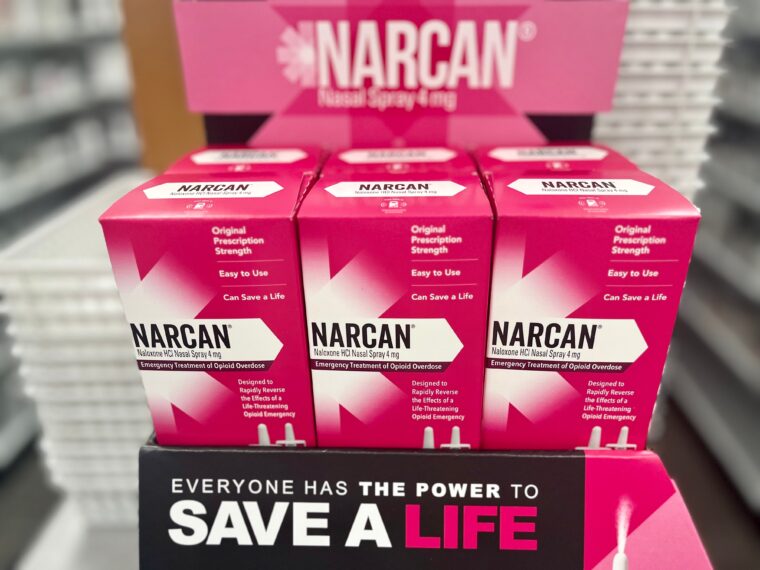
Health officials also urge the public to be prepared by carrying naloxone, a medication that can reverse opioid overdoses. Naloxone, commonly known as Narcan, is widely available at no cost in many communities. If someone is unresponsive and an overdose is suspected, it should be administered immediately and emergency assistance should be called.
Residents can obtain free naloxone kits through the St. Louis County Department of Public Health, which distributes the medication at public health centers and library locations across the county. Free kits also are available at community distribution sites, including NaloxBox locations throughout St. Louis city.
iHeard St. Louis relies on a standing panel of more than 200 residents who respond to weekly mobile phone surveys about health news, questions and beliefs. Launched during the COVID-19 pandemic, the program has expanded to cover a wide range of health topics.
After collecting data, the iHeard team produces infographics, alerts and other resources that are shared with more than 200 community organizations, including local health departments, nonprofits and clinics. This rapid-response model helps ensure accurate information reaches the public quickly.