In Brief
- WashU hosts free public tours of its nationally recognized arboretum, showcasing iconic trees, fall colors and biodiversity.
- The Danforth Campus is home to 7,300 trees, including nearly every species native to Missouri and 58 threatened or endangered species.
- WashU has an accredited arboretum and botanic garden.
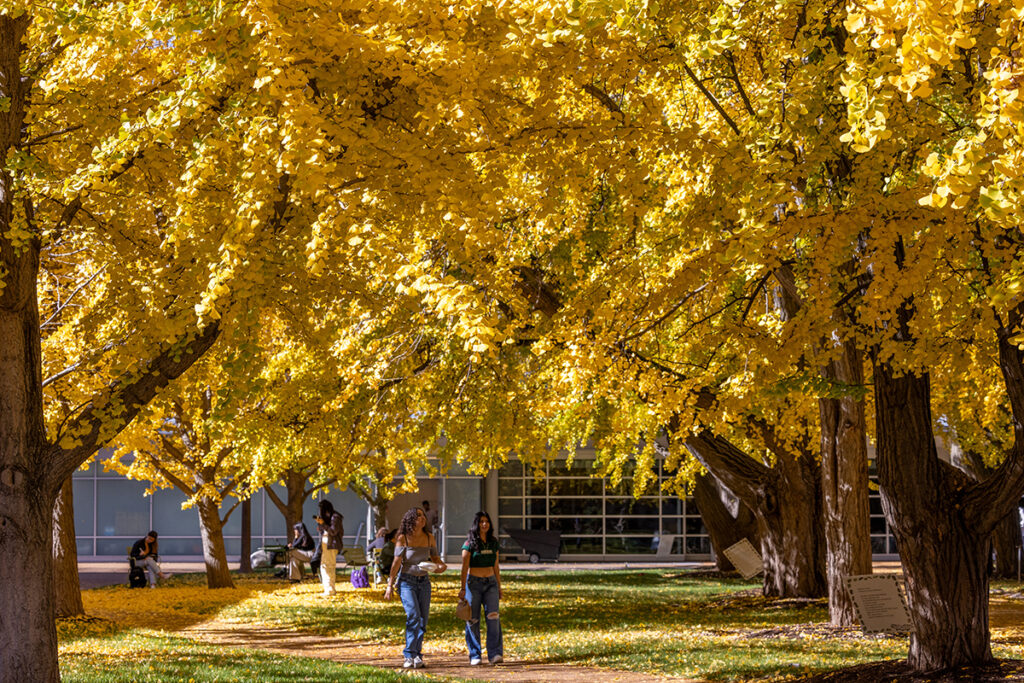
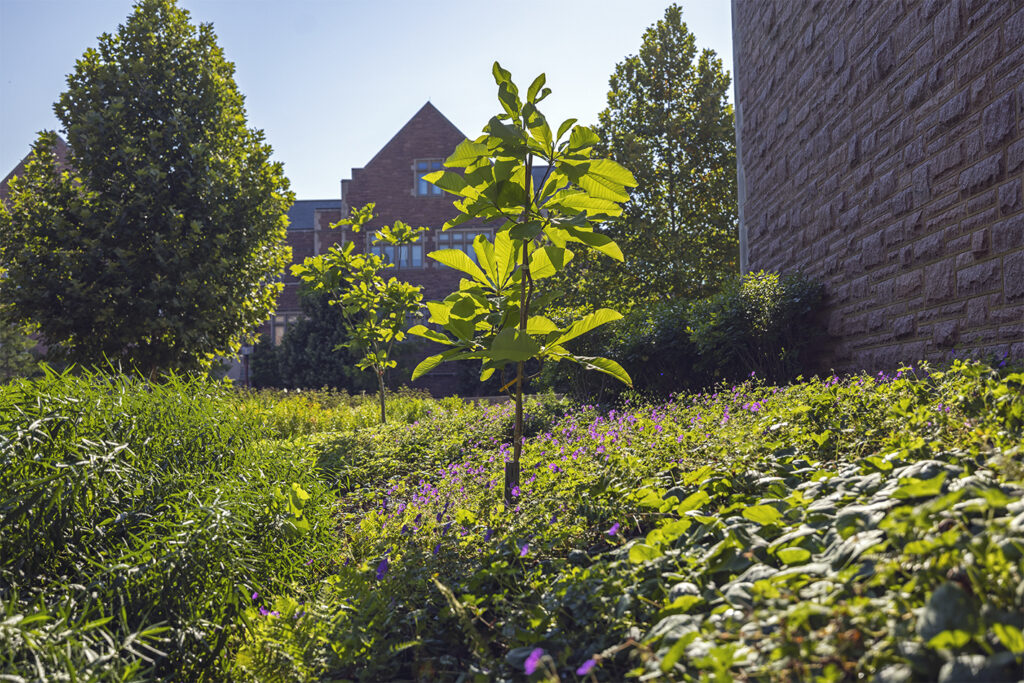
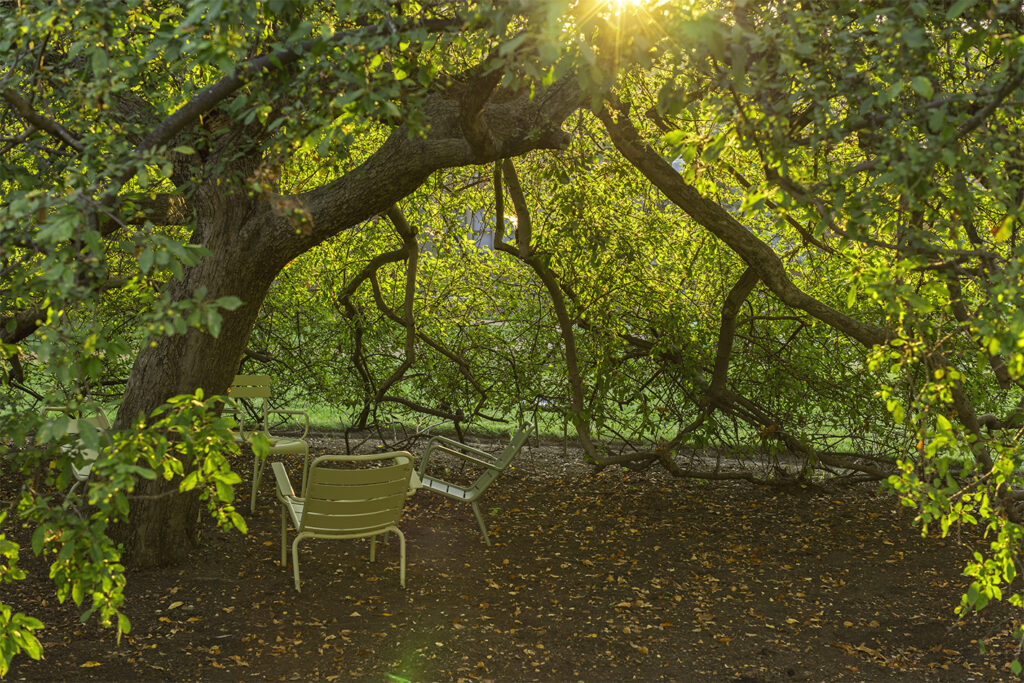
WashU has launched a new series of tours and events highlighting the WashU Arboretum, one of the largest and most diverse arboreta on a college campus. Free and open to the public, the activities showcase WashU’s iconic ginkgo trees, an American tulip tree from Mount Vernon and Missouri’s state fruit, the pawpaw, as well as oaks, birches and maples. In total, the WashU Danforth Campus is home to 7,300 trees, including nearly every native Missouri species and 58 threatened or endangered species.
Upcoming events include:
Noon Oct. 9
Visitors study and sample edible plants, flowers and nuts. Led by Froggi VanRiper, foraging scholar and lecturer in environmental studies in WashU Arts & Sciences.
10:30 a.m.-noon Oct. 14
Participants capture the unique characteristics of different trees during a peaceful walk. Led by Erica Scott, who is studying landscape architecture at the Sam Fox School.
Noon Oct. 19
Led by the Buder Center and WashU Arboretum, guests explore their relationship with the grounds and discuss the purpose of the trees.
Noon Nov. 6 and Nov. 13
A celebration of fall colors, these tours will showcase the histories, relevance and resilience of trees.
In addition, the Arboretum hosts a self-guided tour highlighting 157 trees.
About a decade ago, Stan Braude, a professor of practice in biology in Arts & Sciences, aspired to transform WashU’s tree-lined campus into a lush, leafy classroom for students and the St. Louis community to study and enjoy. The university planted about 2,500 new trees; shared trees, seeds and expertise with arboreta across the globe; and engaged students in tree plantings, research and coursework. For instance, the arboretum partnered with faculty researchers and students to document biodiversity on campus, a crucial step toward fostering and managing biological resources and species on the Danforth Campus.
Braude died in 2024, but the work continued. The WashU Arboretum achieved Level III ArbNet Arboretum accreditation in 2024, a status reserved for arboreta with at least 500 distinct species of trees or taxa and robust educational, tree science and conservation programming. Only a dozen or so higher education institutions host a Level III arboretum, many of which are distinct gardens. In contrast, the WashU Arboretum is fully integrated into the campus landscape.
Phil Valko, assistant vice chancellor for sustainability, said everyone is welcome at the WashU Arboretum.
“People from all over the world come to WashU and they fall in love with this campus,” Valko said. “The arboretum and its programs are a way to tie the physical place to our mission of teaching and research and our commitment to the St. Louis community.”
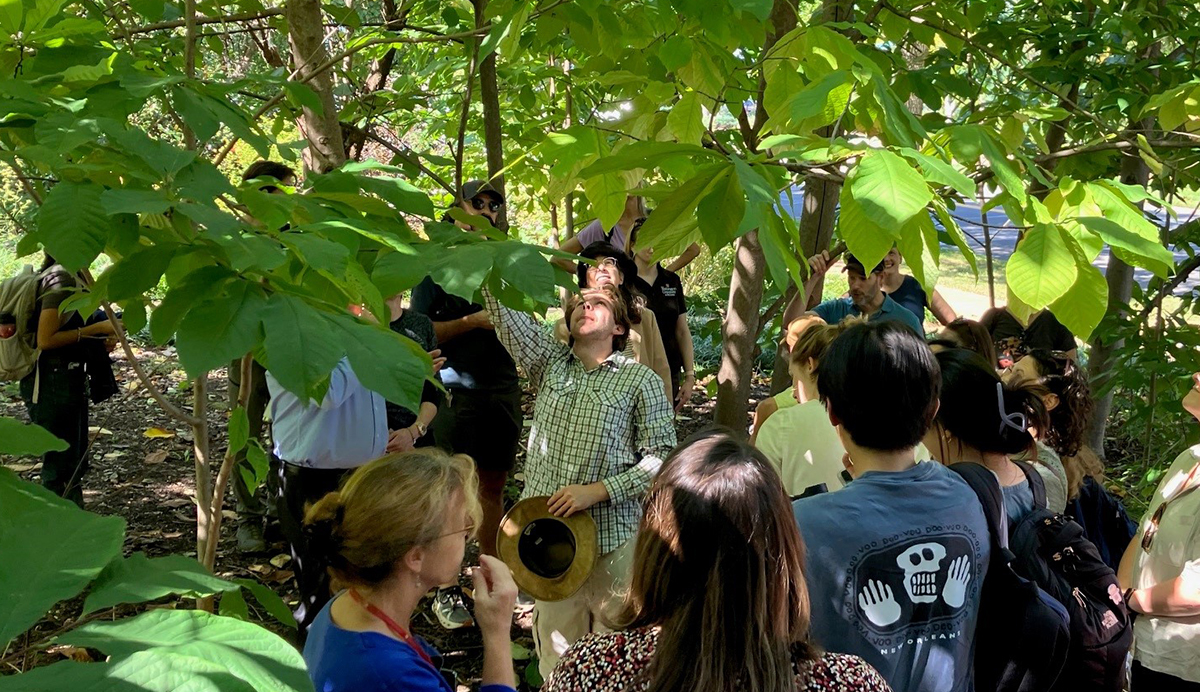
WashU alumna Deb Grossman, EMBA ‘91, is a master gardener and a member of the arboretum’s inaugural cohort of 22 trained docents. On a recent lunch-hour tour, she introduced visitors to Sweet Braude, a hybrid of an overcup and swamp chestnut oak. This summer, the International Oak Society Journal added the Sweet Braude, named for Stan Braude, to its official registrar.
“Look at these acorns. You can grind them to make a flour. That’s what Stan did,” Grossman said.
Grossman loves trees for the beauty we see and the labor we don’t.
“So many people look at trees and see a blur of green, but they do so much work,” Grossman said. “They give us shade that we desperately need, help with stormwater, provide habitat for the pollinators so critical to our food web. And then there are the mental health benefits that come from just being in nature. What an incredible asset.”