For many WashU Law graduates, a judicial clerkship is more than a first job after graduation. It’s an opportunity to sharpen legal research and writing skills, build relationships with judges and gain experience that can shape an entire career.
That opportunity has become increasingly available as WashU Law’s judicial clerkship program has expanded its reach and reputation. Today, graduates clerk for judges across the country, with placements in all 50 states and every federal circuit, including the Virgin Islands, Guam and the Northern Mariana Islands.

“WashU Law’s judicial clerkship program has really grown,” said Molly Snyder, director of the judicial clerkship program.”More students understand what a clerkship is and why it’s worth pursuing. And as WashU’s reputation has grown, judges trust in the experience value of our students.”
Most WashU Law graduates who secure clerkships begin their one-year term shortly after earning their law degree and taking the bar exam. Other graduates practice law for one or more years before clerking.
“They spend almost their whole day researching and writing, so that the judge is equipped and has everything they need to submit opinions and orders and for the work of their chambers,” Snyder said.
What sets WashU’s clerkship program apart?
Snyder credits the program’s success to its individualized approach and strong relationships with judges nationwide.
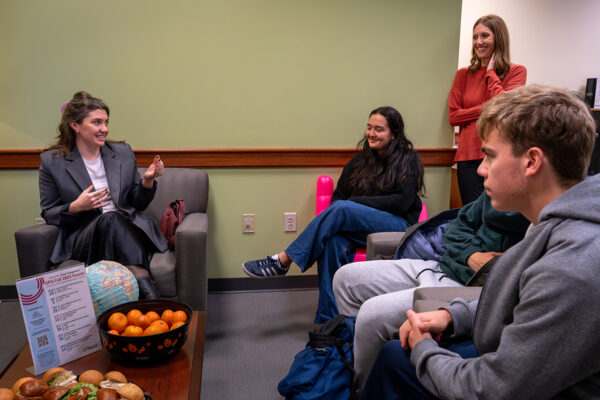
“We know our students, their individual goals and strengths really well,” Snyder said. “We also engage regularly with the judiciary. Judges often visit campus or join virtual programs to speak with students.”
Those connections often lead to lasting relationships with judges, who continue hiring WashU Law graduates.
“A major win is the pipelines we’ve developed with judges who have had a great experience with a WashU Law clerk, and then continue to hire WashU Law clerks in the future because they know they’ll do great work,” Snyder said.
About 12-15% of each graduating class secures a federal clerkship, with additional graduates clerking in state courts.
WashU Law also gives students opportunities to gain judicial experience before graduation. Among other duties, Snyder co-teaches the judicial clerkship externship, which places law students in judges’ chambers for academic credit during the semester. WashU’s location near federal and state courthouses in both Missouri and Illinois allows students to gain firsthand experience that strengthens future clerkship applications.
Earlier this year, WashU Law also hosted live oral arguments from the U.S. Court of Appeals for the Eighth Circuit, giving students and the community an opportunity to observe the federal appellate process in person.
How do clerkships shape legal careers?
Beyond providing intensive legal training, clerkships carry lasting professional value.
“Certainly job training and prestige,” Snyder said. “A clerkship is one of the few things that stays on your resume throughout your career.”
For Allison Walter, AB ’14, JD ’21, who clerked on the U.S. Court of Appeals for the Sixth Circuit, the experience continues to influence her practice.
“My clerkship on the Sixth Circuit was one of the most formative experiences of my legal career,” Walter said. “It sharpened my legal writing and analytical skills while giving me unique insight into how judges evaluate arguments and reach decisions. The experience continues to shape how I approach complex legal issues and advocate for clients. Clerking has the potential to accelerate your career and make you a more thoughtful and effective lawyer.”
Emily (Fox) Heppermann, AB ’21, JD ’24, clerked for Judge Stephanie Dawkins Davis of the Sixth Circuit, a WashU Law alumna, immediately after graduating from WashU Law before joining Bryan Cave Leighton Paisner LLP as a litigation associate. She said the experience provided both practical skills and professional confidence.
“Clerking gave me a stepping stone to build my confidence as a young lawyer and young professional,” Heppermann said. “I learned not only how to think more deeply about the law, but how to trust my judgment, approach unfamiliar issues with curiosity, and empathize with the real people behind every case. I would recommend a clerkship as a valuable opportunity for any law student wishing to hone these skills before entering practice.”
Snyder said the program’s momentum continues to build. She believes having a WashU Law graduate land a first clerkship at the U.S. Supreme Court is within reach.
“Every law school hopes to place a graduate in a Supreme Court clerkship,” Snyder said. “We have outstanding students, and I believe we’re well positioned to achieve that milestone in the near future.”