Five powerful trends are reshaping public health, according to Sandro Galea, MD, DrPH: The world’s population is getting older; the planet is getting warmer; more people are living in cities; trust in institutions is declining; and technology is advancing at extraordinary speed.
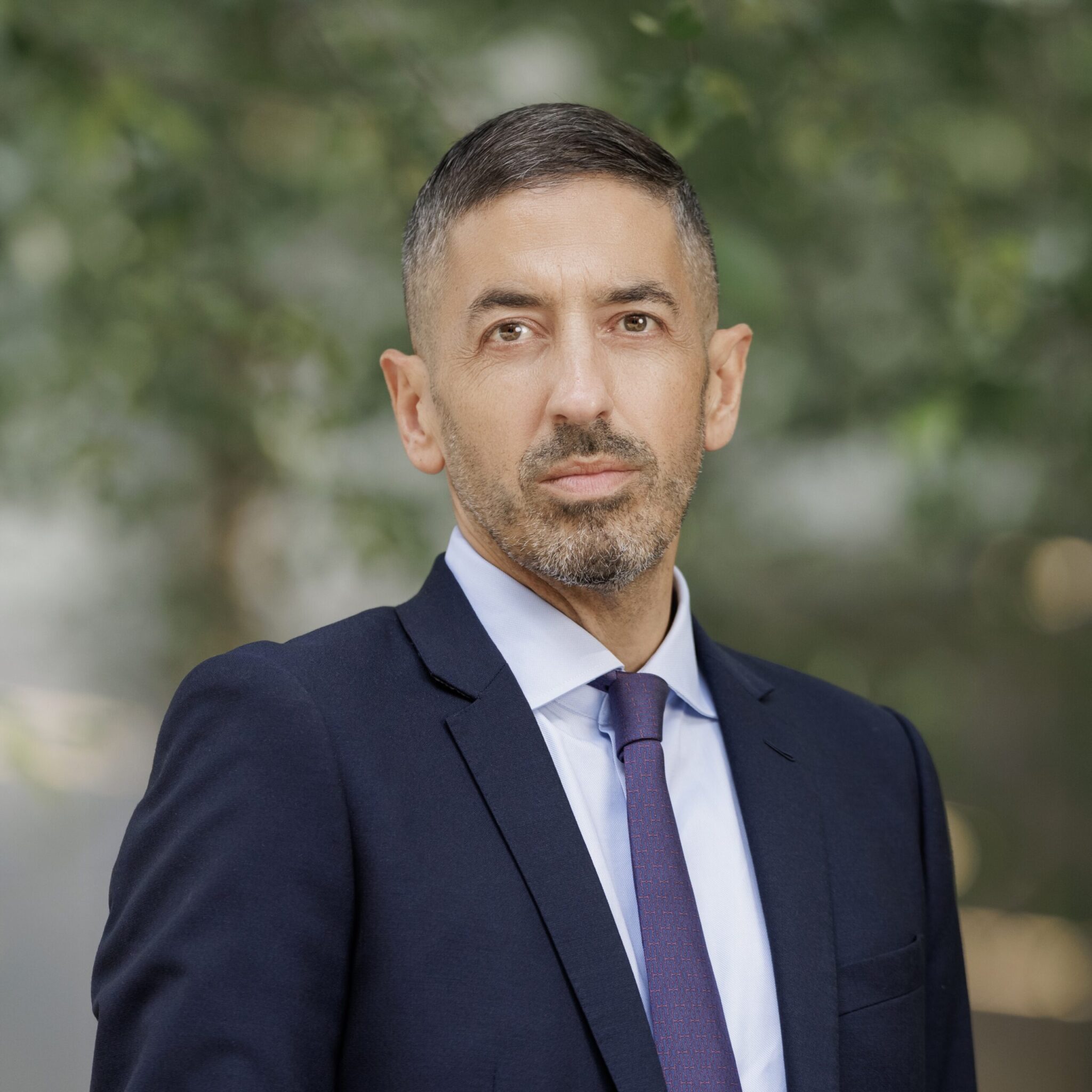
Any one would carry profound consequences for human health. The even greater challenge lies in their convergence, said Galea, the Margaret C. Ryan Dean and the Eugene S. and Constance Kahn Distinguished Professor in Public Health at WashU Bursky Public Health and vice provost for interdisciplinary initiatives.
An aging population is more vulnerable to extreme heat. A warming climate is expanding the reach of some infectious diseases, while urbanization creates more opportunities for diseases to spread. As people and resources concentrate in cities, rural communities risk falling farther behind. Addressing those challenges requires collective action at a time when fewer people trust the institutions charged with protecting their health.
“The trends are not isolated from one another,” Galea said.
His assessment comes at a consequential point for Bursky Public Health. About 18 months after its launch, the school is moving from startup to what Galea calls its “build-out phase.” It has reached a critical mass of faculty, and a $200 million naming gift from the Bursky Family Foundation is providing resources to accelerate the school’s work and translate its science and scholarship into impact locally, nationally and globally.
Understanding where health is headed is essential to deciding what the school builds next, he said.
A changing world
By 2050, about one in four people in North America and Europe will be 65 or older, Galea said. The transition is accelerating: Demographic changes that unfolded over more than a century in Europe have occurred within decades in some Asian countries.
“The world is structured for a younger population demographic,” Galea said. “Structures take a long time to change. The world is aging much faster than we are rethinking and restructuring the world.”
Longer lives are an extraordinary achievement. But they also are changing the burden of disease. Chronic diseases now account for roughly three-quarters of deaths worldwide, Galea said, while aging populations are contributing to a growing burden of dementia and other brain disorders.
That makes closing the gap between lifespan and health span (the period of life spent in good health) increasingly important — particularly because many risk factors for chronic disease and dementia are modifiable.
The health toll of a warming planet is already substantial. Globally, heat-related deaths averaged an estimated 546,000 annually from 2012-21, up 63% from the 1990s. The United Nations Environment Programme recently warned that global temperatures are likely to rise more than 1.5 degrees Celsius — or 2.7 degrees Fahrenheit — above their 1850–1900 average within a few years. Under current policies, warming could reach approximately 2.6 degrees Celsius, or 4.7 degrees Fahrenheit, by 2100, intensifying threats to human health. Galea sees climate change as a force multiplier, worsening existing health problems and disparities.
Even as chronic disease dominates the global health burden, infectious disease remains an enduring public health concern. Galea pointed to the continuing risk of another major pandemic, rising antimicrobial resistance and a resurgence of measles in the United States.
The result is a more complicated health landscape, layered with persistent gaps in health. A 33-year life expectancy gap separates the world’s highest- and lowest-income countries, Galea said. Health systems, meanwhile, face rising demand and a shortage of health workers.
For Galea, that landscape points to what public health must do differently: help people live longer and healthier lives; broaden its understanding of what shapes health; build better institutions; use technology intentionally; and become more effective in the public conversation.
The challenge of public trust
Declining trust in institutions can undermine public health’s ability to act. Six in 10 people globally feel aggrieved by the institutions meant to serve them, Galea said. In the United States, nearly 40 states have fallen below the vaccination levels for measles, mumps and rubella that are needed for herd immunity.
“The world is getting older, warmer, more urban, and we need to build institutions to address that,” Galea said. “And at the same time, people don’t believe in institutions anymore.”
Rebuilding confidence, in Galea’s view, requires more than persuading people to trust existing institutions. Public health must help build better ones — responsive to what people want and need — and find better ways to reach people who may no longer accept traditional sources of expertise.
“We have spent too long as a field, sitting back and watching the world sort of change and talk about us,” Galea said. “We need to be a part of it.”
That includes finding common ground across political and ideological divides. Whatever their differences, Galea argues, people care about their own health and their families’ health.
A technological transformation
Technology is the fifth trend, with artificial intelligence (AI) its most visible edge. Galea described AI as “the tip of the spear” of a broader technological transformation still unfolding.
“What does AI mean for public health?” Galea said. “I’m going to stand here right now and say I don’t really know.”
But public health cannot wait for the answer, he said. It needs to understand emerging technologies, use them intentionally and help shape their impact on health.
Another priority, he said, is expanding what public health considers a determinant of health. The field has long recognized that social conditions, such as income, education and housing, affect health. But commercial forces also have enormous influence.
Five products — fossil fuels, tobacco, ultra-processed foods, chemicals and alcohol — contribute to nearly one-third of deaths globally, Galea said. Yet public health historically has been uncomfortable engaging with the companies, products and business models behind those risks.
“There is no way we can rise to the challenge of the moment without thinking, for example, about business models, about how one engages the private sector that fundamentally shapes everything that we do,” he said.
Addressing commercial determinants of health does not mean treating business simply as an adversary. It means developing the expertise to understand how corporate products and practices affect health — and to engage the private sector in improving it.
These priorities provide a framework for WashU Bursky Public Health’s next phase.
A school for the future
Galea sees opportunity for the school to be more deliberate with its growth. Its 63 primary faculty bring substantial expertise in chronic disease, mental health and brain disorders, health disparities, health systems, implementation science and data and decision sciences. An internal assessment identified opportunities to grow in areas including infectious disease, health communication and public trust.
The school is rethinking its curriculum and considering new degrees, as well as continuing and professional education programs. But the build-out also is about helping ideas develop across disciplines and moving them into policy and practice.
The goal is to build an innovation ecosystem around faculty ideas, drawing on collaborators across the school, WashU and beyond. The Ryan Institute for Interdisciplinary Health Solutions will create pathways for faculty to develop interdisciplinary work that can identify approaches that improve the health of populations. Newly planned Public Health Action Labs will serve as an internal resource unit that works with the Ryan Institute, the Office of Practice, and faculty and staff who can provide expertise in policy development, implementation, communication and economic analysis to deliver on the school’s commitment to local and global impact. The broader aim is to help faculty and staff bring public health expertise into the public conversation.
Galea emphasized that flexibility is essential. As one of the country’s newest such schools, Bursky Public Health can build for the world that public health will confront in 2035 or 2050.
“Twenty-five years from now, the world may look back and recognize this was the defining moment for the field,” Galea said. “A resilient organization with a clear mission uses the moment.”