A guaranteed income program for artists led to improvement in financial stability and reduced debt, but also improved their motivation and artistic output, finds a new study from the Brown School at Washington University in St. Louis.
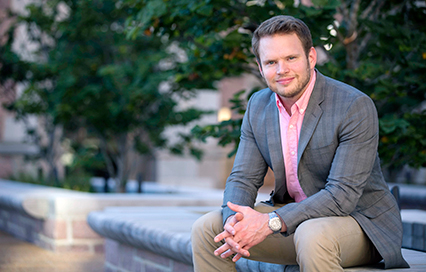
“Our main finding is that giving people cash not only helps them live a more secure life, it also provides a pathway toward personal, professional and artistic growth,” said Stephen Roll, an assistant professor and an expert on asset building and economic security.
Roll is co-author of the paper “Empowering Artistic Labor: How Guaranteed Income Enhances Intrinsic Motivation and Fosters Human Flourishing,” published online in the journal World Development Perspectives.
Roll and his co-authors examined data from the Creatives Rebuild New York (CRNY) Guaranteed Income for Artists program, which provided 2,400 artists with $1,000 per month in unconditional cash assistance for 18 months beginning in 2022.
Applicants had to demonstrate financial need and be residents of the state of New York. The selection process used an “equitable distribution” method rather than competing based on artistic merit. The initiative was primarily funded by the Mellon Foundation, with additional support from the Ford Foundation and Stavros Niarchos Foundation.
“We know from prior research that guaranteed income (GI) programs improve participants’ well-being, including their mental health, their ability to put food on the table, their financial security and a variety of other outcomes,” Roll said.
“However, a lot of guaranteed income advocates view these programs not just as a way to help families meet their needs, but as a way to give people the freedom to pursue their goals and passions,” he said. “In line with other research, we found that the GI payments improved their financial stability. However, we also found that the program improved participants’ artistic output, including the time they could dedicate to their art and their satisfaction with the quality and the impact of their work.”
‘What art could we produce as a society if our artists could invest more time and money in their craft?’
Stephen Roll
The GI program was found to reduce financial stress and debt; increase artists’ ability to invest time in their art; increase motivation and productivity; and improve mental health, while showing no reduction in other sources of income.
The findings are context-specific, Roll said, reflecting the institutional, cultural and labor-market conditions of the state of New York and the particular design features of the CRNY program.
Even so, he said, nearly everyone values the arts to some degree, and the ability to produce lasting works of art is one of the signs of a healthy and flourishing culture.
“What art could we produce as a society if our artists could invest more time and money in their craft?” Roll asked.
“Perhaps more importantly, consider how many great artists never get to emerge because an artistic career often carries such high risks of financial hardship and insecurity,” he said. “Supporting artists financially helps ensure that we maintain a growing and healthy artistic culture, but it also helps ensure we are rewarding artists for the value they create in our society.”
Such support also might help artists to weather the changes wrought by the spread of artificial intelligence (AI), Roll said.
“We’re already starting to see companies rely on AI more and more for graphic design, advertising, communications and other arts-adjacent jobs that could support artists financially while they pursue their own artistic goals,” he said.
“If that trend continues, the options for artists to support themselves while refining their skills will grow narrower and narrower. In that world, it will be even more important to support artists financially in order to cultivate successive generations of human artists in this country and around the world. The alternative is continuing to outsource one of the most fundamental and important modes of human expression to machines and algorithms.”