On Jan. 3, United States forces captured Nicolás Maduro, the president of Venezuela. The following day, President Donald Trump claimed the U.S. government was in charge of the South American nation. Trump also has set his sights on taking control of Greenland, has threatened Cuba, Columbia and Iran, and talked of annexing Canada.
Here, faculty from Washington University in St. Louis reflect on the legality of such moves, the rules of international law, public opinion of imperialism and the meaning of the Monroe Doctrine.
Assessing geopolitical, economic risks ahead
At least in the short term, the U.S. invasion of Venezuela and capture of President Nicolás Maduro and his wife curiously has had little effect on the stock market. Timm Betz, an associate professor of political science in Arts & Sciences at WashU, said the markets have largely shrugged off the geopolitical shock because Venezuela has little impact on the global economy and there’s already so much uncertainty around the world. But that’s not to say the markets and economy are on firm ground. Just like a single spark can ignite a devastating wildfire, one wrong move could send the market into a tailspin and cause economic ripples around the globe, Betz warned. Read more here.
Betz is available to talk about the geopolitical risks facing the U.S. and how other countries reducing their potential economic vulnerabilities in response, which could affect U.S. interests and American businesses down the line. To arrange an interview, email Sara Savat at sara.savat@wustl.edu.
International alliances, global stability on shaky ground
The unfolding crisis in Venezuela, as well as Trump’s subsequent threats to countries including Greenland, Colombia, Mexico and Iran, have called into question the legality of his military actions; the stability of Venezuela, the region and the world; and the future of international alliances and democratic norms. In his 2021 paper, published in International Organization, David Carter, a professor of political science in Arts & Sciences, examined the history of territorial claims over the last 200 years, finding evidence that global instability and crisis creates prime opportunities for revisionist states to make territorial claims. Read more here.
Carter is available to answer questions about international alliances, territorial conflict, global stability and more. Email Sara Savat at sara.savat@wustl.edu to arrange an interview.
How polarization limits power of public opposition
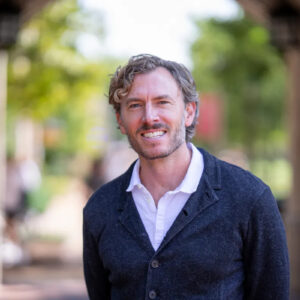
One of the most powerful checks on presidents’ unilateral power in modern times has been public opinion, according to Dino P. Christenson, a professor of political science in Arts & Sciences and co-author of “The Myth of the Imperial Presidency: How Public Opinion Checks the Unilateral Executive.” But in today’s highly polarized political climate, where few members of the GOP are willing to publicly break with the president and party identifiers are steadfast in their views, Trump’s foreign policy is unlikely to have a lasting impact on his approval rating, Christenson said. Read more here.
Christenson is available to talk about the use of — and limits on — unilateral action, presidential approval ratings and more. To arrange an interview, email Sara Savat at sara.savat@wustl.edu.
Why international law forbids forcible seizure of territory
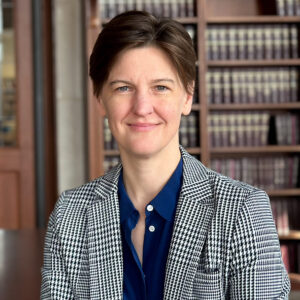
Under international law, one of the clearest red lines for states is the use of force to take another sovereign’s territory — a prohibition that sits at the heart of the modern global legal order, said MJ Durkee, a law professor at WashU. “A state cannot lawfully seize territory belonging to another sovereign without that state’s consent,” said Durkee, the William Gardiner Hammond Professor of Law and director of the Whitney R. Harris World Law Institute. “That rule is foundational. It’s not a gray area and it’s not optional.”
Durkee is available to talk about international law and how the United Nations would handle threats against sovereignty. To arrange an interview, email Neil Schoenherr at nschoenherr@wustl.edu.
The return of the Monroe Doctrine

The arrest of Maduro and his wife represents the return of something very old to U.S. foreign policy, said Krister Knapp, a teaching professor and coordinator of Crisis & Conflict in Historical Perspective at WashU, where he teaches courses in U.S. national security and foreign policy. “Expansionist policies have gone by many names — Manifest Destiny, Monroe Doctrine, dollar diplomacy, Open Door. Nationalists may celebrate them. Realists may try to deploy them strategically. And liberals may condemn them as disastrous, self-defeating imperialism. But they are part of our national DNA,” he said. Read more here.
Knapp is available to talk about the history of expansionist policies in America. To arrange an interview, email Liam Otten at liam_otten@wustl.edu.