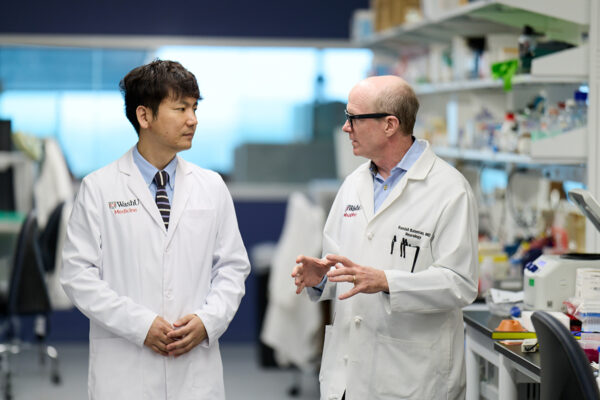
Bateman, Horie recognized for method to detect, stage Alzheimer’s disease
WashU Medicine researchers Randall J. Bateman, MD, and Kanta Horie, PhD, received the 2026 Jeffrey L. Morby Prize from Cure Alzheimer’s Fund for developing a blood test that detects and stages Alzheimer’s by measuring toxic proteins in the brain.

Wu named Pew Biomedical Scholar
WashU Medicine molecular microbiologist Meng Wu was honored for her research on how early-life gut microbes shape lifelong immunity.
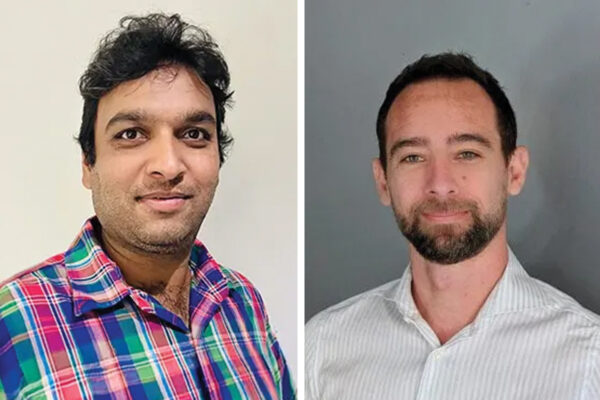
Three new genetic modifiers connected to risk in Alzheimer’s disease
WashU Medicine researchers and collaborators discovered three new chromosomal locations that may be connected to earlier disease onset or faster disease progression in dominantly inherited Alzheimer’s disease, pointing to new directions for Alzheimer’s research.
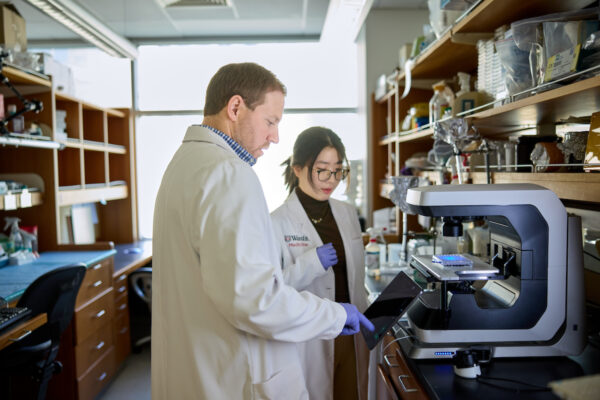
WashU announces new academic-industry collaboration with Bristol Myers Squibb
WashU and Bristol Myers Squibb have formed a multiyear collaboration to advance drug development projects in the neurosciences. WashU medical and research trainees will have opportunities to work alongside the company’s scientists at its facilities as part of the agreement.
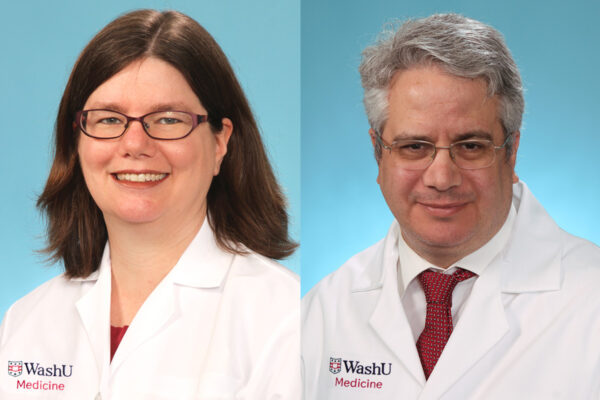
Benzinger, Schindler honored by international imaging society
Tammie L.S. Benzinger, MD, PhD, and Thomas H. Schindler, MD, PhD, both of WashU Medicine’s Mallinckrodt Institute of Radiology, have been recognized with prestigious awards from the Society for Nuclear Medicine & Molecular Imaging.

Cao named Guggenheim Fellow
Yin Cao, ScD, an associate professor in the Division of Public Health Sciences in the WashU Medicine Mary Culver Department of Surgery, has been named a 2026 Fellow of the 101st class of the John Simon Guggenheim Memorial Foundation.
Tool to predict brain swelling earns FDA Breakthrough Device designation
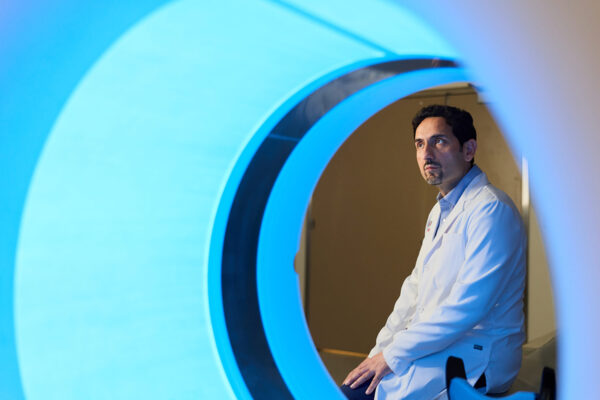
An AI-enabled software tool developed by WashU Medicine researchers is the first device to predict malignant cerebral edema, a dangerous complication of acute stroke.
New approach to designing drugs supercharges cancer medication
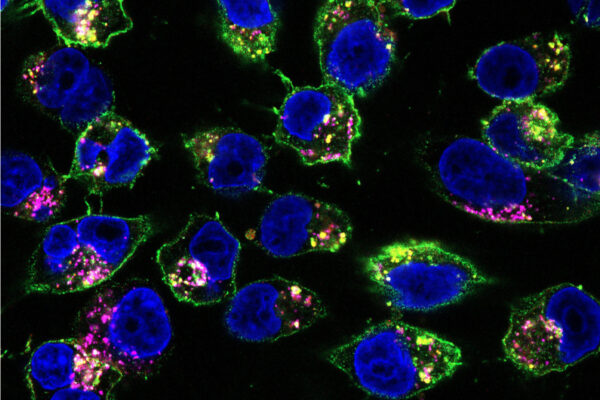
WashU Medicine researchers have shown in mice that a medication-design technique in which modular components of anti-cancer drugs are administered separately and assembled in the body — using what’s known as “click chemistry” — is more effective than standard treatments at targeting and shrinking tumors.
Skeletal muscle signals to brain, brown fat to control aging in mice
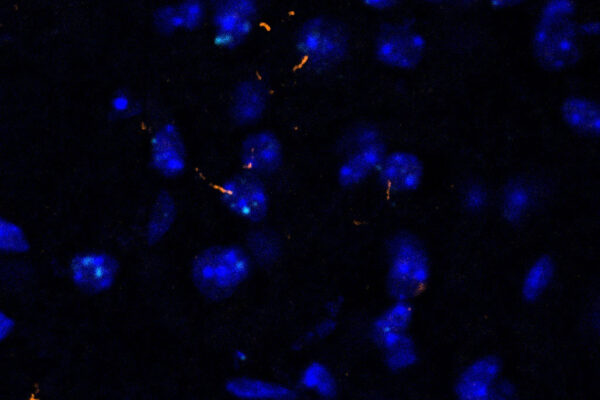
Studying mice, WashU Medicine researchers have identified communication signals linking skeletal muscle, the brain and brown fat tissue that play an important role in aging. Interventions in older mice that restore the signaling to that of young mice could promote healthier aging.
WashU Medicine secures funding for vision research
WashU Medicine has received a $150,000 grant from Research to Prevent Blindness to support eye research.
View More Stories