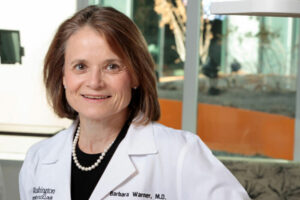
Barbara B. Warner, MD, a physician-scientist noted for her commitment to critically ill infants, has been named director of the Division of Newborn Medicine at Washington University School of Medicine in St. Louis.
Sculptor and longtime faculty member Ronald Leax, the Halsey C. Ives Professor Emeritus of Art, will receive the Dean’s Medal for outstanding service April 4 as part of the Sam Fox School of Design & Visual Arts’ annual Awards for Distinction dinner.
The university has convened a faculty group to consider the Better Together proposal from various perspectives and areas of expertise and to offer opportunities for the campus community to engage in dialogue.
David Peters, the McDonnell Douglas Professor of Engineering in the McKelvey School of Engineering at Washington University in St. Louis, has a body of work in applied aerodynamics and a host of academic honors, but he’s also a baseball fan. That’s why watching a baseball game takes on a whole new spin, aerodynamically speaking.
As a society, we must ask ourselves whether we care about racial inequalities across social, economic and health outcomes. If we do care, we must ask ourselves what we are willing to do make our society more equitable.
The New York Yankees have hired Washington University senior Rohan Gupta as a baseball operations associate. He will crunch big data, “Moneyball”-style, to give his team a competitive edge. It’s a dream job for a student who is passionate about sports and statistics.
The game’s history and traditions are rich, but they threaten to suffocate its future. The “unwritten rules” and the game’s entrenched conservatism are standing in the way of fun. It will take more than bat flips and a backwards ballcap to let it through.
The School of Medicine has received a $15 million gift from Paula and Rodger Riney aimed at accelerating research and developing new treatments for two major neurodegenerative diseases: Alzheimer’s disease and Parkinson’s disease.
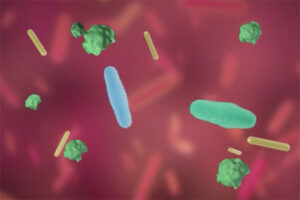
Probiotics – living bacteria taken to promote digestive health – evolve once inside the body and have the potential to become less effective and sometimes even harmful, according to a new study from the School of Medicine. The findings suggest that developers of probiotic-based therapeutics must consider how the probiotics might change after administration.
Jason Yi, assistant professor of neuroscience at Washington University School of Medicine in St. Louis, has received a prestigious 2019 Sloan Research Fellowship, which supports promising early-career scientists.