At the Washington University in St. Louis Board of Trustees meeting Oct. 4, more than a dozen faculty members were appointed or promoted with tenure or granted tenure, effective Oct. 4 unless otherwise indicated.
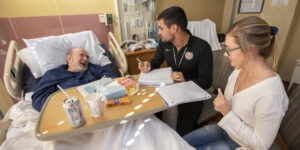
Undergraduates in the Medicine and Society program in Arts & Sciences are helping St. Louis veterans create a version of their life story to be included in their official medical file. The innovative program is taking off around the nation.
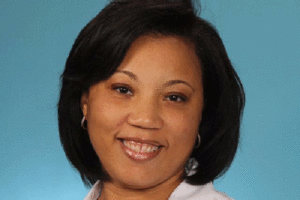
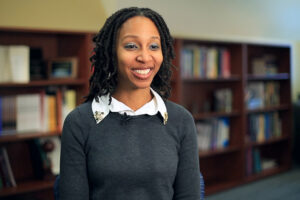
Ebony Carter, MD, assistant professor of obstetrics and gynecology at the School of Medicine, helped develop a recent report released by the National Academies of Sciences, Engineering, and Medicine.
Adia Harvey Wingfield, professor of sociology at Washington University in St. Louis, has joined the leadership team in Arts & Sciences as associate dean for faculty development. In her role as associate dean, Wingfield works closely with Barbara A. Schaal, dean of the faculty, in ongoing efforts to support faculty across Arts & Sciences.
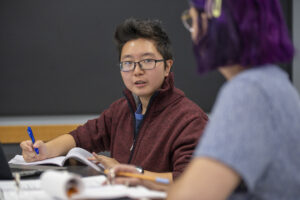
In launching the St. Louis Queer + Support Helpline (SQSH), senior Luka Cai is providing the local community the support they never received as a queer teenager in Singapore. Cai and co-founder Riott Kochman, a Brown School student, will receive a Holobaugh honor for SQSH at the annual James M. Holobaugh Honors Ceremony Nov. 11.
The Association of Marketing and Communication Professionals announced the WashU Women Innovate (WIN) storytelling campaign won a Gold MarCom award. Created by Washington University in St. Louis’ Office of Public Affairs, WIN shines the spotlight on the university’s support of women founders, entrepreneurs and innovators.
The question now is not whether a new angel investor will provide a life raft for everybody floating out there who hasn’t been scooped up by Vox or The New Yorker or whether The Ringer’s unionization will yield positive results.
We can only know our interventions are working, or not working, through evaluation of data properly generated by the different agencies involved. The data must be shared with evidence-minded professionals intent on saving lives and stemming this heartbreaking public health crisis.
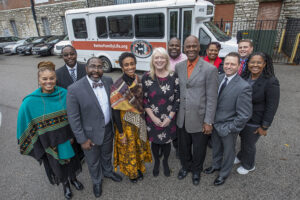
Washington University and its shuttle provider, Huntleigh Transportation Services, donated a shuttle to longtime community partner Better Family Life. The organization will use the shuttle to create and expand services for residents and young people attending Better Family Life after-school programs and summer camps.