As the Christian author Andy Crouch recently advised, one of the best ways to demonstrate that love now is by suspending physical gatherings, including worship services—for the sake of our neighbors.
In the wake of the global crisis set into motion by COVID-19, extraordinary actions were put into place involving almost every aspect of Washington University life, including remote learning, working — and living.
As schools and entertainment venues close due to the coronavirus outbreak, many of us are seeing our social circles reduced quite significantly. An expert on social support at Washington University in St. Louis offers a few evidence-based suggestions for thriving during household isolation.
Cindy Brantmeier, professor of applied linguistics in Arts & Sciences and faculty fellow for international research at Washington University in St. Louis, is the 2019-20 Merle E. Simmons Distinguished Alumna for Indiana University’s Department of Spanish and Portuguese.
Washington University has canceled its 159th Commencement, which had been scheduled for Friday, May 15, due to the continuing global crisis of the coronavirus (COVID-19) pandemic, according to Chancellor Andrew D. Martin.
A noblewoman from Imperial China enjoyed playing polo on donkeys so much she had her steeds buried with her so she could keep doing it in the afterlife, archaeologists found. This discovery by a team that includes archaeologist Fiona Marshall at Washington University in St. Louis is published March 17 in the journal Antiquity.
Researchers at Washington University School of Medicine and Mayo Clinic in Rochester, Minn., have found — in newborn mice — that a component of breast milk may help protect premature babies from developing life-threatening sepsis.
Some reforms are easier than others. Creating a defender general is an unusually simple one, with the potential to provide large benefits for millions of people, given that it involves establishing only an office with two dozen employees.
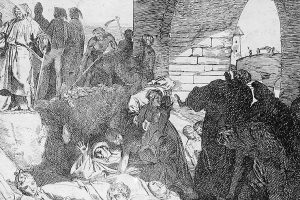
Rebecca Messbarger, professor of Italian and founding director of the Medical Humanities program in Arts & Sciences, speaks on social distancing from medieval Florence to Progressive Era St. Louis.