Washington University employees can support those in need by donating to the United Way of Greater St. Louis. Those who donate online through Nov. 30 will have a chance to win St. Louis-themed prizes.
Naresha Saligrama, assistant professor of neurology at the School of Medicine, received a three-year $1.1 million grant from the Children’s Discovery Institute for pediatric onset multiple sclerosis research.
Panos Kouvelis, director of The Boeing Center for Supply Chain Innovation, said, optimistically, supply chains could recover by next summer. But if the energy crisis in China doesn’t resolve quickly, “2022 will be driven by that crisis and the constraints that it creates.”
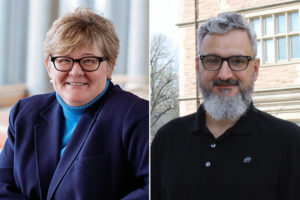
Tonya Edmond, professor and associate dean for social work and social policy, and Rodrigo Reis, professor and associate dean for public health, have been appointed to serve as co-interim deans of the Brown School at Washington University in St. Louis, Provost Beverly Wendland announced. Their appointments begin Jan. 1.
Afrobeat, Spanish dance, Ukrainian multi-instrumentalists and contemporary Son jarocho and Afro-Mexican music. Next spring, WashU’s Center for the Study of Race, Ethnicity & Equity (CRE2) and Department of Music will partner with The Sheldon to present the fourth annual Whitaker World Music Series.
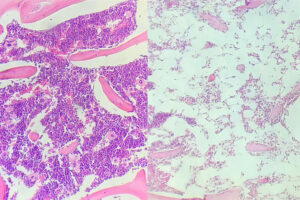
Washington University School of Medicine researchers, studying mice, have developed a method of stem cell transplantation that does not require radiation or chemotherapy. The study opens the door to safer stem cell transplantation.
The Washington University in St. Louis community is invited to register for a virtual discussion with former U.S. congressmen Russ Carnahan and Tom Coleman about voting rights and the threats facing American democracy.
Aristeidis Sotiras, assistant professor of radiology at the School of Medicine, received a five-year $2.8 million grant from the National Institutes on Aging of the National Institutes of Health (NIH) to use machine learning techniques in Alzheimer’s research.