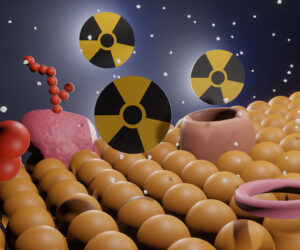
Abhinav Jha, at the McKelvey School of Engineering, wants to use novel imaging to better understand how people absorb radiation therapy. His team won a four-year $2.2 million National Institutes of Health (NIH) grant for the study, which aims to guide treatment decisions.
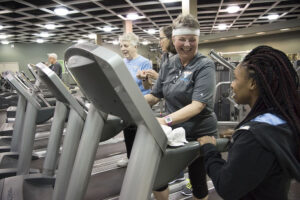
A large study conducted in part by School of Medicine researchers focused on whether exercise and mindfulness training could boost cognitive function in older adults. The study found no such improvement following the interventions.
Recent Chinese protests over COVID-19 restrictions provided a blueprint for future activism to prevent government from infringing on civil liberties, says Zhao Ma, associate professor of modern Chinese history and culture in Arts & Sciences. That could spell trouble for President Xi’s administration.
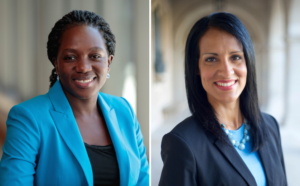
Proscovia Nabunya, at the Brown School; and Patricia Cavazos-Rehg, at the School of Medicine, have received a five-year $1.2 million research grant from the National Institute of Mental Health, part of the National Institutes of Health (NIH), to address depression among youth living with HIV in Uganda.
Cindy Brantmeier, a professor of applied linguistics and of global studies in Arts & Sciences, shared her research, which examined the challenges of functional health literacy for language-diverse patients across the U.S. during the COVID-19 pandemic.
Patients with social needs had a higher number of hospitalizations, obesity, prediabetes and Type 2 diabetes, finds a new study from the Brown School on the social determinants of health.
Washington University is now a part of the Seattle Structural Genomics Center for Infectious Diseases Consortium, and received a subcontract award of up to $50,000 from Seattle Children’s Research Institute in support of a course on protein bioinformatics.
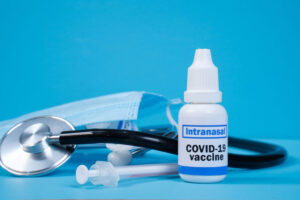
A nasal COVID-19 vaccine based on technology licensed from Washington University in St. Louis has been approved for emergency use in India as a booster for people who have already received two doses of other COVID-19 vaccines.