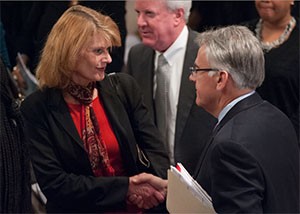
As a member of the Ferguson Commission, Rose Windmiller traveled across the region to learn more about the issues that divide St. Louis. Next, the commission will find ways to put its ideas into action. “This is where the rubber hits the road,” Windmiller says.
The city is filled with stories and tells stories of its own. Last fall, the Center for the Humanities and the Sam Fox School — with support from the Andrew W. Mellon Foundation — launched The Divided City, an urban humanities initiative exploring historical and contemporary segregation across the globe and in St. Louis. Funded projects include an oral history of the Ferguson movement, launched this summer by Jeffrey McCune, PhD, Clarissa Rile Hayward, PhD, and Meredith Evans, PhD.
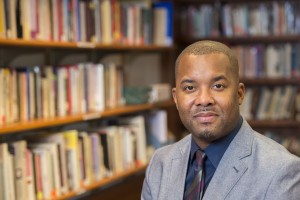
Two Washington University seniors and one 2015 alum (David Dwight, pictured) are assisting the Ferguson Commission to create and write its recommendations to improve education, municipal courts and governments, economic opportunities and the relationship between residents and law enforcement.
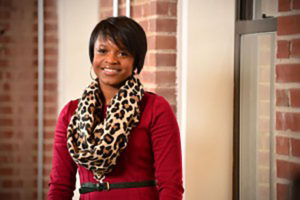
Brittany Packnett, a 2007 graduate of Washington University in St. Louis, has received the 2015 Peter Jennings Award for Civic Leadership from Teach For America.
Washington University in St. Louis departments are encouraged to considering hiring qualified students for part-time jobs through the Federal Work-Study Program. The U.S. Department of Education covers 50 percent of a student’s pay, and the university department pays the rest.
The U.S. Department of Justice released July 31 a report critical of the St. Louis County Family Court, alleging racial bias and unfair treatment of black youth, among other accusations. Mae Quinn, JD, professor of law and director of the Juvenile Law and Justice Clinic at Washington University in St. Louis, is hopeful the report will lead to some measure of change and reform.
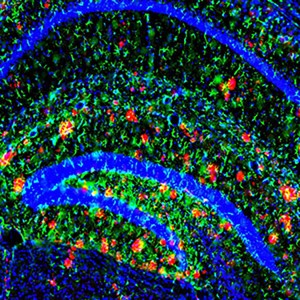
The greatest risk factor for Alzheimer’s disease is advancing age. Researchers at Washington University School of Medicine in St. Louis have identified some of the key changes in the aging brain that lead to the increased risk. The changes center on amyloid beta 42,
a main ingredient of Alzheimer’s brain plaques.
The Center for the Humanities in Arts & Sciences at Washington University in St. Louis has awarded grants to a number of faculty and graduate students for seminars or focused reading and writing groups for the 2015-2016 academic year.
Researchers at Washington University School of Medicine in St. Louis, led by Eric J. Lenze, MD, have received a $15 million grant to study strategies — including exercise, health education, meditation and yoga — aimed at helping older adults prevent or reverse typical age-related cognitive declines.
The Brown School at Washington University in St. Louis
has launched three new joint-degree programs and a dual-degree program
with Fudan University to begin this fall, expanding class offerings and
learning opportunities both in St. Louis and around the world.