Ashrafi receives Ben Barres Early Career Acceleration Award
Ghazaleh Ashrafi, an assistant professor of cell biology and physiology at the School of Medicine, has been awarded a four-year $1.2 million Ben Barres Early Career Acceleration Award as part of the Chan Zuckerberg Initiative’s Neurodegeneration Challenge Network.
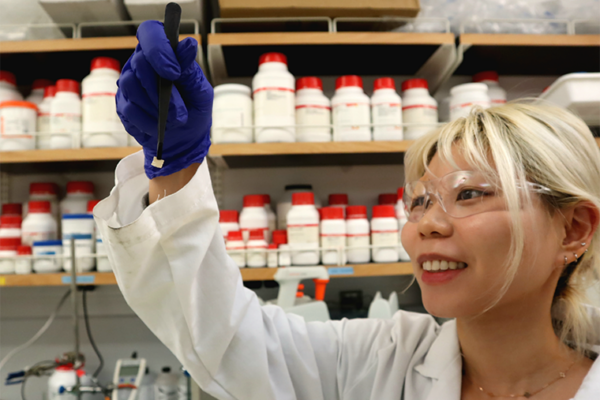
Engineering customizable bio-adhesives for personalized medical repair
Researchers working with Fuzhong Zhang at the McKelvey School of Engineering have genetically engineered a protein-based bio-adhesive with programmable material properties.
Program in Occupational Therapy receives $1.1 million grant
The Program in Occupational Therapy at the School of Medicine received a $1.1 million grant from the U.S. Department of Education’s Special Education – Personnel Development to Improve Services and Results for Children with Disabilities Program.
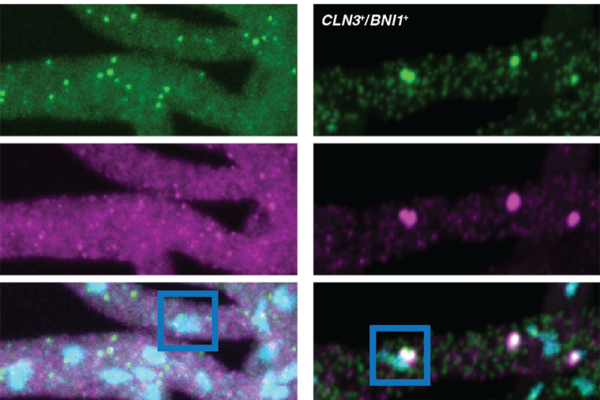
Condensates’ composition determined by when RNA is added
Collaborative research from Rohit Pappu’s laboratory at the McKelvey School of Engineering, published in Nature Communications, shows that timing matters when it comes to the order of how different RNA molecules are added to condensates.
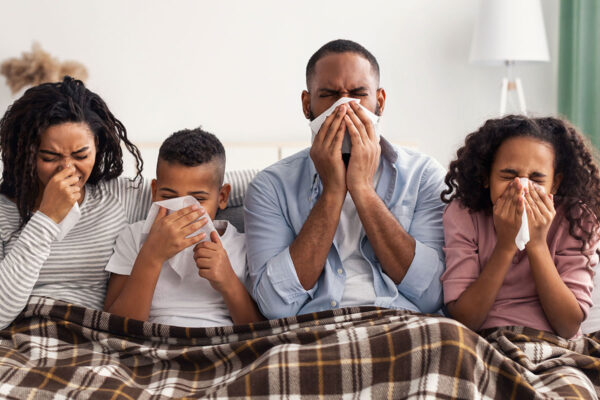
Kwon receives CDC grant to study viral transmission within households
Jennie H. Kwon, DO, an associate professor of medicine and chief of the section of Healthcare Epidemiology & Antimicrobial Stewardship at the School of Medicine, has been awarded a $3.6 million grant from the Centers for Disease Control and Prevention to lead a multisite clinical study.

Improving autonomous driving
Nathan Jacobs at the McKelvey School of Engineering led a team that developed a joint learning framework to enhance two closely related computer vision tasks critical in autonomous driving applications.
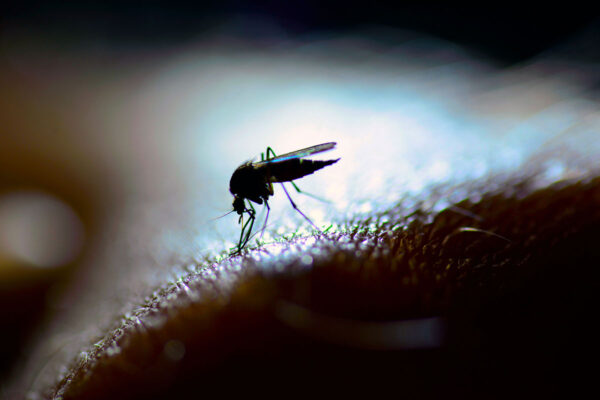
Researchers identify way to block alphavirus infection
Researchers at Washington University School of Medicine in St. Louis have found an innovative way to block infection by a variety of alphaviruses, a group of mosquito-borne viruses that can cause joint and brain infections in people.
WashU researchers among those ‘highly cited’
More than 50 Washington University in St. Louis researchers have been named to the Highly Cited Researchers 2023 list by Clarivate, an analytics company. The list identifies scientists who demonstrate exceptional influence in their fields, as reflected through their papers frequently cited by their peers.
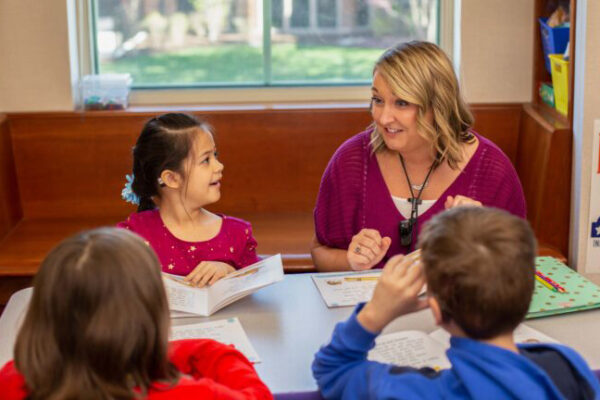
PACS receives funding from Department of Education
The Program in Audiology and Communication Sciences at the School of Medicine has been awarded two grants from the U.S. Department of Education that combined will provide over $2.3 million in support of its graduate training programs.
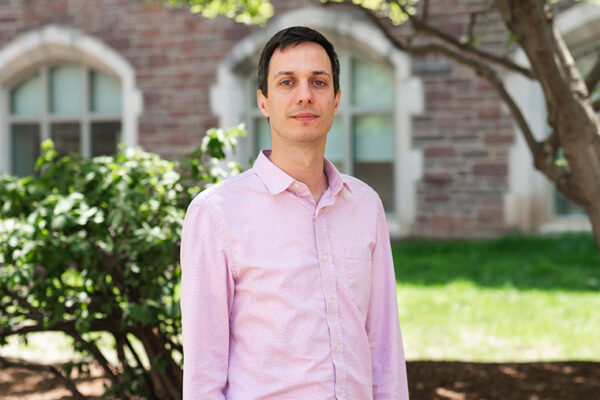
Errando awarded funding for astrophysics of relativistic jets
Manel Errando, an assistant professor of physics in Arts & Sciences, has been awarded a $375,000 grant from the National Science Foundation to conduct studies of active galactic nuclei.
View More Stories