
Washington University researchers awarded $229K to study lead pipe corrosion
The National Science Foundation, along with the Water Research Foundation, has awarded a pair of Washington University in St. Louis researchers $229,000 in grants to study ways to best control lead pipe corrosion, which can poison drinking water. Daniel Giammar, the Walter E. Browne Professor of Environmental Engineering in the School of Engineering & Applied […]

Make no mistake, revenge is (bitter)sweet, study confirms
New research from Washington University in St. Louis is adding a twist to the science of revenge, showing that our love-hate relationship with this dark desire is indeed a mixed bag, making us feel both good and bad, for reasons we might not expect.
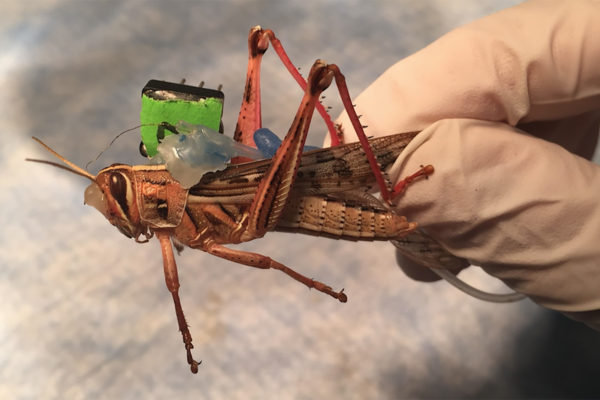
A new use for insects: biorobotic sensing machines
Using a locust’s sense of smell, a team of engineers from Washington University in St. Louis is developing new biorobotic sensing systems that could be used in homeland security applications, including bomb and chemical detection.
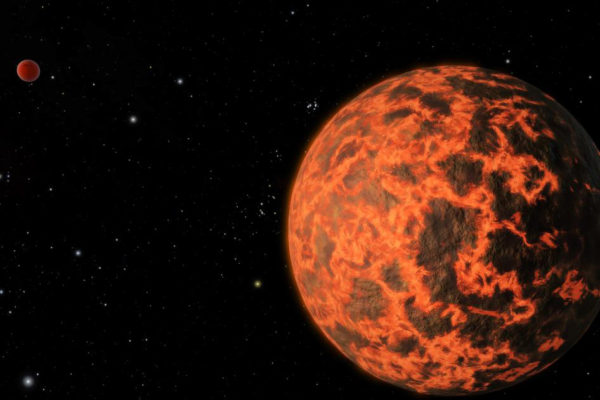
Hot stuff
Numerical models show hot, rocky exoplanets can change their chemistry by vaporizing rock-forming elements in steam atmospheres that are then partially lost to space.
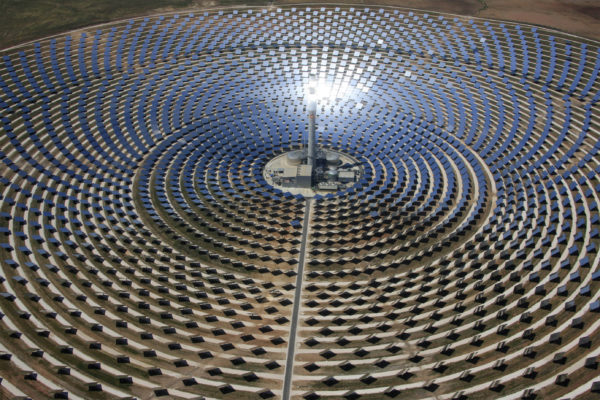
Controlling light: New protection for photosynthetic organisms
Scientists at Washington University in St. Louis have discovered a previously unknown strategy photosynthetic organisms use to protect themselves from the dangers of excessive light, providing further insight into photosynthesis and opening up new avenues for engineering this process, which underlies the global food chain.
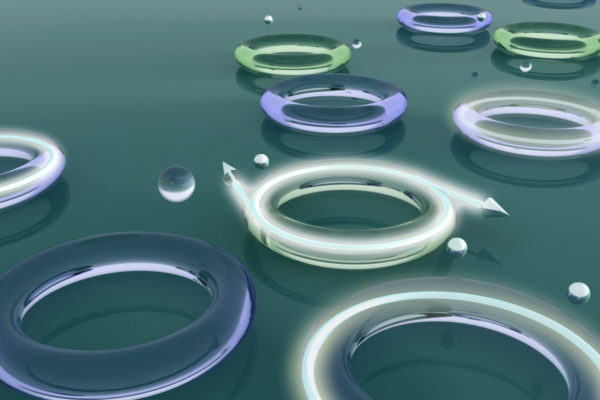
Giving photons their marching orders
Researchers in the School of Engineering & Applied Science have found a way to give photons, or light packets, their marching orders. The researchers have capitalized on the largesse of an energy state in an optical field to make photons in their lasing system travel in a consistent mode, either clockwise or counterclockwise.

XMT 2016: World’s top memory athletes to compete June 24-26
Two dozen of the world’s best memory athletes will battle head-to-head for their share of $75,000 prize money as the Extreme Memory Tournament (XMT-2016) returns to the headquarters of San Diego-based Dart NeuroScience June 24-26. Sponsored by Washington University in St. Louis and Dart NeuroScience, the live-streamed competition offers the internet public a chance to […]
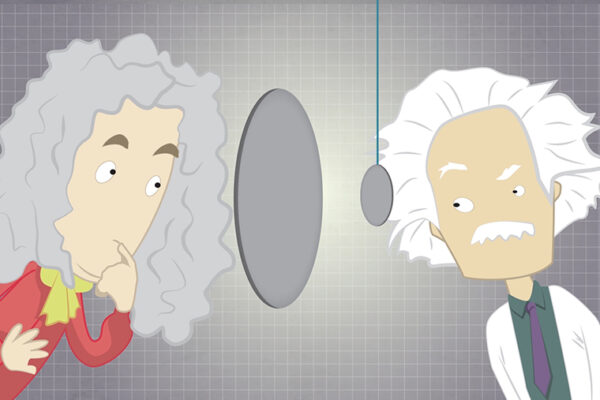
Why is gravity so weak?
Scientists find gravity very puzzling. For one thing, they don’t understand why it is so weak; that is, why it takes so much stuff (like a planet’s worth) to generate much gravitational force. Perhaps, they say, it is leaking out of our universe. Physicist Adam Archibald, MA ’14, explains how this could be and describes an […]

Wandering ice on Mars
Glaciations on Mars are different from those on Earth. During a Martian glacial period, water vapor that would otherwise travel to the north polar cap instead snows out at lower latitudes, where ice then accumulates. Radargrams of the north polar region of Mars record the most recent mid-latitude Martian glacial period and the regrowth of the polar ice since then.
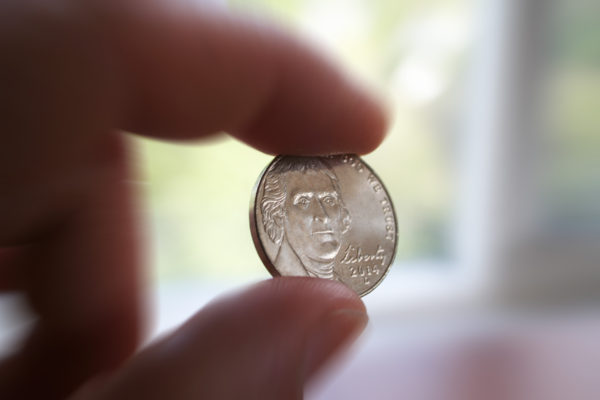
Five-cent chemistry
The research team of Liviu Mirica, associate professor of chemistry in Arts & Sciences, has developed novel methods for generating the buildings blocks of important compounds with the common metal nickel. The work expands scientists’ toolbox for nickel-based chemistry, and contributes to the movement of “green chemistry” toward a 21st century of sustainable synthesis.
Older Stories