
Research suggests a better multiple-choice test
People often think about multiple-choice tests as tools for assessment, but they can also be used to facilitate learning. A new paper in the Journal of Applied Research in Memory and Cognition offers straightforward tips for constructing multiple-choice questions that are effective at both assessing current knowledge and strengthening ongoing learning.
Statistically sound
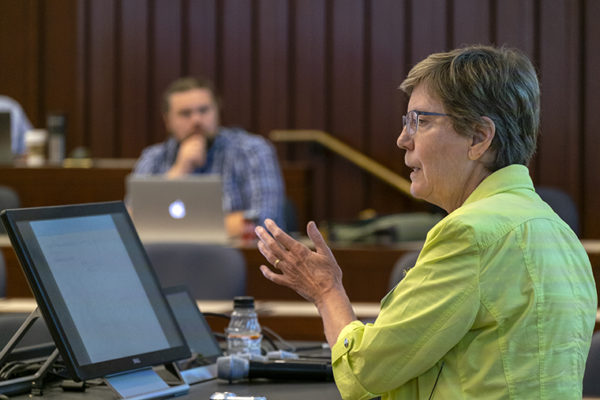
A National Science Foundation-funded workshop recently brought more than 75 statistics researchers to the Danforth Campus. Organized by Todd Kuffner of Arts & Sciences, this is the third year the event has been hosted at the university, and the first since math changed its name this summer to the Department of Mathematics and Statistics.

Engines through the ages: Nobel laureate to deliver Weissman Lecture
2016 Nobel laureate Fraser Stoddart will deliver the Weissman Lecture Oct. 4 at Washington University in St. Louis. The lecture journeys into mechanical innovations realized during the early and mid-20th century and a new type of bonding in molecules consisting of mechanical linkages. It is free and open to the public.
The complicated social life of primates
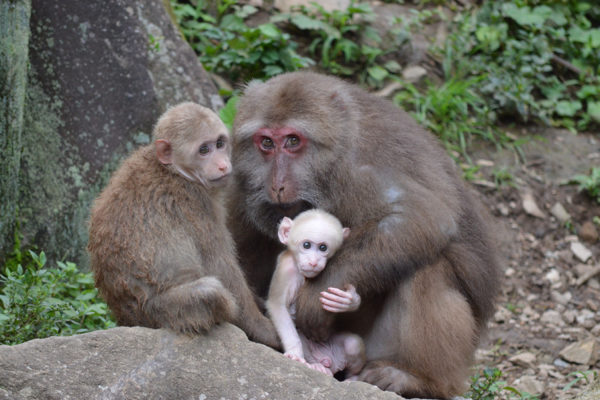
Anyone who peruses relationship settings on social media knows that our interactions with other humans can be complicated, but a new study in Nature Scientific Reports suggests that researchers may be overlooking some of these same complexities in the social relations of our closest primate relatives, such as chimpanzees and macaques.
Sniffing out error in detection dog data
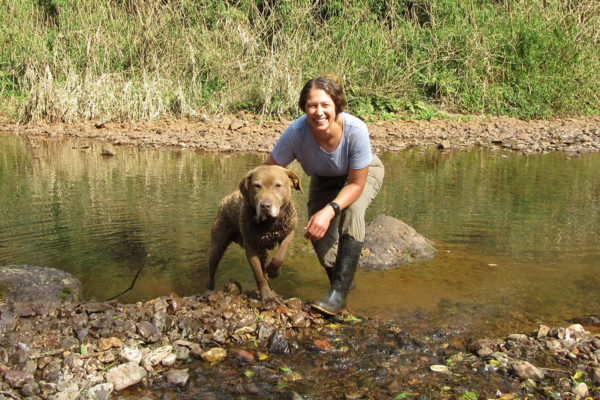
New research by Karen DeMatteo, a biologist in Arts & Sciences, finds three alternative explanations beyond errors in handler or dog training that can explain why dogs trained to identify scat for conservation purposes sometimes collect non-target scats.
Diving in to how our brains process information
Why don’t you eat your friend’s lunch when you are hungry? Cognitive control. Researchers at the School of Engineering & Applied Science and Arts & Sciences at Washington University in St. Louis are working together to better understand this aspect of cognition.
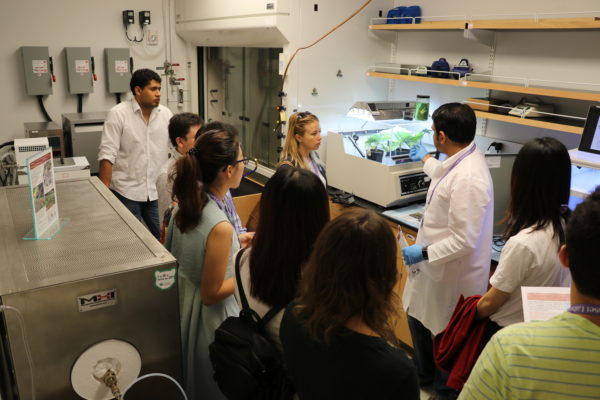
Research comes full circle at International Aerosol Conference
More than 1,500 of the world’s preeminent aerosol scientists gathered in St. Louis for the 10th International Aerosol Conference. The School of Engineering & Applied Science helped organize the meeting and presented talks on a wide range of aerosol topics: from air quality and pollution, to better drug delivery for cancer patients.
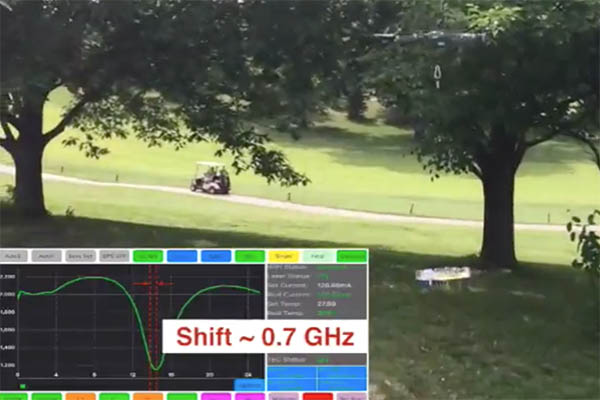
Enabling ‘internet of photonic things’ with miniature sensors
Swapping electrons for photons, researchers in the School of Engineering & Applied Science have developed wireless sensors which are not subject to electromagnetic interference and are smaller and generally more flexible than the currently electronics-based technology.

Quick learners remember more over time
Healthy adults who learn information more quickly than their peers also have better long-term retention for the material despite spending less time studying it, finds a new study from psychologists at Washington University in St. Louis finds.
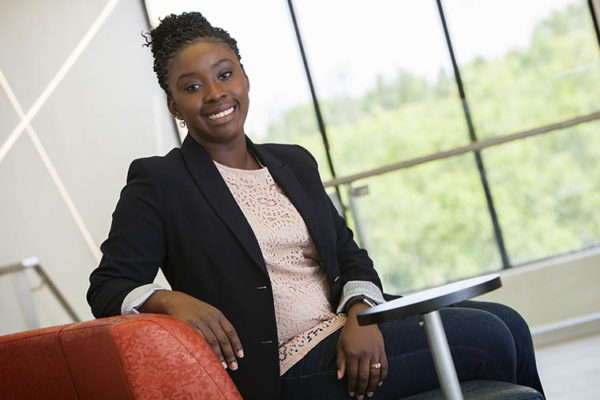
Making sense, pictures of medical data
A picture may be worth a thousand words, but what if you don’t want a whole essay? A computer engineer at Washington University in St. Louis is building visualizations to clarify and condense health risk data for patients.
Older Stories