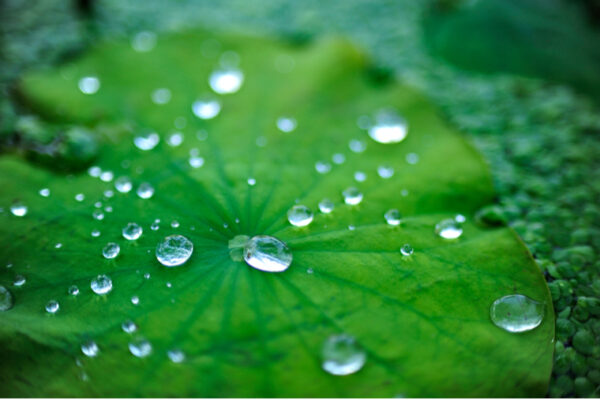
Plants model more efficient thermal cooling method
Patricia Weisensee, a mechanical engineer in the McKelvey School of Engineering at Washington University in St. Louis,
combined properties similar to those seen in a lotus leaf with those found on rose petals to find a more efficient way for droplets to evaporate from a surface.
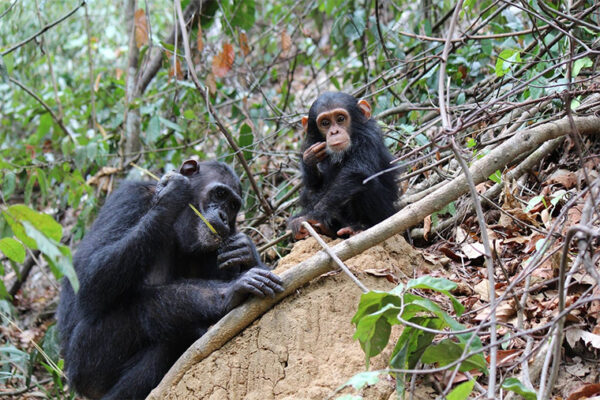
Chimpanzees more likely to share tools, teach skills when task is complex
New Arts & Sciences research finds that chimpanzees that use a multi-step process and complex tools to gather termites are more likely to share tools with novices. The study helps illuminate chimpanzees’ capacity for prosocial — or helping — behavior, a quality that has been recognized for its potential role in the evolution of human cultural abilities.
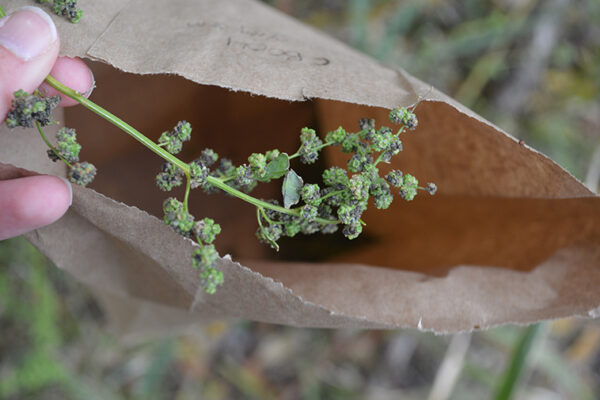
‘Lost crops’ could have fed as many as maize
For thousands of years, goosefoot and knotweed were grown as crops, possibly feeding as many indigenous people of North America as corn. But the domesticated forms of these lost crops became lost over the years, and now a Washington University in St. Louis archaeologist is trying to figure out why — and recreate them.
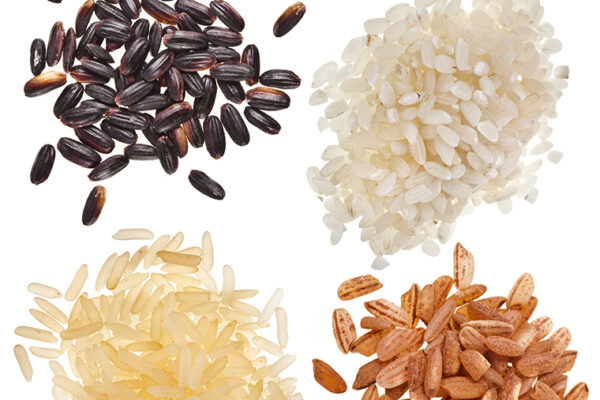
Grain traits traced to ‘dark matter’ of rice genome
Researchers from Washington University in St. Louis and the Chinese Academy of Agricultural Sciences discovered that rice domestication relied on selection for traits determined by a poorly understood portion of the rice genome.

New Year’s resolution: Wait until spring
Winter is dark. It’s exhausting. It also features the flu, colds and a tendency to stay indoors. So is Jan. 1 really a good time for resolutions? WashU’s Tim Bono has a better idea: Wait a few months.
And then there was light
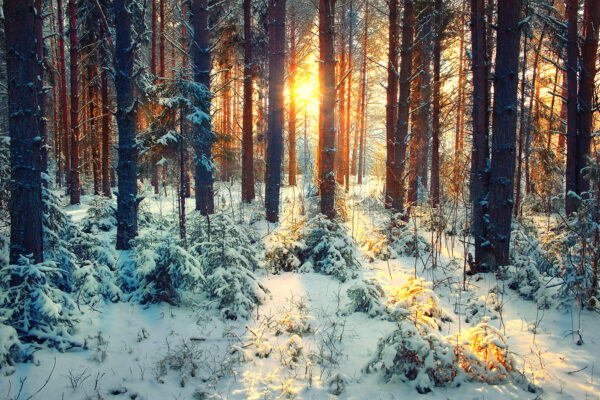
New research from Washington University in St. Louis provides insight into how proteins called phytochromes sense light and contribute to how plants grow. Biologists used sophisticated techniques to structurally define the sequence of events that support the transition between light- and dark-adapted states.
Survey: Electorate wants candidates, parties to act on climate change
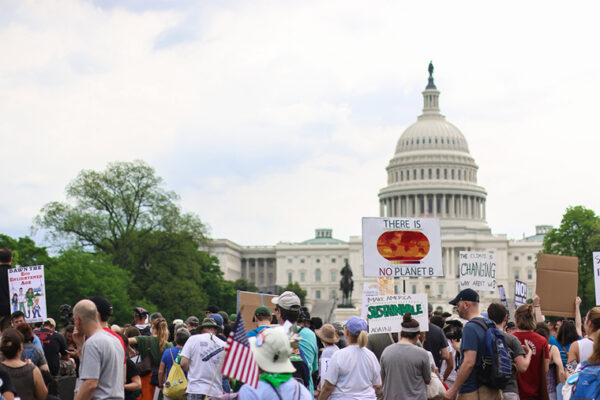
In a November wave of The American Social Survey conducted by the Weidenbaum Center on the Economy, Government, and Public Policy, political scientists polled likely primary voters to find that — despite consensus among Democratic candidates and the Trump administration’s actions to repeal environmental regulations — the two parties’ electorates don’t match their candidates’ stances on climate change.
WashU physicists launch cosmic ray telescope from Antarctica
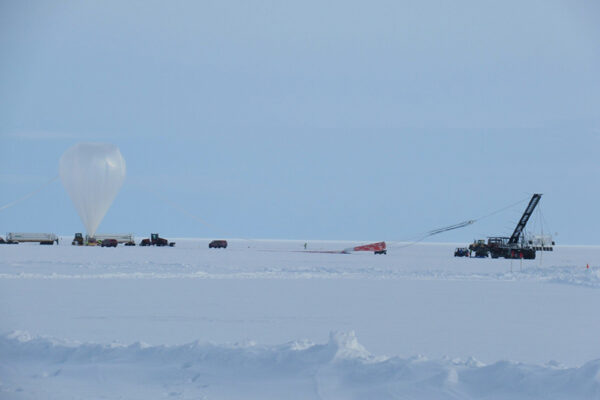
A team of Washington University in St. Louis scientists at McMurdo Station, Antarctica, successfully launched its SuperTIGER (Super Trans-Iron Galactic Element Recorder) instrument, which is used to study the origin of cosmic rays.

Division of Computational and Data Sciences marries AI, social science
The interdisciplinary Division of Computational and Data Sciences, one of a few of its kind in the country, focuses on turning the computational lens on social sciences. In the new PhD program, students have two advisers, one in computer engineering and one in a social science domain from social work and public health, political science, or psychological and brain sciences.
Supersize me: Physicists awarded $3.3M for XL-Calibur telescope
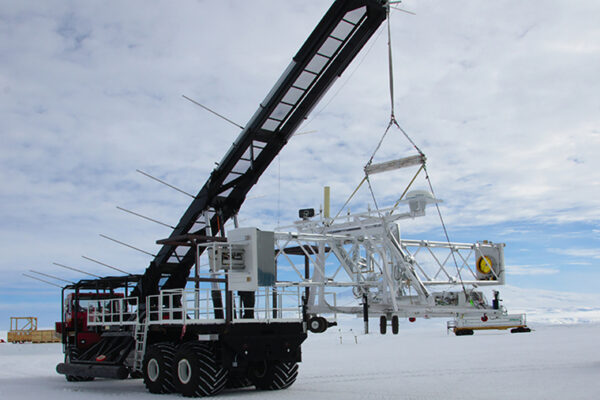
Researchers from Washington University in St. Louis will develop and deploy a new telescope designed to measure the linear polarization of X-rays arriving from distant neutron stars, black holes and other exotic celestial objects. The instrument will be flown on a minimum of two scientific balloon launches as early as summer 2021. The NASA-funded effort builds on promising results from a previous balloon-borne mission known as X-Calibur and is dubbed XL-Calibur.
Older Stories