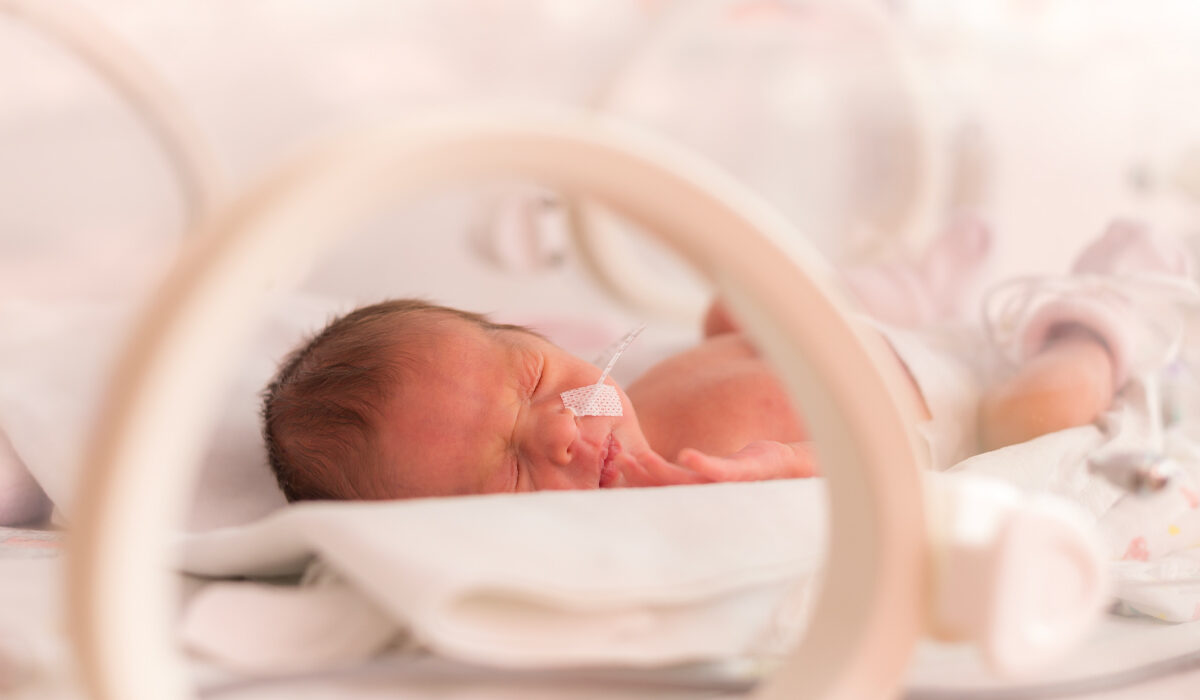
In a discovery that challenges long-standing assumptions about necrotizing enterocolitis, a sudden and often fatal intestinal illness that affects premature infants, researchers at Washington University School of Medicine in St. Louis have identified previously unknown predictors for the disease.
While bacteria have been proposed as key drivers for the devastating disease, scientists have been unable to identify specific intestinal bacterial features that reliably predict the disease. In a new study, the researchers found within the gut microbiomes of babies that bacteria-infecting viruses and bacterial antibiotic resistance genes are additional harbingers of necrotizing enterocolitis.
The findings, published Sept. 16 in Gut, are the first to show that these biomarkers in stool can predict human disease risk up to eight days before clinical symptoms appear.
“The mortality rate for necrotizing enterocolitis has changed little since it was first described 65 years ago, and our ability to predict it has been virtually non-existent — until now,” said Gautam Dantas, PhD, the Conan Professor of Laboratory and Genomic Medicine in the Department of Pathology & Immunology at WashU Medicine and co-corresponding author on the study. “By showing that bacteria-infecting gut viruses and bacterial drug resistance genes can accurately signal a baby’s risk days in advance, we are offering clinicians a window of opportunity to intervene.”
Viral dark matter
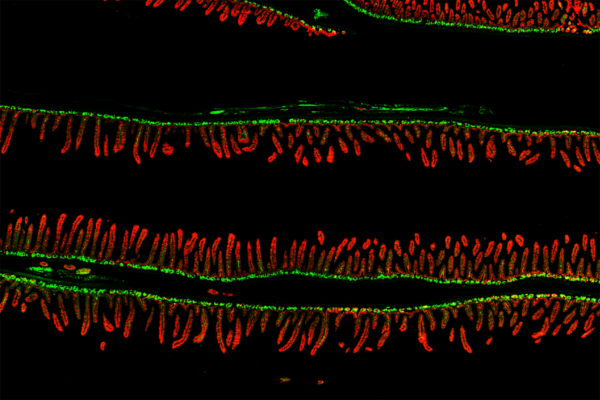
Necrotizing enterocolitis strikes a fragile and undeveloped gut lining. As inflammation flares, blood flow to the intestinal tissue is choked off, causing sections of the delicate intestine to swell, break down and die.
“With high mortality rates and severe long-term complications for survivors, the disease remains one of the most feared and challenging diagnoses in the neonatal intensive care unit,” said co-corresponding author Barbara Warner, MD, the F. Sessions Cole, MD, Chair in Newborn Medicine and director of the Division of Newborn Medicine at WashU Medicine, who treats premature infants with necrotizing enterocolitis at St. Louis Children’s Hospital.
For nearly two decades, Dantas and Warner have been collaborating with Phillip I. Tarr, MD, the Melvin E. Carnahan Professor of Pediatrics at WashU Medicine and co-corresponding author on the study, to better understand the gut ecosystem in preemie infants, focusing on harmful gut bacteria as the driver of necrotizing enterocolitis.
Sprinkled throughout the genomes of bacteria living in the gut is the genetic material of viruses. Rather than infecting human cells like the flu virus does, these viruses — called bacteriophages or phages — target bacteria, integrating their DNA into that of their bacterial host. Such integration can shuttle genes for antibiotic resistance or virulence between microbes, converting harmless bacteria into deadly, drug-resistant pathogens.
‘When dealing with a disease as sudden and devastating as necrotizing enterocolitis, every day counts.’
— Barbara Warner
This viral dark matter within the bacterial genomes has been largely ignored, said Dantas. When Kailun Zhang, PhD, a postdoctoral research associate and first author on the study, joined the Dantas lab, she asked a simple question: What if this often-discarded phage information has an important role to play in necrotizing enterocolitis?
Zhang used advanced computer algorithms to dig into existing genetic data obtained from stool samples from 43 premature infants who developed necrotizing enterocolitis and 86 healthy preemies. The samples came from infants born between 23 and 33 weeks’ gestation who spent time in the neonatal intensive care units at St. Louis Children’s Hospital, Norton Children’s Hospital in Louisville, Ky. or Oklahoma Children’s Hospital OU Health. She pieced together phage genomic sequences and antibiotic resistance genes embedded inside gut bacterial genomic DNA and fed those genetic sequences into AI prediction models to identify premature infants at risk for necrotizing enterocolitis.
The analysis revealed that phage-bacterial interactions were an important early warning signal for early-onset necrotizing enterocolitis, which occurs in the first month of life. By tracking the genetic footprint of phages, the team’s predictive models identified which premature infants would develop the disease up to eight days before physical symptoms appeared with approximately 75% accuracy.
“When dealing with a disease as sudden and devastating as necrotizing enterocolitis, every day counts,” said Warner. “Improving predictive power will help clinicians intervene earlier than ever before with tried-and-true measures without having to wait years for new drugs to make a difference today.”
The researchers also found that late-onset necrotizing enterocolitis, which strikes approximately six weeks or later after birth, appears to be biologically distinct from early-onset cases. They discovered that late-onset necrotizing enterocolitis is marked by the accumulation of antibiotic-resistance genes in gut bacteria, driven by cumulative antibiotic exposure during longer NICU stays. By tracking this gene buildup, the team could also predict late-onset necrotizing enterocolitis up to eight days before symptoms appeared with 83% accuracy.
“By showing that the phages that infect gut bacteria play an important role in disease, this computational approach opens doors to early diagnosis of other inflammatory illnesses, including inflammatory bowel disease, sepsis and drug-resistant bacterial infections, that plausibly involve phages or are precipitated by antibiotics,” said Tarr. “Phage biology could also be within the causal pathway leading to necrotizing enterocolitis, and, if so, inform new approaches to interventions.”
Zhang K, Gorelik MG, Sullivan JE, Radmacher P, Escobedo M, Warner BB, Tarr PI, Dantas G. Divergent microbial preludes to necrotizing enterocolitis defined by gut phages and bacterial resistomes. September 16, 2026. Gut. DOI: 10.1136/gutjnl-2026-338976
This work was supported in part by awards from the National Institutes of Health (NIH) Human Virome Project (HVP) through the National Center for Complementary and Integrative Health, grant number U01AT012998; the National Institute of Diabetes and Digestive and Kidney Diseases, grant number P30DK052574; the National Institute of Allergy and Infectious Diseases, grant numbers R01AI155893 and UH3AI083265; the Eunice Kennedy Shriver National Institute of Child Health and Human Development, grant numbers R01HD092414; the Children’s Discovery Institute of Washington University; St. Louis Children’s Hospital; the Pediatric Gastroenterology Research Training Program, grant numbers T32 DK077653. The content is solely the responsibility of the authors and does not necessarily represent the official views of the funding agencies.
Competing interests: G.D. is a consultant to and a member of the Scientific Advisory Board of Pluton Biosciences, which is developing methods for discovering environmental microbes for commercial applications. G.D. has consulted for SNIPR Technologies Ltd. in the last 5 years. P.I.T. is a holder of equity in, a consultant to, and a member of the Scientific Advisory Board of MediBeacon Inc., which is developing a technology to noninvasively measure intestinal permeability in humans. P.I.T. is a co-inventor on patents assigned to MediBeacon (U.S. patents 11,285,223 and 11,285,224 titled “Compositions and methods for assessing gut function” and U.S. patent application 2022-0326255, “Methods of monitoring mucosal healing”), which might earn royalties if the technology is commercialized. He is a member of the Data Safety Monitoring Board of Inmunova, which is developing an immune biologic targeting Shiga toxin-producing E. coli infections, for which he receives no compensation, except for reimbursement of expenses. P.I.T. receives royalties from UpToDate for two sections on intestinal E. coli infections. The authors declare no other competing interests.
About WashU Medicine
WashU Medicine is a global leader in academic medicine, including biomedical research, patient care and educational programs with 3,100 faculty. Its National Institutes of Health (NIH) research funding portfolio is the second largest among U.S. medical schools and has grown 78% since 2016. Together with institutional investment, WashU Medicine commits over $1.6 billion annually to basic and clinical research innovation and training. Its faculty practice is consistently among the top five in the country, with more than 2,550 faculty physicians practicing at 200 locations. WashU Medicine physicians exclusively staff Barnes-Jewish and St. Louis Children’s hospitals — the academic hospitals of BJC HealthCare — and Siteman Cancer Center, a partnership between BJC HealthCare and WashU Medicine and the only National Cancer Institute-designated comprehensive cancer center in Missouri and southern Illinois. WashU Medicine physicians also treat patients at BJC’s community hospitals in our region. With a storied history in MD/PhD training, WashU Medicine recently dedicated $100 million to scholarships and curriculum renewal for its medical students, and is home to top-notch training programs in every medical subspecialty as well as physical therapy, occupational therapy, and audiology and communications sciences.
Originally published on the WashU Medicine website