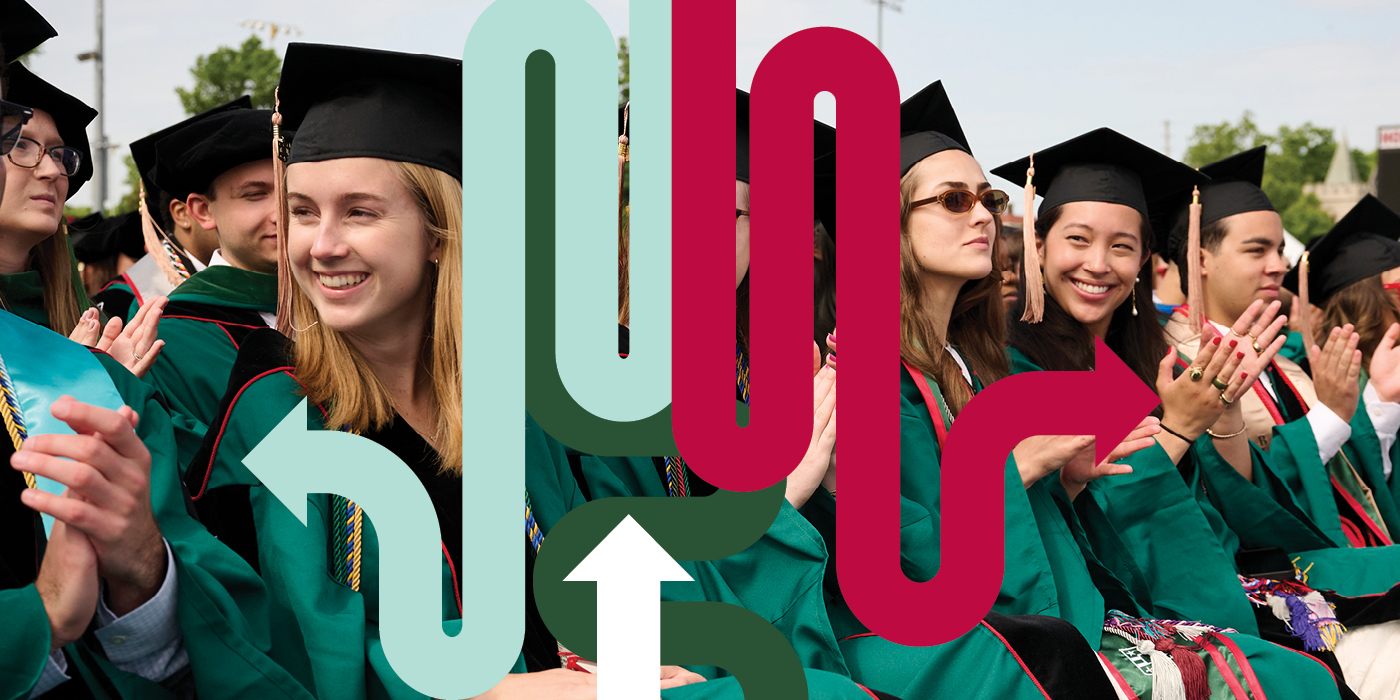
Less than a year ago, in October 2025, the Pew Research Center released a troubling set of findings. In its annual nationwide survey on higher education, the center included a straightforward prompt: Are colleges and universities in the United States headed in 1) the right direction or 2) the wrong direction? Among nearly 3,500 respondents, seven in ten chose the second option.
These results, though stark, are not out of line with recent trends. With every passing year since 2020, Pew has found that a greater percentage of Americans in both political parties believes higher ed is going astray. In a separate poll last fall, Gallup revealed that only 35% of Americans deem college “very important,” down from 75% in 2010.
Gallup revealed that only 35% of Americans deem college “very important,” down from 75% in 2010.
Colleges and universities around the country have been closely tracking these ongoing shifts in public perception. Yale University, for example, created a committee on trust in higher education, which reported that Americans perceive the cost of college to be too high — and career outcomes too uncertain to justify that cost. The survey also pointed to broad concerns about political bias and a dampening of free speech on campuses.
The 2025 Pew poll grounds these findings. The most damning critique points to the price tag of a college degree: An overwhelming 79% of respondents (including 82% of those identifying as Republican) said colleges and universities are doing a “fair” or “poor” job keeping tuition costs affordable.
The steady decrease in public approval raises concerns for university administrators, faculty and anyone who cares about the purpose and success of these longstanding institutions. Because behind the sinking line on a graph, families and elected officials are debating real-world questions at dining room tables and in the halls of government — questions with deep importance for students and for society:
Are college campuses places where freedom of expression matters and where differing viewpoints can coexist? Is the cost too high? Is a college degree even worth pursuing in 2026?
At WashU, the answers to these questions are clear: yes, yes, yes. Through programming, coursework, staffing and investments, university leaders express to those within our community — and increasingly, to outside observers — that WashU is tackling the university challenge head on. Our university is a place that values affordability, excels in career outcomes and actively cultivates free speech.
The principles that guide these efforts have long been integral to the university’s mission of teaching, research and patient care. At a time of growing public skepticism about higher education, reaffirming those commitments, and sharing our successes, is essential.
Perception No. 1
A college education is unaffordable.
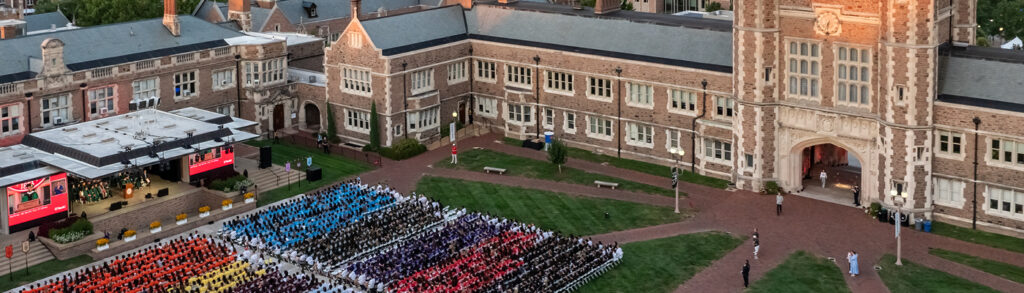
There’s no denying it: costs have risen since readers of WashU Magazine first walked through the archway of Brookings Hall. For students in the Class of 2030, who celebrated Convocation a few weeks ago, the full cost of attending WashU this academic year, including tuition, housing, meals and fees, is right around $97,000.
That price tag can shock those unfamiliar with the broad reach and impact of financial aid, says Mike Runiewicz, assistant vice provost and director of student financial services. The number, however, doesn’t tell the story of what WashU really costs for many of the students who excitedly waved flags at Convocation.
“We meet 100% of need with no loans for any student,” Runiewicz says. “We let people know, number one, that we’re committed to their success and that we’re going to stick with them for all four years.”
WashU’s no-loan undergraduate financial aid policy, in place since 2024, means scholarships, grants and work-study make up all financial aid offers — leaving little or no debt for families and for future graduates as they enter the workforce. Thanks to the policy, the percentage of WashU students who hold student debt declines every year, even as tuition costs rise.
“We meet 100% of need with no loans for any student … We let people know, number one, that we’re committed to their success and that we’re going to stick with them for all four years.”
Mike Runiewicz, assistant vice provost and director of student financial services
“We meet 100% of need with no loans for any student,” Runiewicz says. “We let people know, number one, that we’re committed to their success and that we’re going to stick with them for all four years.”
That reality isn’t widely understood, says Ronné Turner, vice provost for enrollment management. “The cost of higher education is confusing for people,” she says, with many families assuming either that a college degree is completely out of reach or that lower-tuition schools are the only feasible options.
In fact, for lower- and moderate-income families, the cost to attend WashU may be less than a nearby public university. And these income groups represent more applicants than many expect. The university defines “moderate income” as $75-200,000 a year, and families earning up to $300,000 are expected to receive some financial aid, according to Runiewicz. The university’s need-blind admissions policy, adopted in 2021, also means that a family’s income has no effect on student admittance.
To build transparency and awareness, the financial aid office has been stepping up its communications efforts. “We were the first school in the country to do an instant net price estimator,” says Turner, “which has really made it very easy for students and families. We have tools on the website to help.”
The tools help applicants anticipate their family’s expected financial contribution, an individualized amount based on factors like income, assets and number of siblings.
Beyond that out-of-pocket amount, financial aid covers 100% of the remainder. One thing the formula doesn’t include at WashU? The value of a family’s home. After all, a student moving into a dorm doesn’t mean their family has any plans to sell their house.
“We’re one of the very few schools in the country that approach aid in that way,” Runiewicz says. “We do not consider home equity when we determine eligibility for need-based aid.”
After a student applies to WashU, communication moves beyond the website and becomes hyper-personalized. Every student is partnered with a financial aid counselor who remains his or her contact for all four years.
“They’re not having to tell their story over and over every time they have to reach out or every time they have a question,” Runiewicz says. “It started with WashU’s commitment to ‘know each student by name and story,’ and we really still live that in financial aid.”
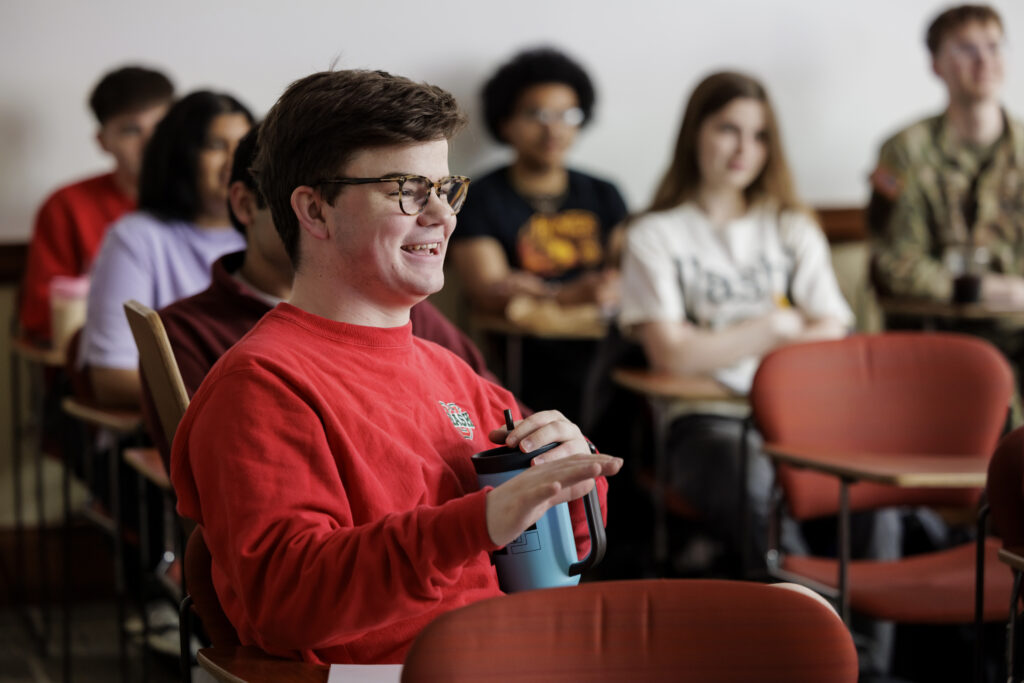
Reaching out
Generous aid and personalized service make financial aid popular among those who attend WashU. In 2023, even before the no-loan policy took effect, the Princeton Review ranked the university No. 1 in the nation for financial aid, based on student satisfaction and other factors.
Now, the office wants to raise awareness and build trust among an even broader applicant pool, including those in more rural areas.
Multiple initiatives bolster this goal of greater access. A 2022 gift from Emerita Trustee Joyce Buchheit, BSBA ’76, MBA ’77, and her husband, Chauncy Buchheit, established the Rural Scholars Academy, a program that brings high school students from rural and small-town areas to WashU to learn about St. Louis, the university and its admissions process. Several attendees have gone on to enroll at WashU.
The university is also a founding member of the STARS College Network, a nationwide, collaborative rural outreach effort supported by Trott Family Philanthropies. Through a newer pilot program, also funded by the family foundation, WashU hired three staff members specifically to work with talented rural students and their high-school counselors.
“We’re recruiting globally and broadly — rural, urban, suburban, public, private. We’re trying to identify and attract talent, and once they’re admitted, we make it affordable.”
Ronné Turner, vice provost for enrollment management
“WashU being a part of the STARS network is an effort to reach communities that thought they were forgotten by higher education, and particularly highly selective institutions,” Turner says. “And I think that in the long run, if our effort is successful, it will change the perception of higher education in those rural communities.”
In recent years, the university has also focused its outreach efforts closer to home through the WashU Pledge. The commitment provides a free undergraduate education to admitted students from Missouri and Southern Illinois with family incomes of $75,000 or less. This fall, 95 new WashU Pledge students arrived on campus. They join more than 350 students who have benefited from the program since its inception. The efforts are working.
“We’re recruiting globally and broadly — rural, urban, suburban, public, private,” Turner says. “We’re trying to identify and attract talent, and once they’re admitted, we make it affordable.”
There’s always room for improvement, Turner believes, and philanthropic support can help. For this reason, With You: The WashU Campaign centers “greater access” as a priority area of impact.
“Several of our peers have announced tuition-guarantee programs, which tell a family, ‘If you make below a certain amount of money, you’ll pay no tuition,’” Turner says.
“This type of program simplifies things, particularly for moderate-income families. They can more easily plan, see the institution as affordable and view higher education in a more positive way.”
Perception No. 2
Colleges and universities don’t prepare students for well-paying jobs.
After the question of affordability, Americans in the Pew study expressed the most skepticism about graduates’ career readiness. When asked to rate how well colleges and universities prepare students for well-paying jobs in today’s economy, only 12% of respondents gave high marks.
Had they been included in the survey, WashU recent graduates and their families might have skewed those results. The average starting salary for the Class of 2025 was $89,475, according to the university’s annual survey of graduating students.
A nearly $90,000 starting salary is far above the norm — both nationally and among research universities with an “R1” designation. The National Association of Colleges and Employers (NACE) tracks career outcomes and salaries for new grads. In 2022-24, on average, WashU graduates have landed salaries more than $20,000 higher than their peers, including graduates from top research universities.
A plethora of premier, high-paying job offers aren’t made solely because WashU graduates are intelligent and hardworking (though, of course, that’s often true). These stand-out results are due to WashU’s investment in career preparation for students, grounded in an active and strategic Center for Career Engagement (CCE).
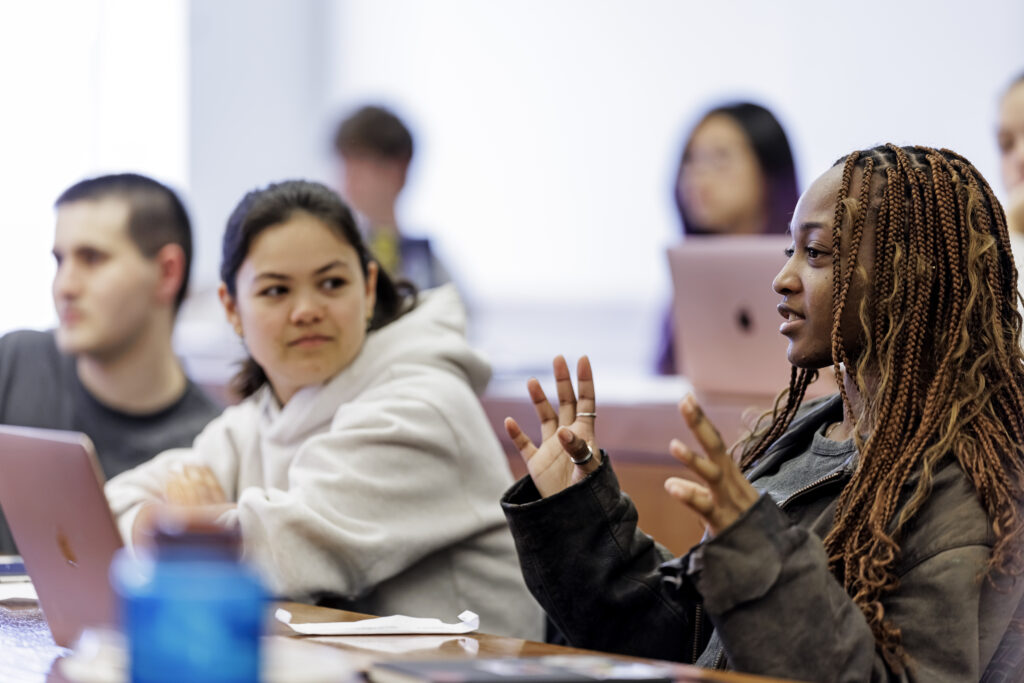
Career collaboration
“We have one of the most comprehensive career center programs in the country when you compare us to other institutions our size, signaling that at WashU, our leadership really values the next-step experience of our students,” says Norma Guerra Gaier, associate vice chancellor for career development and education.
Developing future-ready leaders
WashU is committed to preparing students to grow as principled, purpose-driven leaders. The university invests in exceptional career engagement and leadership development programming to put students on the path toward meaningful, rewarding careers. These resources enable students to apply their knowledge and skills after graduation and use their talents to create a more promising future for all.
With you, we can cultivate the next generation of leaders.
Visit withyou.washu.edu to learn more.
She points out that many students also successfully enter advanced studies or fellowships after earning their WashU degrees. Among the Class of 2025, 94% of those seeking employment or graduate study reported a positive outcome. Once again, this percentage is well above the most recent NACE national average.
So, what’s the formula for success? With more than 30 years’ experience in higher ed and career development, including a stint as president of NACE, Gaier has deep knowledge of what employers seek in new hires. She has organized the CCE around the needs of both students and their future employers.
The center’s four teams reach all of campus and beyond. They focus on academic partnerships (folding career skills into course work and other campus opportunities); employer engagement (cultivating a network of some 45,000 companies interested in recruiting at WashU); experiential learning and internships; and career coaching.
The coaching team includes internationally certified counselors with expertise in a range of professional paths, all organized into eight “career communities” largely centered on industries, rather than majors.
“Students can indicate ‘I have an interest in healthcare’ or ‘I have an interest in technology,’ and they choose that career community,” Gaier says. “The career community wraps around them with in-person programming, virtual programming, potential part-time jobs and internships, and, of course, the post-grad experience.”
Alumni and recruiting employers are also positioned within the communities, and the new Neil S. Hirsch Center will facilitate connections among these groups. Upon its opening in winter 2027, the Hirsch Center will house both the CCE and a welcome center for alumni.
The career coaching team makes it a priority to incorporate career exploration and preparation into every phase of a student’s WashU journey, starting at day one — or perhaps day zero, depending on how you count.
“We actually meet with first-year students during orientation. We end up seeing about 97% of first-year students who engage with us before classes even start.”
Norma Guerra Gaier, associate vice chancellor for career development and education
“We actually meet with first-year students during orientation,” Gaier says. “We end up seeing about 97% of first-year students who engage with us before classes even start.”
Students are welcome, even encouraged, to shift their goals and plans over the years. But thinking about career preparation early opens a door that most students then choose to enter again. In addition to individual coaching, the center offers more than 500 in-person and virtual events every academic year.
Tools abound for those students actively seeking opportunities. On Handshake, a national online platform widely used at WashU, “on any given day, a student can find up to 30,000 different internships and jobs listed,” Gaier says.
Then, when applying for those internships and jobs, students know how to translate their academic and co-curricular experiences into the skills those jobs demand.
“We have learned that employers are saying it’s not about the major; it’s about the competencies that students learn and hone during their academic careers,” Gaier says.
A new program, the CCE’s Career Innovation Faculty Fellows, partners with faculty across schools to help students develop and communicate the all-important competencies they gain through WashU courses. The program welcomed six inaugural fellows last year, and more faculty members have joined this year. These fellows purposefully integrate skills like communication, critical thinking, teamwork and professionalism into courses in ways that students can articulate to themselves and to future employers.
Literacies for Life and Career, an advising and pedagogical program in Arts & Sciences, also focuses on career readiness. In fall 2026, all undergraduate courses in Arts & Sciences will actively incorporate at least one of 11 core literacies — such as critical and interpretive skills, data analysis or communication dexterity.
Importantly, the skills apply to more than students’ future career paths. In these programs and throughout the many activities and services offered by the Division of Student Success, WashU prioritizes students’ well-being, their personal fulfillment and their future roles as citizens and community members.
Outside of course work, WashU actively supports opportunities like summer research and internships — increasingly important as employers seek skills and experience alongside degrees. Numerous funds at WashU help students secure and afford these opportunities.
Chancellor Andrew D. Martin has long promoted experiences like internships and career preparation overall. He spearheaded the Summer Internship Fund and the Chancellor’s Career Fellows Program, which provide support for students with financial need to pursue internships and experiential learning. Under his leadership, the CCE unified into an all-campus model rather than career services being spread out among individual schools.
In recognition of these efforts and commitments, NACE awarded Chancellor Martin the 2026 Career Services Champion Award — a national honor recognizing a university president or chancellor for visionary leadership in advancing career education and student success.
“Higher education, as we all know, is facing a crisis of public trust,” Martin said upon receiving the award in June.
“Too many Americans have come to question whether a college degree is worth it and whether our institutions are delivering on the promise we make to students and families,” he said. “The more we can show, loudly and clearly, that our graduates are prepared, purposeful and ready to contribute, the more we rebuild the trust that our institutions depend on.”
Perception No. 3
Colleges and universities stifle differing points of view.
Alongside career preparation, Chancellor Martin has long championed free speech on college campuses; he literally wrote the book on the subject. Free Speech: A Campus Toolkit was published in October 2025, the same month as the latest Pew report on higher education.
Martin and his co-authors based the text on a WashU undergraduate course taught by Martin and WashU Law’s Lee Epstein, the Ethan A.H. Shepley Distinguished University Professor. The two political scientists’ work together has deep roots: Back in the 1990s, Epstein was the future chancellor’s doctoral adviser.
Offered every spring since 2020, “Free Speech on Campus” teaches students the basics of First Amendment law, the foundations of free speech in the U.S., and how those laws and principles play out on college campuses. Case studies vary year to year, reacting in real time to events and controversies facing universities. This spring’s iteration of one assignment asked students to write statements in favor of, and against, Senate Bill 2972, a 2025 Texas law restricting protests on public university campuses. Students then identified which argument they found most persuasive.
Introducing Ordered Liberty
The course “Free Speech on Campus” is one of numerous avenues through which WashU students learn to listen actively, think critically and respond productively to arguments and opinions of all kinds. One year ago, Chancellor Martin announced the Ordered Liberty Project, an effort that brings these opportunities together under a single framework.
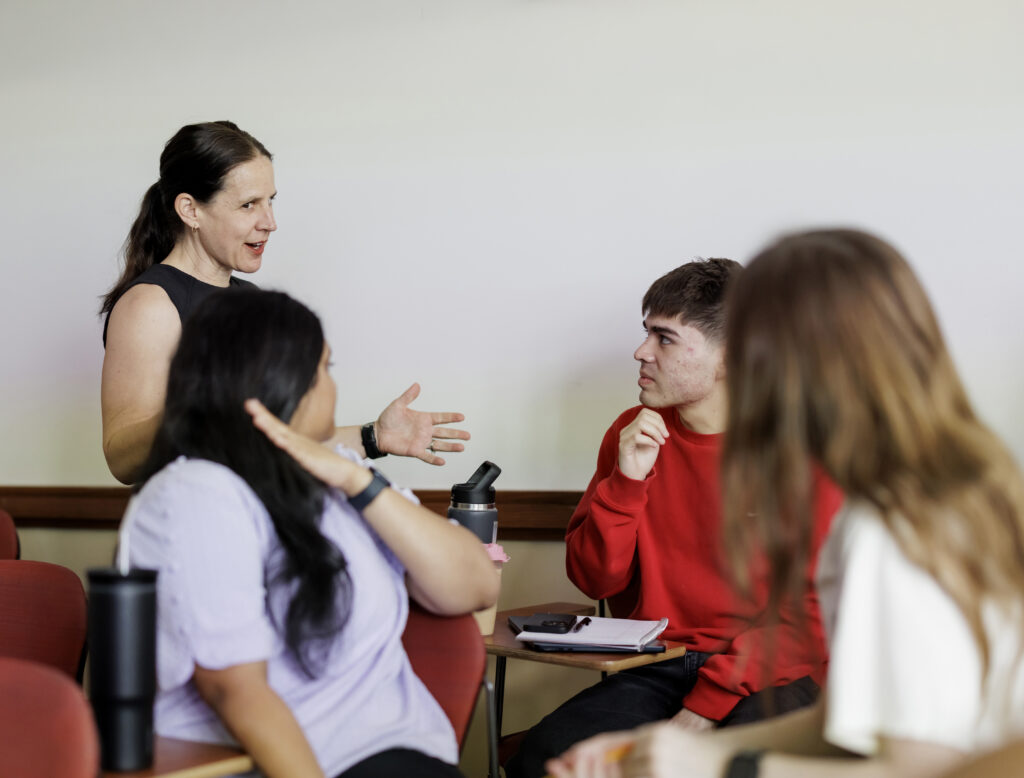
Betsy Sinclair (left), the Thomas F. Eagleton University Professor of Public Affairs and Political Science, speaks with students during class in February. A faculty affiliate of the Ordered Liberty Project, Sinclair teaches “Public Opinion and American Democracy.” (Photo: Whitney Curtis/WashU)
“The Ordered Liberty Project is not a departure from what we already do at WashU. It is a name for it,” Martin said in his announcement. “We are investing in the conditions that allow that work to flourish: freedom of thought, diversity of perspective, and a culture of serious argument and mutual respect.”
A major component of the Ordered Liberty Project is the Frick Initiatives, established by a gift from Emeritus Trustee Robert Frick, BS ’60, MBA ’62, and his wife, Barbara. The initiatives aim to encourage civil and spirited discussions around free and open markets, free speech, civil discourse and personal responsibility, and will invest annually in grants for the WashU and St. Louis communities.
Martin recruited Andrew Reeves, director of the Frick Initiatives and professor of political science in Arts & Sciences, and Stefanie Lindquist, the Nickerson Dean of WashU Law, to co-chair the Ordered Liberty Project. Reeves also serves as director of the Weidenbaum Center on the Economy, Government and Public Policy in Arts & Sciences.
Reeves remembers having discussions about the importance of free speech, viewpoint diversity and respectful dialogue with Chancellor Martin and faculty members well before the latest findings on trust in higher ed. As director of the Weidenbaum Center, he finds these questions and debates familiar. The center honors Murray Weidenbaum, a renowned economist and WashU faculty member who served in multiple presidential administrations. It regularly brings in speakers from across the political spectrum and from diverse academic and philosophical backgrounds.
Universities are the ideal place for ideas to be “battle-tested,” with all sides of an argument presented and then given weight and consideration, Reeves says. At the Weidenbaum Center, this testing can mean honestly weighing the nuanced costs and benefits of policy proposals — universal healthcare or affirmative action, for example — that many people wholeheartedly accept or reject based on their political affiliation.
“The ‘civil’ in ‘civil discourse’ doesn’t mean nice. It’s fine to disagree passionately,” Reeves says. “The goal is to understand and engage the other side rather than simply defeat it.” He believes that together, the many facets of the Ordered Liberty Project will help the university community continue to keep this goal top of mind.
“Some critiques of higher education are unfounded, disingenuous or legally dubious,” Reeves says. “Others raise questions that universities should engage directly rather than dismiss.”
At WashU, Reeves sees a place where civil debate is “part of our DNA.” He finds students are willing to engage with differing viewpoints. When the Weidenbaum Center invited Aaron Hedlund, chief economist in President Trump’s Council on Economic Advisers, to campus in February, students “listened attentively, had sharp questions and then went about their day,” Reeves says.
As part of its mission, the Ordered Liberty Project is facilitating the hiring of faculty members with expertise in classical liberalism, including two endowed professorships established through the With You campaign. The first hire under the project, Daniel Layman — who researches the character of political liberty and is an expert on philosopher John Locke — recently joined the Department of Philosophy in Arts & Sciences.
When Layman begins teaching courses this semester, he enters a community with a commitment to free speech and civil discourse that contradicts national perceptions of college campuses today. Members of the Class of 2027, now seniors, have been enriched by these principles throughout their college careers.
Three years ago, when that class celebrated its own Convocation ceremony, Chancellor Martin urged the new students to honor freedom of expression: “You may have heard of other institutions where individuals or groups seek to limit the types of questions students and professors can ask,” Martin said in the speech. “They do so because they don’t want to contend with the implications of the potential answers.
“These challenges to freedom of inquiry aren’t limited to any one side of the political aisle, and they are always antithetical to who we are and who we wish to be,” he said. “I believe that the highest use of free speech is to search for the truth.”
Leading the way
As WashU bolsters its efforts in affordability, career readiness and open dialogue, the university serves as a leader for other higher ed institutions. If WashU can gain the full confidence of our community, our region and beyond, can we model how other universities might do the same?
The answer, again, is yes. In March 2025, Chancellor Martin and Daniel Diermeier, chancellor of Vanderbilt University, invited college leaders to a meeting in Dallas to discuss the core principles of higher education and how to most effectively navigate this uncertain moment. The conversation followed Martin’s and Diermeier’s publication in February 2025 of an influential op-ed in the Chronicle of Higher Education titled “Universities must reject creeping politicization.”
The Vanderbilt and WashU chancellors would have been happy if 10 people showed up in Dallas, Martin later recounted on the Heterodox Academy podcast. To their surprise, 45 leaders from research institutions around the country attended the meeting. Just like on our own campuses, WashU provided a space for people of different opinions and experiences to share their viewpoints and exchange ideas.
Martin also continues to meet with elected officials in Washington, D.C., and across Missouri and the St. Louis region, building trust among the university’s neighbors as well as in the nation at large. WashU’s full-time staff members in D.C. also engage with leaders daily to reinforce the importance of the work we do and our positive impact on society.
“There’s no shortcut to building trust,” Martin says. “At WashU, we’ll continue to listen, adapt and seek innovative ways to deliver on our promises to keep college within reach and prepare students for lives of purpose.
“If we stay focused on what matters most, I believe WashU can be a powerful example of the value of higher education.”