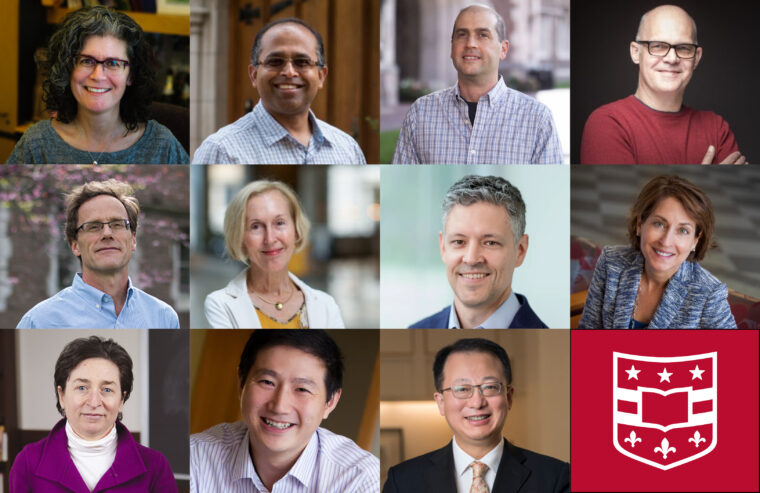
Eleven WashU faculty members are among the nearly 500 new fellows selected by the American Association for the Advancement of Science (AAAS), one of the most distinct honors in the scientific community.
AAAS is the world’s largest general scientific society and publisher of the Science family of journals. New fellows will be celebrated at a forum May 29 in Washington, D.C.
The 2025 WashU members are:
Yixin Chen
Chen, PhD, a professor of computer science at WashU McKelvey Engineering, focuses his research on artificial intelligence (AI), machine learning, data mining, foundation models, AI for scientific discovery and computational biomedicine. He is the director of the Collaborative Human-AI Learning and Operation (HALO) Center, which advances principles and methods for productive human-AI collaboration, including fairness, trust, awareness, privacy and situational sensitivity in human-AI interaction. Chen is also a fellow of the Association for the Advancement of Artificial Intelligence and the Institute of Electrical and Electronics Engineers (IEEE).
Ram Dixit
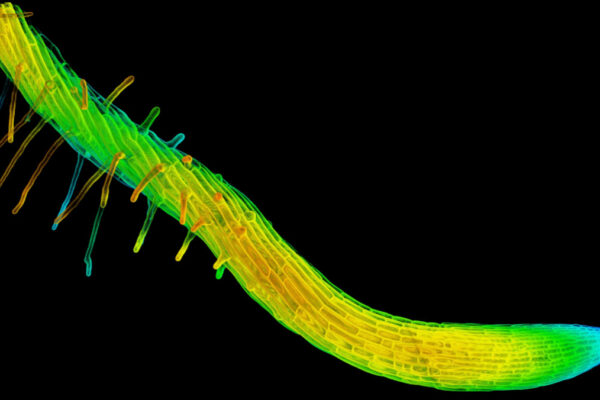
Dixit, PhD, is chair of the WashU Department of Biology and the George and Charmaine Mallinckrodt Professor in Arts & Sciences. He researches how microtubules dynamically become patterned into specific arrays and how these arrays guide cell wall deposition to control the shape of plants and their cellular functions. His lab is also working to uncover how plant cells decode diverse mechanical stimuli and the complex interplay between mechanical and biochemical stimuli underlying plant growth and development.
David Fike
Fike, PhD, chair of earth, environmental, and planetary sciences, is the Glassberg/Greensfelder Distinguished University Professor in Art & Sciences. Fike uses geochemical analyses to investigate the links between biological activity, geological processes and ambient environmental conditions today and to reconstruct how they have varied over Earth’s history. His research focuses on the occurrence of past ice ages and the rise of atmospheric oxygen and its relationship to animal evolution and mass extinctions.
Andreas Herrlich
Herrlich, MD, PhD, a professor of medicine, of cell biology and of physiology in the Division of Nephrology at WashU Medicine, focuses on cellular and molecular mechanisms involved in kidney injury, repair and fibrosis, and in interorgan communication in the kidney-lung, kidney-heart and kidney-brain axis. Using advanced in vivo and in vitro models and bioinformatics, Herrlich’s work aims to develop therapeutic strategies to prevent kidney injury and its secondary organ complications, such as remote lung inflammation with respiratory failure, cardiovascular disease and neurocognitive dysfunction.
Petra Levin
Levin, PhD, the George William and Irene Koechig Freiberg Professor of Biology, is also associate chair of faculty research and development in Art & Sciences. Her research investigates the impact of the environment on bacterial growth, cell size and metabolic signaling. Her group is particularly interested in how changes in pH and nutrient availability relevant to human infection sites affect antibiotic sensitivity in bacterial pathogens, including Escherichia coli and Klebsiella pneumoniae.
John E. McCarthy
McCarthy, PhD, a professor of mathematics in Art & Sciences, is a big proponent of pure mathematics and the useful applications that can emerge from that discipline. He primarily works in operator theory, the study of matrices in infinite dimensional space, and analysis, mathematics that decompose complicated signals into simpler pieces. Applications range from quantum mechanics to improvements in ultrasound and MRI sensing. He collaborates widely across WashU developing mathematical models with other scientists.
Karen O’Malley
O’Malley, PhD, a professor of neuroscience at WashU Medicine, studies how chemical signals critical for brain development and intellectual disabilities control biological signaling and behaviors that contribute to these processes. Her lab has shown that receptors for chemical signals that control neurons involved in learning and memory are not just on the cell surface, but also on intracellular membranes including the nucleus. O’Malley’s lab is working to better understand how signaling from inside the cell initiates unique signaling cascades that play dynamic roles in development and learning.
David Pagliarini
Pagliarini, PhD, is a BJC Investigator and the Hugo F. and Ina C. Urbauer Professor in cell biology and physiology, biochemistry and molecular biophysics, and genetics, all at WashU Medicine. He studies mitochondria, cellular structures that produce much of the body’s energy, to better understand the biochemical basis of mitochondrial disorders. These conditions affect one in 5,000 people and can impair neurological function, muscle strength, vision and other body functions. Pagliarini was named a Howard Hughes Medical Institute Investigator in 2024.
Lori Setton
Setton, PhD, chair and the Lucy & Stanley Lopata Distinguished Professor of Biomedical Engineering at McKelvey Engineering, focuses her research on the role of mechanical factors in the degeneration and repair of soft tissues of the musculoskeletal system and on engineering and evaluating novel materials for tissue regeneration and drug delivery to treat musculoskeletal disease. She is a fellow of the Biomedical Engineering Society, of the American Society of Mechanical Engineers and of the American Institute of Biological and Medical Engineering.
Corinna Treitel
Treitel, PhD, the William Eliot Smith Endowed Professor and chair of history in Arts & Sciences, was recognized by AAAS for distinguished contributions to the history of science and medicine. Treitel has written about occultism and disenchantment, the rise of “natural eating” and its adoption by radically divergent political cultures, and the making of modern health consciousness. Treitel often engages in collaborative and transdisciplinary work. In 2015, she co-founded WashU’s medical humanities minor in Arts & Sciences. Today, she co-leads an international group of health humanities scholars.
Joshua Yuan
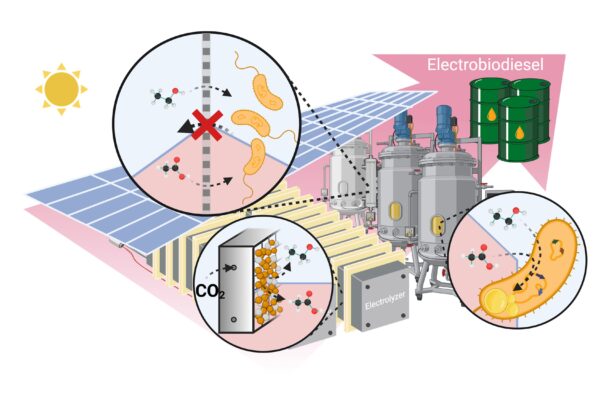
Yuan, PhD, chair and the Lucy & Stanley Lopata Professor of energy, environmental and chemical engineering at McKelvey Engineering, focuses his research on broad sustainability challenges and natural resources engineering; on designing biorefinery and biomaterials from renewable resources; and on environmental remediation, carbon capture and utilization, and synthetic and systems biology. He also is director of the National Science Foundation-funded Carbon Utilization Redesign for Biomanufacturing Engineering Research Center. Yuan also is a fellow of the Royal Society of Chemistry.