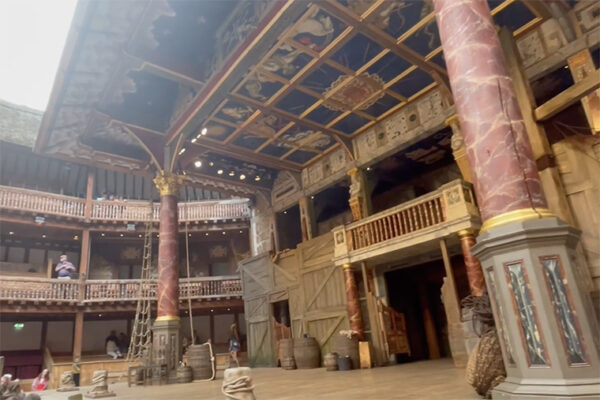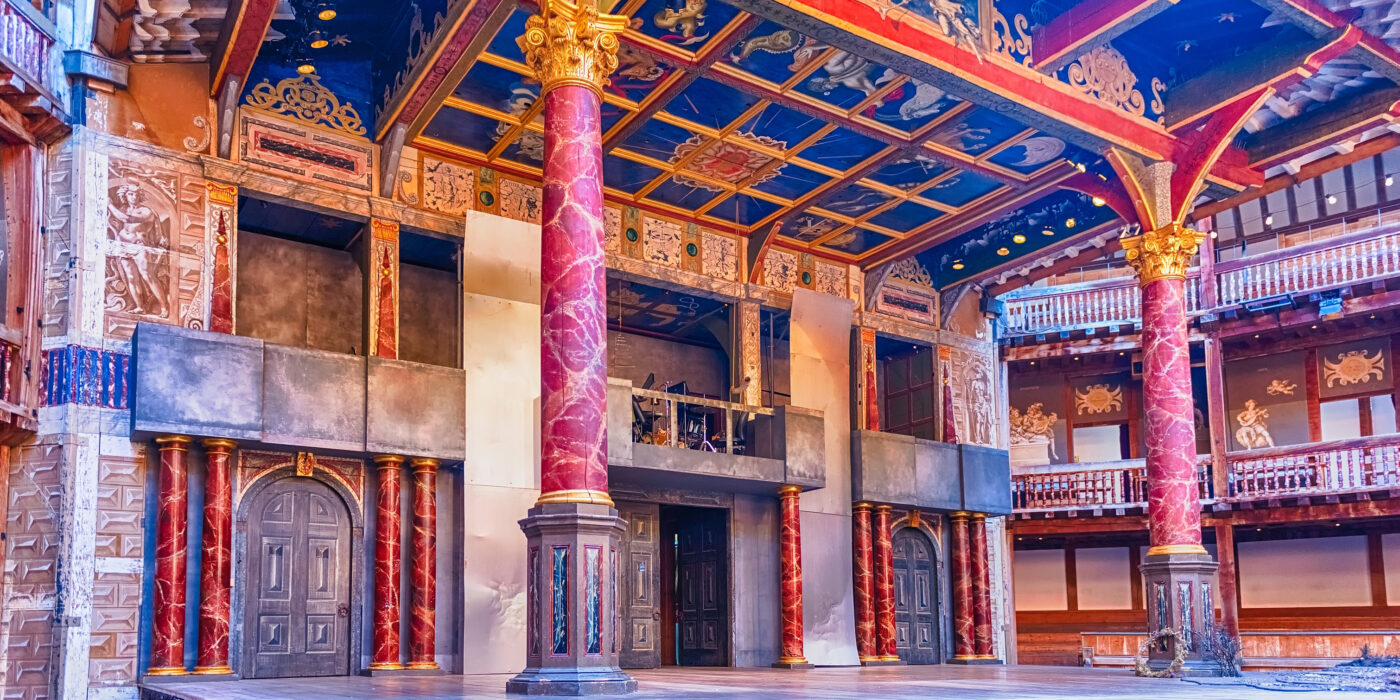
Lesley Malin, AB ’88, and Scott Helm, BSBA ’87, of Baltimore, have made a $1.35 million gift to support WashU’s annual summer theater program at Shakespeare’s Globe Theatre in London, which is hosted by the Performing Arts Department (PAD) in Arts & Sciences.
The gift creates an endowed fund to assist participating students with financial need, including providing resources for tuition and program fees, as well as for airfare, meals and other expenses. The couple also made an additional gift of $60,000 to bolster the summer 2026 iteration.
“Shakespeare was perhaps the greatest humanist of all time,” said Malin, a founder and producing executive director of The Chesapeake Shakespeare Company, Maryland’s leading proponent of classic theater. “If you’re interested in understanding humanity, if you’re interested in becoming an empathetic person, there is no better way than to step into the shoes of the vast array of characters that Shakespeare created.”
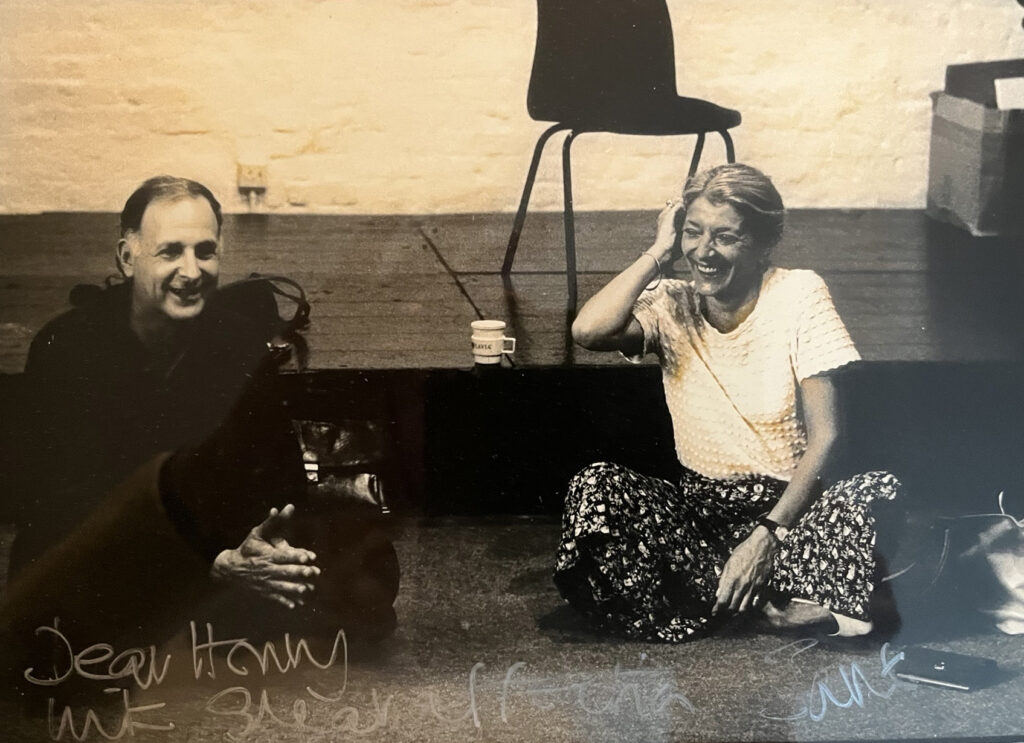
The program will be renamed the Schvey-Spottiswoode Shakespeare’s Globe Program. The naming honors Henry Schvey, a professor emeritus and former chair of the PAD; and Patrick Spottiswoode, founder and retired director of Globe Education at Shakespeare’s Globe and a former visiting professor at WashU. Together, they founded the first-of-its-kind study-abroad opportunity in the early 1990s — even as the modern Globe building was still under construction.
“Lesley and Scott are great believers in the liberal arts,” said Julia Walker, chair of the PAD and a professor of English in Arts & Sciences. “They deeply value the role of the arts and humanities in undergraduate education. They understand that theater, at its most basic level, is about the diversity and complexity of the human experience. We are immensely grateful for this generous gift that will provide permanent support for students eager to engage with Shakespeare’s works.”
Helm, who earned a bachelor’s in 1987 from Olin Business School, chairs the retail electricity and power generation company Vistra Corp. He said that as students, both he and Malin were powerfully influenced by their own study-abroad experiences.
“It was really transformational,” Helm said. “I came back with a much greater level of self-confidence and understanding. So this was an opportunity not only to support Shakespeare, about which Lesley is so passionate, but to combine that support with a meaningful study-abroad program for WashU students.”
From Edison to the Globe
Malin and Helm met at WashU in the mid-1980s. “Scott was in the business school,” Malin said. “I was in English and performing arts. So we both stayed true to the paths we forged in college.”
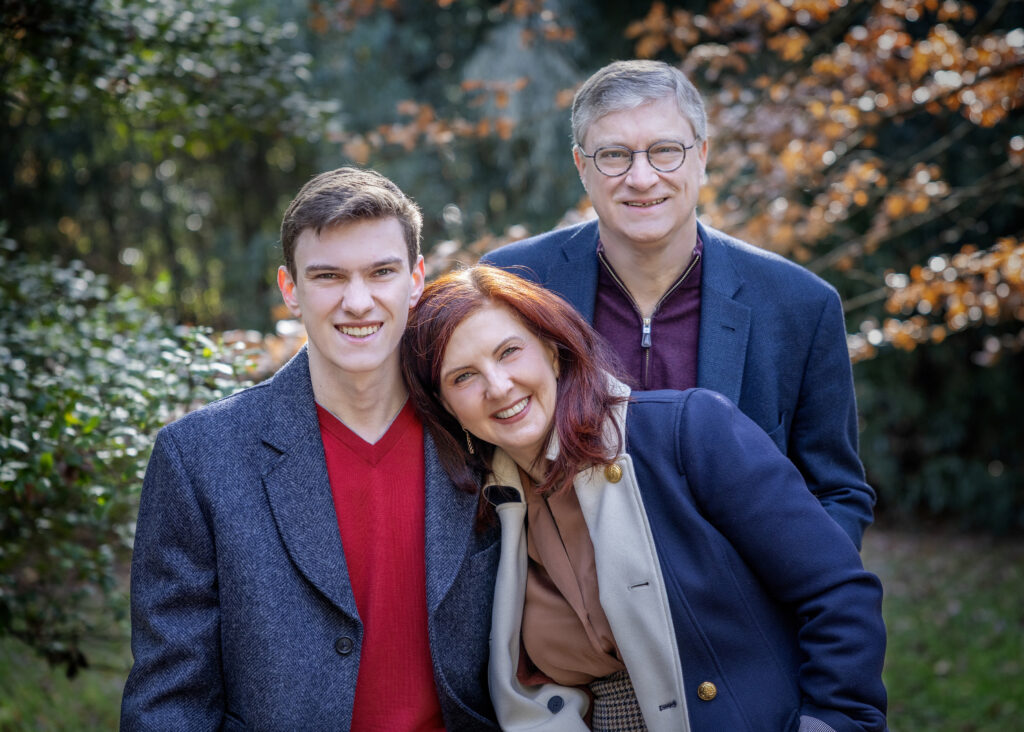
Malin graduated from Arts & Sciences in 1988, delivering the undergraduate address. She and Helm married that fall. Their child, Addison Malin Helm, graduated from WashU Olin in 2022.
Schvey joined the WashU faculty in 1987. Though Malin never took a class with him, Schvey directed her as Hester Solomon in a campus production of Peter Shaffer’s “Equus.” That production turned out to be the first domino in a series of events that would culminate in the founding of WashU’s Shakespeare summer program.
Schvey had invited Shaffer to attend the show’s opening and deliver a lecture. Also attending was Sir Oliver Wright, a former British ambassador to the U.S. and an admirer of Shaffer’s work. Wright was so impressed by the show that he introduced Schvey to actor and director Sam Wanamaker, then leading the campaign to rebuild the Globe, and to Spottiswoode, who was soon to launch the Globe Education program.
In December 1989, Schvey flew to London, toured the Globe’s historic site and met with Wanamaker and Spottiswoode. The three reached an agreement and WashU became the first American university to establish an annual summer program with Globe Education — eight years before Queen Elizabeth officially opened the building.
“People who see the Globe today assume that completion was inevitable,” Schvey said. “But in the late 1980s and early 1990s, it was anything but. It was hard to raise the money. Sam was obliged to build in increments. For several years, the theater stood as an oddly incomplete fragment on the South Bank — a series of bays that eventually formed the Globe’s familiar, circular structure.”
Accessible and exciting
The original Globe opened in 1599, on the south bank of the River Thames. It was constructed by the Lord Chamberlain’s Men, Shakespeare’s own company, and saw productions of “As You Like It,” “Hamlet,” “Othello” and many others. But in 1613, a fire broke out during a performance of “Henry VIII,” and the structure was lost. The second Globe opened the following year but staged its last performance in 1642 and was pulled down in 1644.
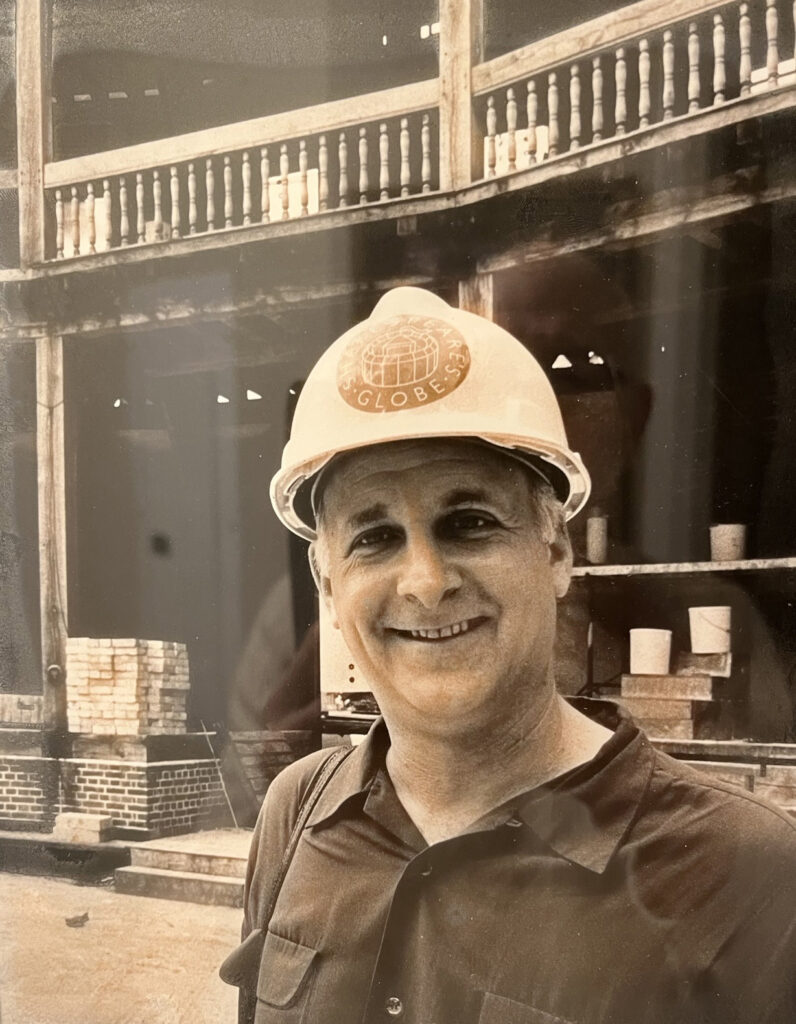
Three centuries later, when Wanamaker began planning the third iteration, the only indication of the site’s illustrious history was a small plaque at a neighboring brewery.
For the first few summers, Schvey and students studied and performed in an old coffee factory, but students also were immersed in London’s rich theatrical culture.
In 1993, the late Tony Award-winning actress Jane Lapotaire, a Royal Shakespeare Company veteran, joined the WashU summer faculty. Spottiswoode, conversely, became a regular visitor to the Danforth Campus — delivering lectures, advising on productions and once serving as a visiting associate professor.
“I was astonished not only by Patrick’s love of Shakespeare, but by his genius for making Shakespeare come alive for young people,” Schvey recalled. “He had a gift. He made the plays feel real, accessible and exciting.”
The right time
“Since its founding, WashU’s Shakespeare summer program has been enormously successful, both pedagogically and in terms of the student experience,” Walker said. But it also faced challenges, she explained. Applications for financial aid rose sharply in the years following the Great Recession of 2007-08 and again following the COVID-19 pandemic.
In 2023, the Shakespeare summer program regained momentum when it became linked to WashU’s Ampersand Programs, a series of interdisciplinary and experiential opportunities for first-year students. Those who completed “All the World’s a Stage,” a two-semester exploration of Shakespeare’s language, historical context and performance practices, could then apply to study at the Globe. But participation costs remained a concern. The Globe program was paused for summer 2025 and, absent additional funding, looked like it might be paused again in 2026.
When Malin spotted that news, in Walker’s annual letter to PAD alumni, she knew she had to act. “Scott and I thought, ‘we can make a gift,’” Malin remembered. In a matter of weeks, “the program was saved. That was exciting.
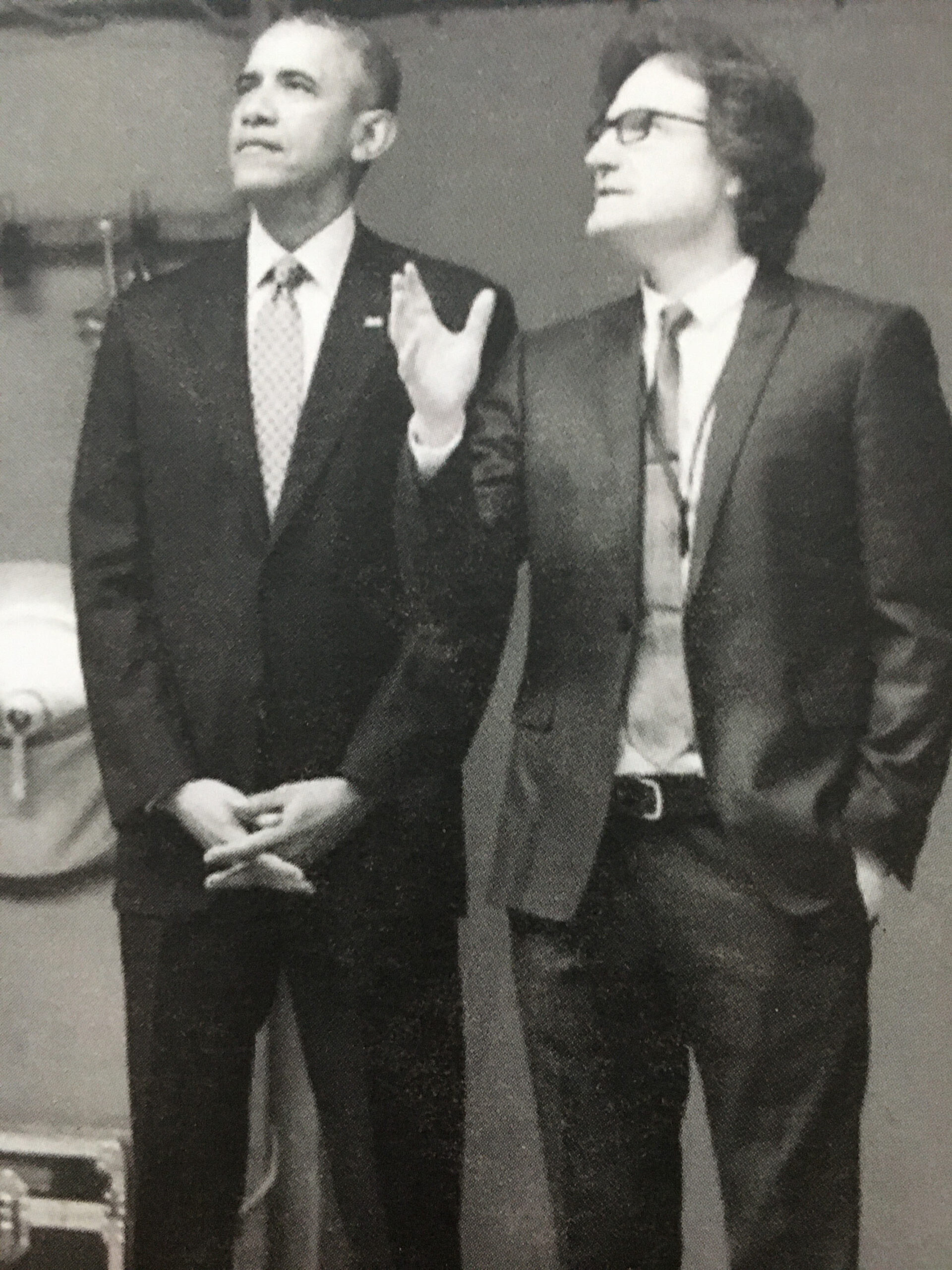
“I would have loved to have done this program as an undergraduate,” Malin added. “Spending weeks concentrating on nothing but Shakespeare in performance — it’s any actor’s dream. And the Globe is just such a remarkable space. It changes how the plays are perceived.”
The program carries additional significance because of the couple’s lifelong relationships with its founders. Malin has remained in touch with Schvey. She also met and worked with Spottiswoode through the Shakespeare Theatre Association, of which both the Globe and Malin’s company are members. (Spottiswoode stepped down as Globe Education director in 2020.)
Endowing the Schvey-Spottiswoode program “fits so squarely with Lesley’s life’s work,” Helm said. “It’s an important contribution to her field.
“The goal is to make sure that everyone, whether they’re a first-generation college student or come from a family with means, has the same opportunity,” Helm concluded. “We want any WashU student who sees the value and wants to attend to be able to make it work.”