
In the United States and around the world, public health is under enormous strain. Entire divisions at the Centers for Disease Control and Prevention have been dismantled; the U.S. Agency for International Development (USAID) has been shuttered; science funding through the National Institutes of Health has been slashed and thousands of public health jobs cut. As preventable crises mount — from hunger and chronic disease to health misinformation — the systems meant to protect lives are faltering.
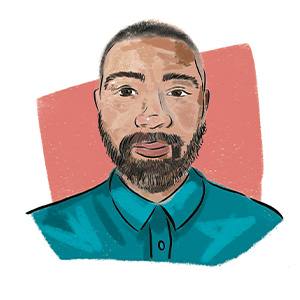
For Elvin H. Geng, MD, a global HIV expert, the consequences are personal. “For me and many colleagues, this has been one of the most difficult times of our professional lives,” says Geng, professor of medicine in the Division of Infectious Diseases at WashU Medicine. “Programs built over decades were dismantled overnight — sometimes reinstated, then dismantled again. Thousands worldwide have had HIV treatment interrupted.”
Enter dissemination and implementation (D&I) science, a field of academic study uniquely equipped to meet the moment. Behind its academic name and 11 poetic syllables lies one of the most practical, high-stakes sciences in the world.
Dissemination science shares evidence-based practices with those positioned to act — clinicians, community leaders and policymakers. Implementation science embeds those practices in real-world settings such as health systems, schools and community organizations. The two disciplines, often collectively referred to as implementation science, ensure that what works in theory works in practice, measuring impact not just by journal articles or grants, but by improved lives.

Managing HIV
In 2004, fewer than 10% of people living with HIV were virally suppressed; today, two-thirds are. These patients take medication that leads to a very low, often undetectable amount of HIV in their blood — along with healthier lives and a greatly reduced risk of transmission. Elvin Geng, MD, professor of medicine and of public health, credits that progress not only to once-daily, low-toxicity pills but also to implementation strategies that made treatment culturally acceptable, scalable and sustainable. Many global gains, he notes, stem from real-world approaches, such as health fairs, media campaigns and partnerships with religious leaders.
“This is a moment for implementation researchers to step up to the plate,” Geng says. “It’s always been vital, but with public health facing unprecedented disruption, we need bold new strategies to respond.”
Even before these crises, a deeper challenge persisted: the gap between what science discovers and what health systems deliver. The U.S. invests over $40 billion in health research annually, yet an often-cited 2011 study found that only 14% of findings enter routine practice — a process that can take up to 17 years.
Barriers abound: funding that ends with clinical trials; findings locked in journals; overstretched health systems; cultural mismatches; policy inertia; and limited awareness, to name a few. In underfunded communities and conflict zones, the divide between knowledge and care can be dangerously wide.
To close that gap, implementation science emerged in the late 20th century — exploring how to bring evidence-based interventions into a complex, imperfect world. It asks: What helps frontline teams adopt new practices? How must interventions be adapted to different settings? What training, workflow or policy changes make them stick?
The field blends scientific rigor with urgency — and WashU has helped to shape it from the start.
A mental health imperative
For Enola K. Proctor, implementation science captures the heart of why she
entered social work.
“I was a mental health practitioner working with families of severely emotionally disturbed kids, and we didn’t know how to help them,” says Proctor, a research professor and the Shanti K. Khinduka Distinguished Professor Emerita at the Brown School. “A wonderful supervisor told me, ‘Go find your clients in the library.’ So we searched for research we could apply.”
That search became her life’s work: getting evidence out of journals and into practice to improve care.
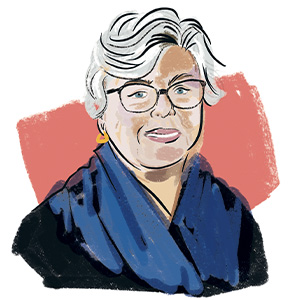
Enola Proctor, the Shanti K. Khinduka Distinguished Professor Emerita, is one of the pioneers of dissemination and implementation. Long before it was a recognized discipline, she was searching for ways to get evidence into practice to improve care.
For 15 years, Proctor led a National Institute of Mental Health (NIMH)-funded center at the Brown School to improve mental health care delivery. Long before implementation science was a recognized discipline, she already was doing the work. “There were effective mental health treatments,” she says, “but only about 10% of people were receiving high-quality, evidence-based care — and I was alarmed by that.”
In the early 2000s, implementation science was still in its infancy, with no formal training or practical guidance to support the field. Proctor connected with David A. Chambers, then newly tasked with developing implementation science at the National Institutes of Health (NIH). “I reached out to him, and we agreed ‘the field needs more people, stronger methods and a real literature base,’” Proctor says. “So we went to work on this.”
At the same time, chronic disease prevention expert Ross C. Brownson was at nearby Saint Louis University reaching similar conclusions.
“My first eight years after graduate school were spent in a state health department,” says Brownson, now the Steven H. and Susan U. Lipstein Distinguished Professor in the School of Public Health. “You’re supposed to be conducting evidence-based public health, things that already work. Or if you try something new, you need to evaluate it.
“Evidence-based public health often isn’t implemented well. For many proven strategies — like those that reduce smoking — we know what works, but we’re not doing it.”

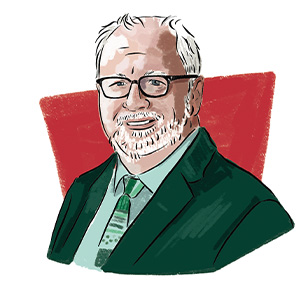
Ross Brownson, the Steven H. and Susan U. Lipstein Distinguished Professor, spent the early years of his career in a state health department, where he learned firsthand the value of evidence-based strategies in disease prevention.
A collaborative catalyst
In 2008, Brownson and fellow public health researchers Debra Haire-Joshu, Douglas A. Luke, Matthew W. Kreuter and Timothy D. McBride all arrived at WashU, bringing expertise in chronic disease prevention, systems science, health policy and health communication. The researchers built long-term careers at the university and hold a string of named professorships in the School of Public Health: Haire-Joshu, the Joyce and Chauncy Buchheit Professor; Luke, the Distinguished Professor in Public Health Systems Science; Kreuter, the Kahn Family Professor; and McBride, the Bernard Becker Professor.
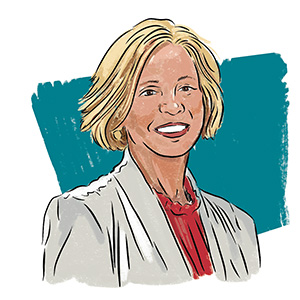

At the time of their hiring, the five researchers joined the Brown School faculty. That merger of social work and public health created what Brownson calls “a magic elixir,” enabling interdisciplinary problem-solving.
Brownson, Proctor and Luke began meeting to expand the still-nascent field. Those talks evolved into the WashU Network for Dissemination and Implementation Research (WUNDIR). “It was grassroots from the beginning,” Proctor says. “People wanted space to learn from each other.”
Today, that informal lunch-and-learn has become a campuswide hub linking students, staff and faculty across disciplines. Its sessions combine skill-building, peer feedback and mock grant reviews, supporting trainees through senior faculty. An internal evaluation found the network boosted funding success and inspired similar models nationwide.

Helping mind and body
People with serious mental illness face a much higher risk of preventable cardiovascular disease and early death. Leopoldo J. Cabassa, professor of social work in the Brown School, is using implementation science to close this gap for marginalized groups. Partnering with communities, he adapts and delivers evidence-based interventions — integrating cardiovascular screening into mental health clinics and developing supports for young adults with first-episode psychosis. His book, Addressing Health Inequities in People With Serious Mental Illness, distills these strategies into actionable guidance.
Momentum continued as Proctor and colleagues advanced implementation science beyond social work and public health. Among its earliest champions was William “Bill” G. Powderly, MD, the Dr. J. William Campbell Professor of Medicine, whose leadership of the Institute for Public Health (IPH) and the Institute for Clinical and Translational Sciences (ICTS) helped cement the university’s reputation in implementation science. “Bill recognized its value from his vantage point in infectious disease and HIV care,” Proctor says. “There was no stronger supporter.”
With pilot funding from ICTS, Proctor began mentoring medical faculty and shaping proposals grounded in implementation science. “WashU is a premier site of basic and clinical research,” she says. “It was clear we also should lead in the science of implementing high-quality care. We can’t fully benefit from our investment in new treatments unless we invest in implementation science with the same urgency.”
Over time, the researchers realized they weren’t just influencing the field — they were building it. “It seemed like a field needed a textbook,” Brownson says. In 2012, he, Proctor and Graham A. Colditz, MD, DrPH, the Niess-Gain Professor of Surgery and director of the Public Health Sciences Division in the WashU Medicine Department of Surgery, co-edited what became the field’s definitive guide, Dissemination and Implementation Research in Health: Translating Science to Practice.
Now in its third edition, the 700-page volume codified core frameworks, methods and priorities — and helped establish WashU as a global leader in the field. “Many amazing colleagues at WashU contributed chapters,” Brownson says, “alongside other top scholars around the world.”
A national model takes shape
WashU has built an institutional ecosystem to match its ambition. A cornerstone is the Prevention Research Center (PRC), founded by Brownson in 1994 and relocated in 2008 to WashU, where it became a national leader in translating chronic disease prevention into policy and practice with public health departments and community partners.
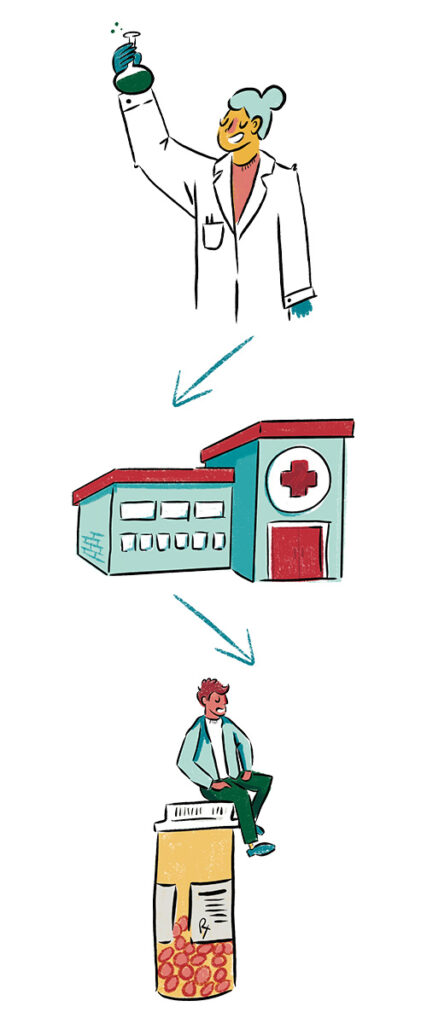
To deepen its impact, WashU added infrastructure to support D&I research across disciplines. A key milestone was the Dissemination and Implementation Research Core (DIRC), housed within WashU’s ICTS — among the first of its kind and now a national model. DIRC provides one-on-one consultations to help investigators refine study designs, strengthen grant proposals and apply evidence-based methods, along with toolkits spanning introductory D&I frameworks to advanced evaluation.
“That’s a group where WashU D&I scientists are essentially on call,” Brownson says. “If someone comes in and says, ‘I’ve got a grant idea’ or ‘I need help figuring out the aims or the study design,’ DIRC helps shape that work to be more implementation-focused.”
In 2019, the new Center for Dissemination & Implementation (CDI) further strengthened WashU’s capacity to move research into practice, offering pilot funding, training and technical assistance to health systems and community organizations. That same year, WashU became one of the first U.S. universities to offer a PhD-concentration in dissemination and implementation science.
Much of this infrastructure was built under Proctor, who directed both the DIRC and the CDI. Geng now holds both roles. “He’s raised its visibility on the Medical Campus,” Brownson says, a key step given the amount of research funding that flows through WashU Medicine.
Now, more than a dozen centers and 50 investigators are engaged in D&I research, Brownson estimates. WashU ranks among the top institutions nationwide in NIH funding for implementation science — a reflection of its collaborative model and breadth of talent, from early-career scholars to senior leaders and staff. What makes it successful, he adds, is “the people, the support and the culture. The whole is bigger than the sum of its parts.”
That breadth reflects what Brownson calls a “big tent” approach. Even faculty who don’t identify as implementation scientists, such as health economist and policy scholar Timothy McBride, advance practices that shape real-world decisions. For decades, McBride has analyzed Medicaid and Medicare policy changes, communicating their impact to the public and policymakers. “Whether or not people call it implementation science,” Brownson says, “if they’re helping put what works into practice, they’re part of this movement.”
Collaboration is central to that effort. WashU researchers partner with hundreds of organizations — public health departments, community groups, health systems and policy networks — across the nation and around the world to translate evidence into practice. “Implementation science doesn’t happen
within university walls,” Brownson says.
“It happens outside.”
Turning evidence into action
Infrastructure alone doesn’t guarantee change. Even with funding and proven methods, putting evidence into action runs up against entrenched routines, fragmented systems and limited capacity. What works on paper doesn’t always translate to clinics, communities or policy.
Delivering evidence-based care, Proctor says, isn’t just about knowing the latest research. It’s about transforming how systems function. Implementation means putting new programs into practice in the real world, and that transformation is rarely simple.
“Systems science recognizes that the world is messy. Any new practice or policy enters a system — a hospital, neighborhood or state — where people, businesses, laws and cultures all interact in unpredictable ways.”
Douglas A. Luke
“Systems science recognizes that the world is messy,” Luke says. “Any new practice or policy enters a system — a hospital, neighborhood or state — where people, businesses, laws and cultures all interact in unpredictable ways.”
Successful implementation demands change at every level, from patients and providers to organizations and systems. “Most people in helping professions want to deliver the best care,” Proctor says. “But changing routines, adopting new innovations is hard, even for the best organizations.”
Implementation scientists study strategies to support that process, such as training, workflow redesign, clinical prompts and audit-and-feedback systems, all tailored to the realities of each setting. They assess whether proven practices are adopted, accepted, affordable and sustainable.
One example is integrating mental health services into primary care. “For decades, those systems were separate,” Proctor says. “Physicians had little training in mental health, and mental health providers weren’t equipped to manage physical conditions even though psychiatric medications can significantly affect the body.”
Today, many medical patients complete anxiety or depression screeners during intake, often on tablets while waiting. “That’s the result of an implementation process,” she says. “Clerical staff are involved, scoring systems guide clinicians, and workflows ensure referrals when needed.”
Some practices even embed mental health professionals in primary care, though reimbursement challenges remain. “Most of us have experienced the early stages of integrated care,” she says, “and the data on these tools is excellent.”
Implementation scientists also remove barriers to care by tackling the social and economic challenges that keep patients from following through on treatment. Unstable housing, food insecurity and other daily pressures can make it nearly impossible to maintain health behaviors, says Maura Kepper, assistant professor of public health.
“When people are burdened by daily needs, preventive care isn’t a priority,” Kepper says. “They’re focused on finding food, paying utilities and getting through the day.” Without support, patients often delay treatment or skip follow-up visits, so it’s important to point toward community assistance programs.
These barriers fall hardest on communities already facing insufficient care. “Even within a single part of a state — take Missouri’s Bootheel — the quality of care is not the same as in urban areas,” Proctor says. “The challenge is ensuring high-quality care reaches everyone.”
Unlearning what doesn’t work
Implementation science also studies how to phase out practices that are outdated or harmful, a process called de-implementation.
“We used to hand out antibiotics for every cough,” Proctor says. “Now, unless there’s a confirmed bacterial infection, you’re not getting one, and that’s a good thing. Overuse has made antibiotics less effective.” Still, she adds, change hasn’t come easily. “Patients want relief, and doctors have to explain why the best care sometimes means not prescribing something.”
A similar shift occurred with opioids. In response to the addiction crisis, health systems introduced safer prescribing guidelines, non-opioid alternatives and audit tools to flag overuse. “Physicians were on the front lines,” Proctor says, “but implementation science helped determine how to reduce availability safely.”
One of the most effective strategies is provider audit and feedback — reviewing prescription patterns, identifying outliers and comparing to peer benchmarks. “If you’re prescribing far more opioids than your colleagues, your records will get flagged,” Proctor says. “The goal isn’t to punish. It’s to support providers in delivering better care.
“There is no single strategy that changes health care,” she adds. “It’s more like a playbook.”
Enola K. Proctor
“There is no single strategy that changes health care,” she adds. “It’s more like a playbook.”
Adapting to fit the context
The best strategies fit their environment. “Context is everything,” Proctor says. “A strategy is like a puzzle piece. It only works if it fits the setting. That means engaging the people who will actually use it.”
She saw this clearly during the COVID-19 pandemic. Rapid rollout mattered but so did trust and clear communication. “If people don’t see it as acceptable, it won’t happen,” Proctor says.
The mRNA vaccine platform, for example, wasn’t rushed — it was decades in the making — but what failed was communication. “We didn’t explain that well enough,” she says. “When guidance shifted, many saw it as failure rather than science in action.”

Giving every child a chance
In many countries, childhood cancer survival depends less on diagnosis than on whether hospitals can deliver evidence-based care with available resources. Sara Malone and Maura Kepper, assistant professors of public health, co-lead the ARIA project with colleagues at St. Jude Global to address this challenge. ARIA, or Adapted Resource and Implementation Application, adapts treatment guidelines to local capacity. If a U.S. protocol assumes access to a CT scanner that a rural hospital lacks, ARIA offers the best evidence-based alternative. Informed by nearly 400 children’s hospitals worldwide, it keeps care high-quality, lifesaving and achievable — even in low-resource settings.
Misinformation makes that challenge even steeper. “False information spreads about three times faster than accurate information,” Brownson says. For public health agencies, that speed creates an impossible dynamic. Official messages often move too slowly through layers of approval, allowing false information to take hold.
At WashU, Matt Kreuter, co-director of the Health Communications Collaborative Innovation Research Network, and colleagues are building health knowledge and trust through iHeard, a national listening platform that detects emerging rumors and delivers ready-to-use, community-informed messages to partnering health departments and organizations before falsehoods gain traction. The effort reflects a core principle of implementation science called co-production — designing solutions with communities rather than for them.
That same idea drives another essential step: adaptation. Implementation succeeds when evidence is reshaped to work within the specific cultural, organizational or resource context, without losing effectiveness. “An intervention that’s effective in a controlled research setting has to be recalibrated for the communities that will use it,” Haire-Joshu says. “We have great science. Now, we have to shape it so it works outside the settings where it was created.”
In under-resourced areas, that might mean simplifying a program so small clinics can deliver it, training local community workers to reach neighborhoods without regular care, or reframing materials to match people’s languages or cultures. Researchers may shift an intervention from hospital or clinic settings to existing services, such as schools, churches or food programs, to make proven strategies feasible. Once a program succeeds locally, the next challenge is scale: expanding that success to reach broader populations, systems or regions.
Extending reach
For research to make a difference, it must reach people who can act on it — and in a form they can use. Dissemination is the science of that reach, translating research into accessible, actionable knowledge for those who shape policy, deliver care and influence practice. That’s the challenge, Brownson says, and academia hasn’t always rewarded it. “We’re incentivized to publish papers and get grants,” he notes.
Most policymakers don’t read scientific journals; they depend on summaries, trusted messengers and concrete examples. Done well, dissemination drives policy change — from reducing tobacco use and increasing seatbelt compliance to expanding cancer screening and boosting vaccine uptake. But evidence alone isn’t enough. It takes strategic framing, human-centered storytelling and readiness to act when policy windows open.

Reaching families
Debra Haire-Joshu saw systems failure firsthand: women in their 30s and 40s facing serious, preventable chronic disease because of limited access to nutritious food or health care. To address this, she partnered with Parents as Teachers, embedding evidence-based nutrition and diabetes prevention strategies into its national home-visiting network. Rigorous trials showed gains in maternal and child health, from reduced obesity to better prenatal outcomes, and the model scaled nationwide. Haire-Joshu and colleagues are applying the same approach to improve cardiovascular health of both mothers and their children through a national trial called ENRICH.
WashU experts are ensuring that implementation science informs not only care delivery, but also the policies and systems that sustain it. Still, promising public health interventions can stall without political will. “Sometimes the political will just isn’t there,” Brownson says.
Luke has seen this gap in his tobacco control work. “Raising tobacco taxes is one of the most effective ways to reduce smoking, especially among kids,” he says. “The science is solid. The challenge is political will, regional values and adoption.”
Missouri’s cigarette tax, just $0.17 per pack, the lowest in the nation, contrasts sharply with New York’s $5.35 per pack. There, higher taxes are a deliberate public health strategy. “Smoking remains one of the leading preventable causes of death,” Brownson says. “In states that raise taxes and reinvest the funds in prevention, smoking rates are half or even a third of ours.”
Equipping leaders for impact
Real progress depends on people who can turn evidence into action. WashU equips frontline practitioners, emerging scholars and senior investigators through D&I training at every level.
One of its longest-running and most widely adopted programs, Evidence-based Public Health, began 20 years ago and has trained more than 4,000 practitioners worldwide. That reach is crucial, Brownson notes, because about 80% of those working in public health lack formal public health training.
Offered in person and online, the 10-module course mirrors fundamentals of a public health master’s curriculum, embedding D&I principles throughout. Learners draw on data from their own communities and analyze local health challenges through case studies and exercises. WashU also leads national D&I training across mental health, substance use, cancer, diabetes and HIV. Offerings range from the “D&I bootcamp” — a one-day expert consultation to refine grant proposals — to multiyear NIH-funded programs for researchers and clinical leaders. These include the Implementation Research Institute and the HIV, Infectious Disease and Global Health Implementation Research Institute. More than 200 scholars have completed these programs.
These efforts share a common goal: developing leaders who will shape the future of D&I. Byron Powell, PhD ’14, associate professor in the Brown School and, with Geng, co-director of the Center for Dissemination & Implementation, was among WashU’s first doctoral trainees in the field. In 2015, Powell led a team to address what he calls D&I’s “Tower of Babel problem.” Their work produced a standard list of 73 implementation strategies — a reference that unified language and strengthened the field’s foundation. “He’s come full circle,” Brownson says. “We train people to raise the bar, and then they go on to build the next generation of solutions.”

Similarly, another early postdoctoral trainee, Rachel Tabak, associate professor of public health, now leads important work on theories, models and frameworks in implementation science. Her efforts guide real-world applications and approaches that integrate evidence-based practices in clinical and community settings, ensuring more efficient use of resources and improved health outcomes.
Shaping what comes next
Implementation science is positioned to play an even greater role at WashU. With the launch of the School of Public Health in 2024, it gains visibility through the Dissemination and Implementation Science Innovation Research Network (DISIRN), one of six new interdisciplinary hubs housed in the school. The DISIRN links efforts across campuses to close the gap between research and practice. It is co-directed by Brownson, Geng and Powell.
A consolidation of efforts is underway, folding the Center for Dissemination into this broader structure to create a streamlined, integrated system that amplifies D&I’s reach. “D&I connects with everything,” Brownson says. “That’s the plan — to catalyze and benefit all research.”
Proctor says she feels gratified to hear WashU described as the “center of gravity” for implementation science. “We collaborate, we cheer each other on — it’s all about helping everyone do their best work,” she says. That success stems from an intentional culture of mentorship and inclusion, supported by institutional commitment and a readinessto adapt.
In a time of agency closures, misinformation and rapid policy shifts, D&I researchers are moving quickly. They’re building trusted local networks, using evaluations to guide real-time decisions, and tailoring interventions to close disparities. The same principles that make D&I effective in a crisis make it indispensable now.
“Our science is built for this,” Proctor says.

“WashU is a premier site of basic and clinical research.”
— Enola Proctor