The Declaration of Independence is many things, said Cassie Brand, curator of rare books at WashU Libraries. Our nation’s founding document — yes. But also the model that led colonies and nations across the globe to break from imperial rule and the inspiration behind countless freedom movements. The declaration is also a physical object, one that has taken many forms throughout its history.
‘Unalienable Rights: 250 Years of the Declaration of Independence’
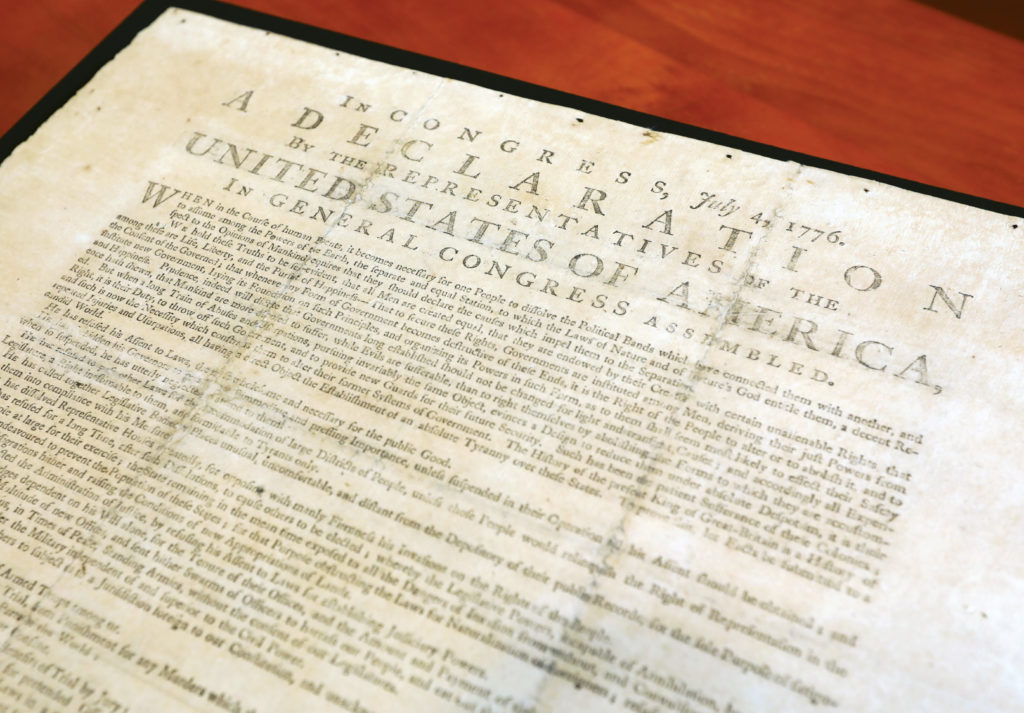
Where: WashU Olin Library
When: Through July 19
How much: Free
More info: Declaration exhibit webpage
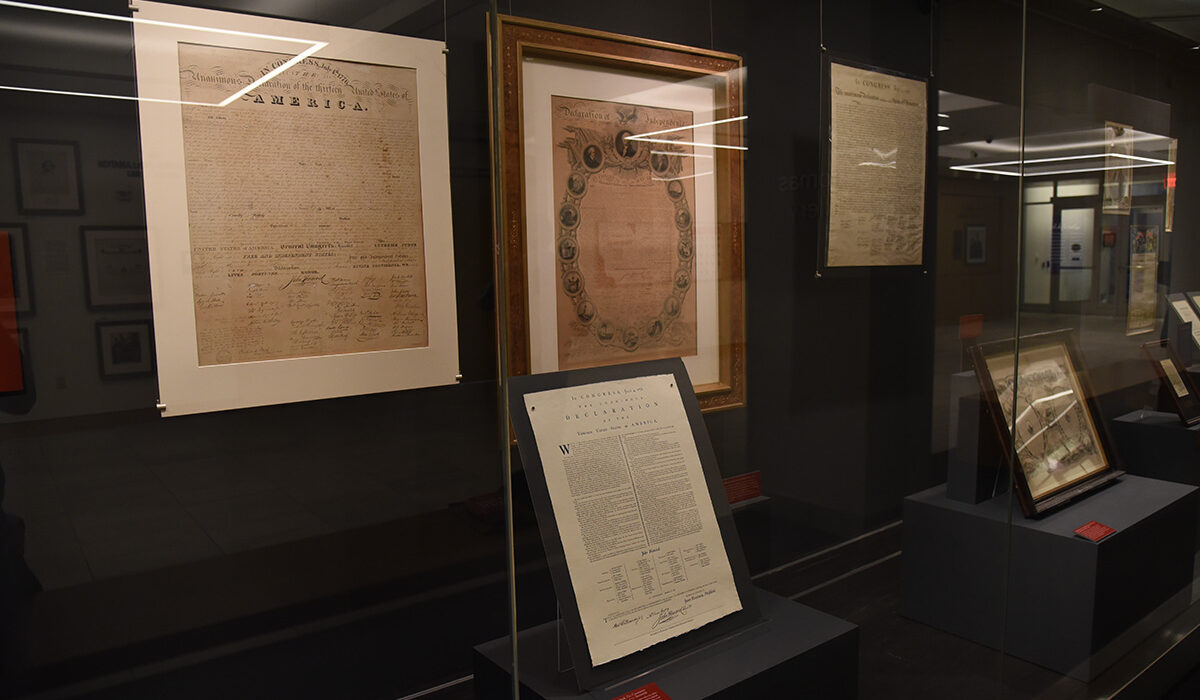
“Unalienable Rights: 250 Years of the Declaration of Independence,” a new exhibit at Olin Library at Washington University in St. Louis, explores all aspects of the declaration. Artifacts include a copy of the declaration that traveled to the moon in 1969; a copy of the first commercially produced declaration, published in 1818; and a reproduction of the 1777 Mary Katharine Goddard declaration, the first version to be printed by a woman and to include the word “unanimous” (New York had yet to vote on the document on July 4, 1776).
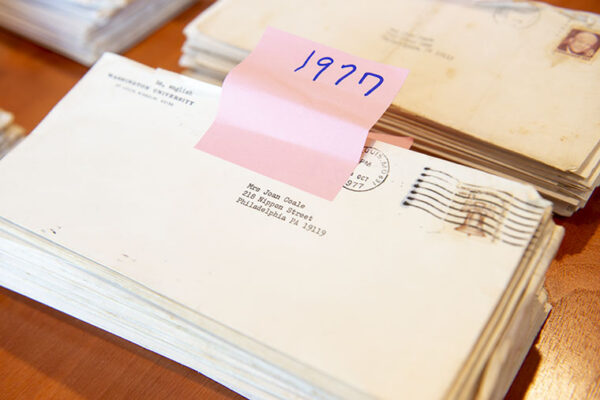
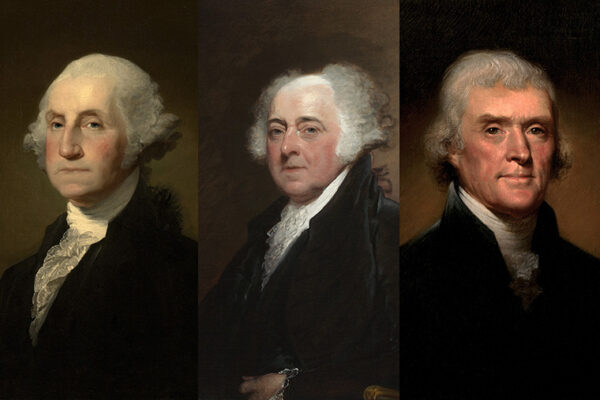
Other highlights include letters from George Washington asking for more troops, John Adams writing about the Continental Army and Benjamin Franklin bemoaning Benedict Arnold’s betrayal. The exhibit also features contemporary posters, artworks and books that question the nation’s committment to the declaration’s ideals.
“The 250th anniversary of the Declaration of Independence provides an opportunity to reflect on the values it expresses, look back at the history of our country, and consider how those values are present in contemporary culture,” Brand wrote in the exhibit’s introduction. “We often talk about the Declaration of Independence as a starting point towards an equality that we have not yet reached. And so we wanted to highlight our amazing collections around our Founding Fathers and also this idea of progress towards equality.”
The centerpiece of the exhibit is the university’s two rare broadsides of the declaration. Broadsides were copies of the declaration that were printed and posted in town squares across the colonies after the declaration’s July 4, 1776, adoption. The handwritten copy in the National Archives was not signed until Aug. 2, 1776. WashU owns one of seven remaining Solomon Southwick broadsides, which were posted in Rhode Island on July 12. The university also has on long-term loan a John Rogers broadside, which was printed in Salem, Mass., between July 14-16, 1776.
Other reprintings on display feature unique typography, illustrations and design elements.
“There’s no Twitter in 1776, so the fastest way to get information out are broadsides,” Brand said. “But the declaration soon becomes an object of celebration, something that people collect and put on the wall. You can see how different illustrative elements and symbols are used to reflect the state of the country at the time that they were printed.”
The exhibit also captures the tension between the Founding Fathers’ ideals and their actions. In one early draft, declaration author and slave owner Thomas Jefferson denounces slavery as a violation of “most sacred rights of life & liberty” – language that was ultimately stripped from the final document. Other documents include the 1813 indenture contract of an 8-year-old Indigenous girl in St. Louis and an 1850 letter from Henry Clay, champion of the Fugitive Slave Act. Meanwhile, contemporary artworks and books in the exhibit illustrate just how elusive the concepts of life, liberty and the pursuit of happiness remain today.
“The contradictions and paradoxes existed from the start,” Brand said. “But because the declaration is a living document, it has the power to inspire us to live up to its ideals.”