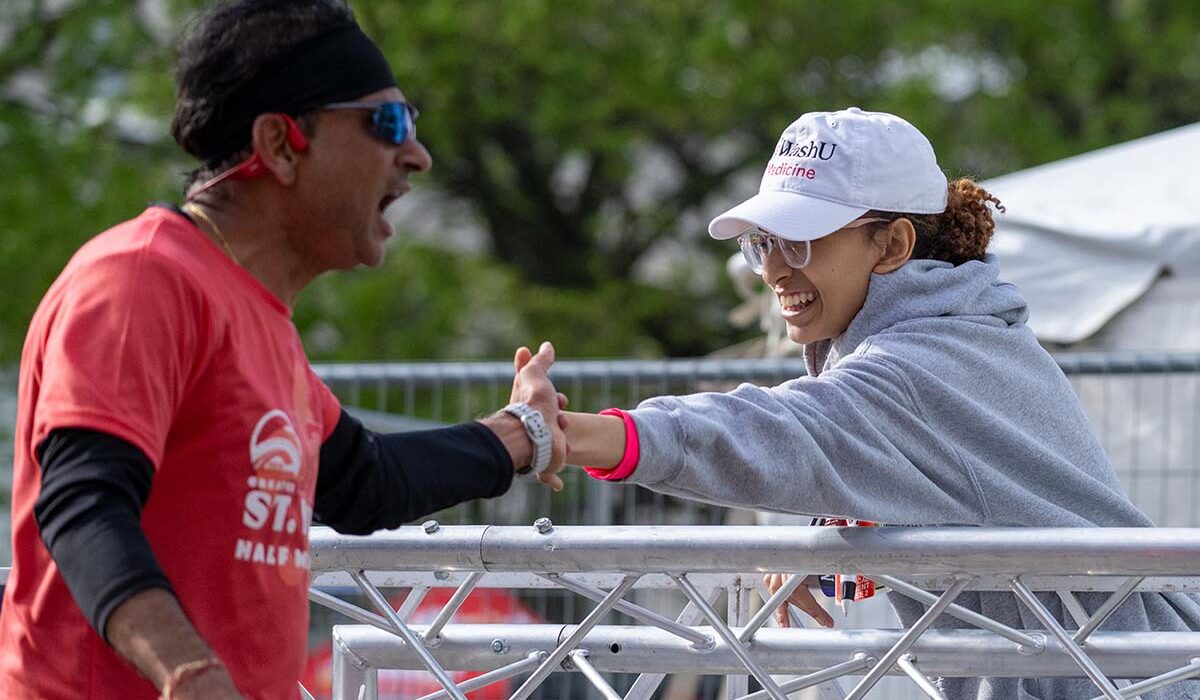
Booming music, clanging cowbells, a giant toasted ravioli and thousands of spectators lined the streets of historic downtown to cheer on athletes in the Greater St. Louis Marathon April 11.
WashU Medicine volunteers were also there, supporting runners every step of the way. WashU Medicine served as the official medical provider, joining WashU as a major race sponsor. From well before sunrise to late afternoon, 25 physicians, along with fellows, residents and medical students, stationed themselves along the route to help runners throughout the race.
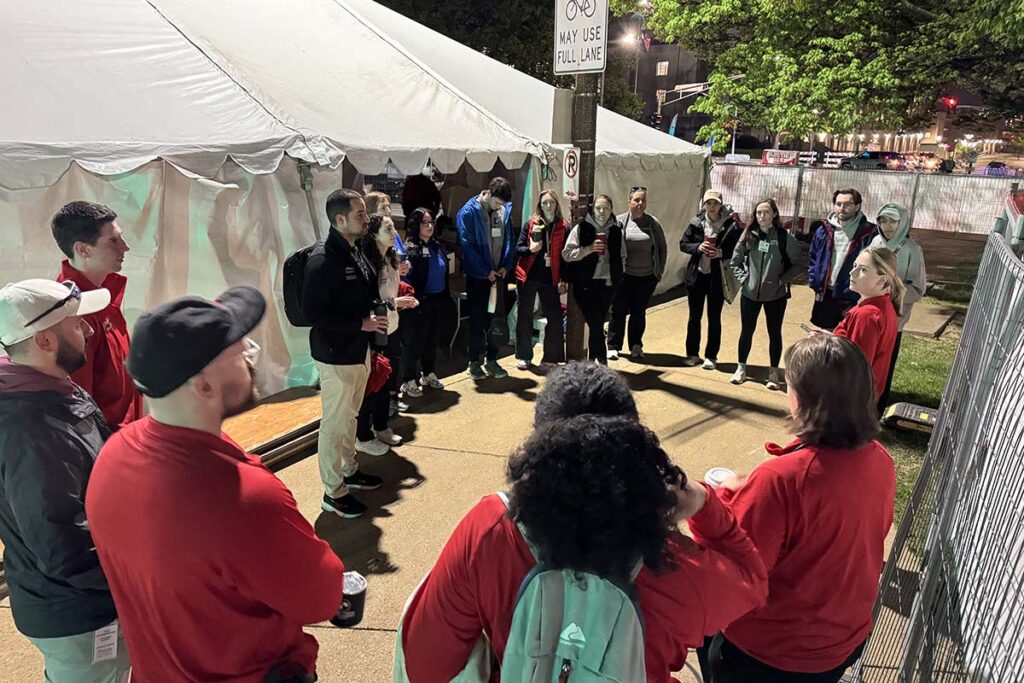
Clinicians from pediatrics, physical therapy, orthopedics, internal medicine and emergency medicine, alongside trainees, aided a total of 70 patients, including two who required ambulance transport. Although the team was ready to treat anything from serious cardiac concerns and dehydration to scraped knees and twisted ankles, the moderate temperature yielded fewer overall heat- or rain-related injuries than potentially expected.
“I’m thrilled that WashU Medicine has played a bigger role in the event this year,” said Katherine Caldwell, MD, an assistant professor of orthopedic surgery and official race day medical director. “Multiple people expressed that they were very impressed with our team and our ability to work seamlessly with the Greater St. Louis Marathon race coordinators, physical therapy and emergency medical crews.”
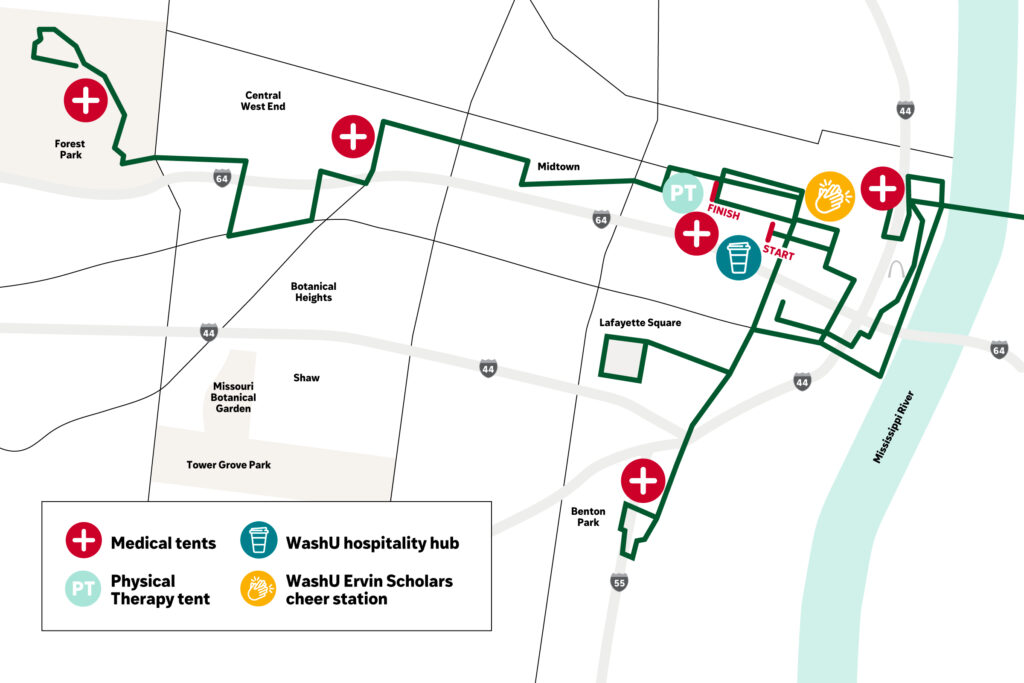
In addition to a large medical tent directly across from the finish line, four aid tents lined the 26.2-mile route, ensuring runners were never too far from expert, on-the-spot care.
“WashU and WashU Medicine are in St. Louis, for St. Louis,” Caldwell told the crowd of runners and supporters before the race began. “We are proud to be part of this community, and we’re happy to support our friends and neighbors with fun events like these, and through health care, education and economic growth that makes an impact every day.”
Community impact
In total, 10,000 participants — representing every state in the nation and several other countries — took to the streets in one of several races, including the family fun run, 5K, 10K, half marathon and full marathon.
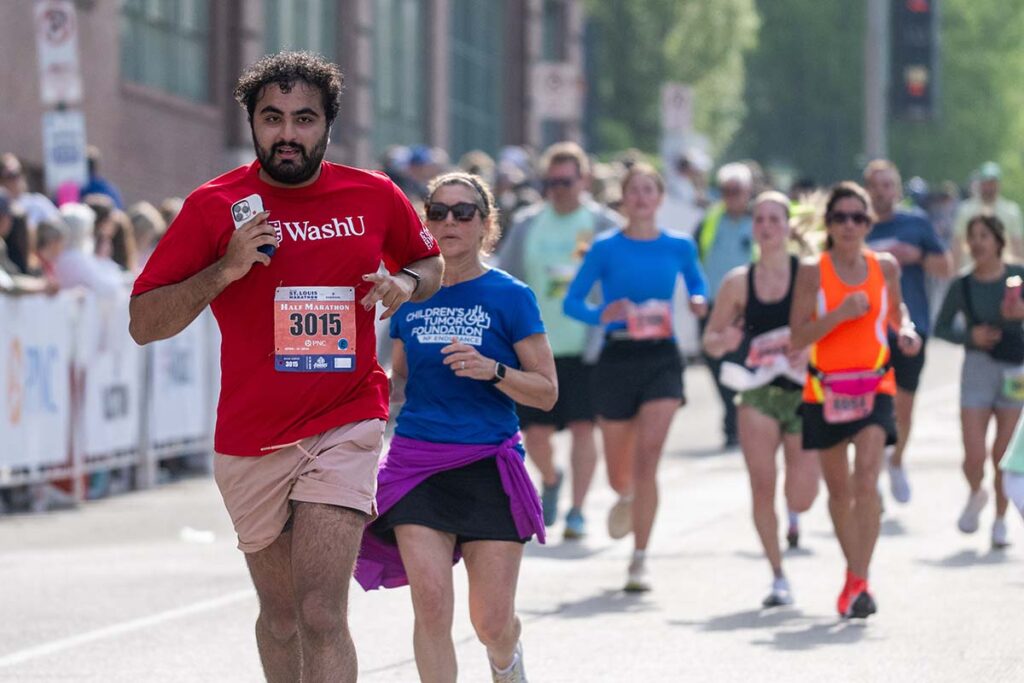
“I found it exciting to see so many people supporting fitness, promoting prevention and taking charge of their health,” said Jennifer Schmidt, MD, an associate professor of medicine who ran the half marathon this year. “Some people don’t really know about all the services we offer, so being here provides a chance to show the community that we’re accessible, friendly and ready to help them stay healthy, and not just treat them when they’re sick.”
The 80-volunteer-strong team from the WashU Medicine Program in Physical Therapy continued their three-year streak of providing a pre-race stretching session and post-race recovery. Their tent was strategically placed at the end of the finish line chute, where they served approximately 620 runners. WashU Medicine Program in Physical Therapy and Orthopedics also prepared registrants for race day with training tips, emailed to those who opted for additional support.
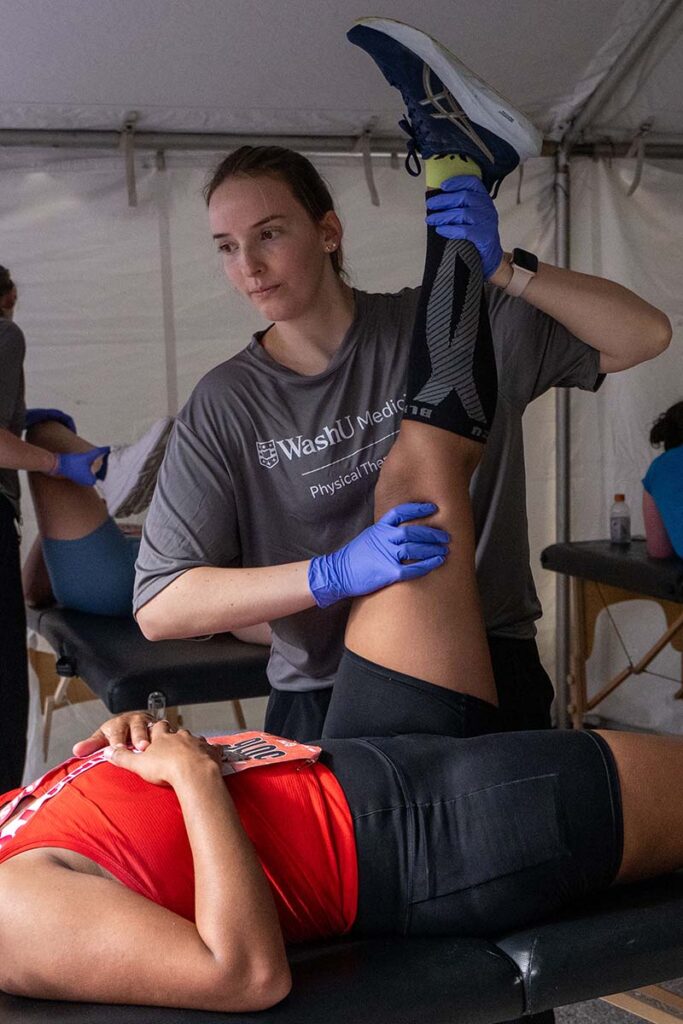
“As the race has grown, so has WashU Medicine’s physical therapy support,” said Gregory Holtzman, PT, DPT, a professor of physical therapy and orthopedic surgery. “What I love most is how everyone plays a part. We have our senior-most physical therapists working right alongside our first-year learners. Interactions like that can speak volumes to students.”
Numerous WashU Medicine community members laced up their sneakers to promote healthy lifestyles, showing they don’t just talk the talk as physicians but they also walk the walk — or, run the run, in the case of Randall Jotte, MD, a professor of emergency medicine at WashU Medicine, who earned third place for his age group in the half marathon.
“For me, running is as much for my head as my body,” Jotte said. “You might start out the race thinking, ‘Why am I even doing this?’ But you’ll finish feeling like it was one of the most joyful, fulfilling experiences you’ve ever had, surrounded by thousands of strangers cheering, high-fiving and proving how kind people can be even on one of the hardest days they’ve chosen for themselves.”
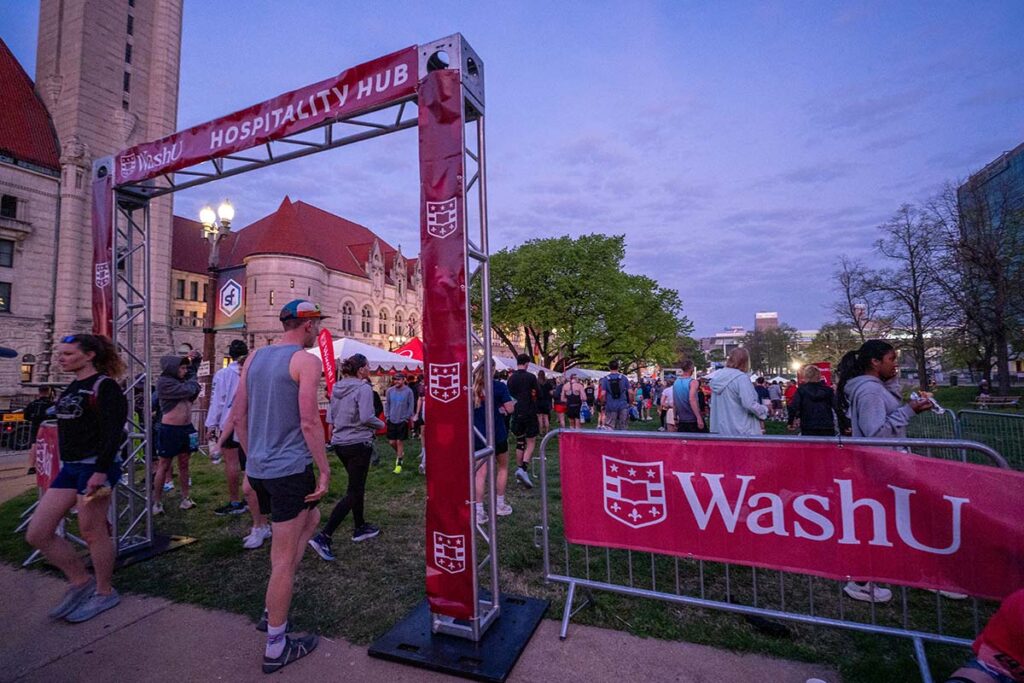
View here to access enlarged photos from the event.