What’s one thing we all need to remember about aging?
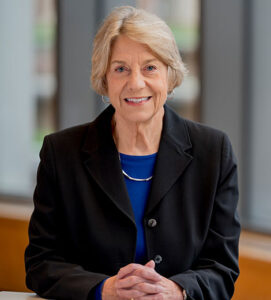
“We don’t become different people when we turn 65,” Nancy Morrow-Howell says. “We’re the same people — we sound the same inside.”
What’s another thing?
“Everybody is aging.”
Morrow-Howell, the Betty Bofinger Brown Distinguished Professor of Social Policy, teaches graduate students in the Master’s of Social Work (MSW) program and other WashU graduate students about issues impacting older adults and families as well as our wider society. Her course “Contemporary Perspectives on Aging” is a Brown School requirement for MSW students in the older adults and aging societies specialization.
The need for gerontology specialists is exploding because there are more older adults in the United States than ever before. According to the World Bank, 2024 marked the first time there were more people in the U.S. age 65 and over than under age 15. And the number of older adults continues to climb.
In our age-biased society, some people think these careers might be depressing. “But that is not how people who work with older adults find it,” says Morrow-Howell, also the co-director of the Harvey A. Friedman Center for Aging at WashU.
Her course takes on myths and generalizations about older adults: that they are all depressed, they have dementia and they don’t contribute to society. “Older adults are not that,” Morrow-Howell says. “Most don’t have dementia, and depression is not a normal part of aging. We tell the whole story of aging, not just the biggest challenges.”
But right now, she says, older adults are “otherized” and segregated, with ageism becoming the most accepted “-ism.” This age bias is evident in the slow adoption of aging innovations, including finding ways to make communities more age-inclusive. “We are all living longer, and we need communities to support that,” she says. “We want to create communities for all ages, where we can all age in place and stay in our community, until we can’t.”
Morrow-Howell’s students quickly grasp the problem and can see how they and their families have experienced ageism — and how they have perpetuated it.
“This class was invaluable in showing me where I still had bias,” says Liz Smith,an MSW student who wants to design caregiving training programs for family members of people with dementia. “I learned how pervasive ageist rhetoric is in social media, policy and public perception. Before we can make impactful changes, we need to change how older people are perceived, treated and ultimately ignored.”
Anastasia Rhule, MSW ’25, found the course rewarding even though her studies concentrated on children and families. “I’m also interested in older adults and intergenerational work that bridges the gap between older and younger generations,” she says.
Aaron Li, a social work PhD student and a teaching assistant for Morrow-Howell’s class, says all graduate students at WashU could benefit from learning about challenges facing older adults. “Whether you’re studying social work, public health, medicine, business, law, engineering or another field,” he says, “everyone has a role to play in building a more inclusive, equitable and age-diverse society.”
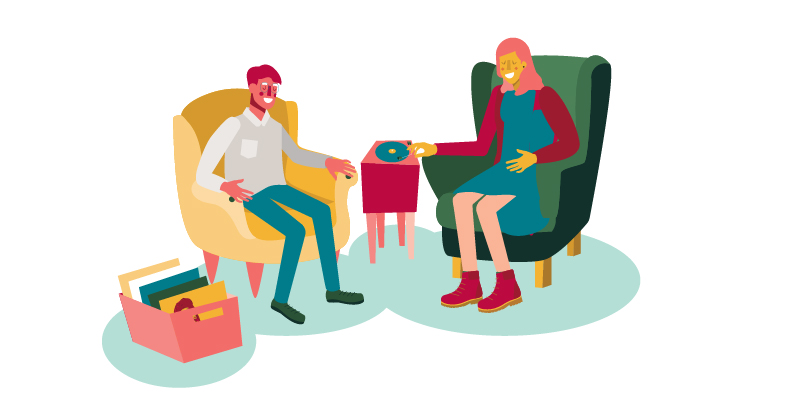
Age inclusivity also means acknowledging and supporting the contributions of older adults. “We focus on productive aging,” Morrow-Howell says. “Older adults contribute to society through volunteer roles, caregiving roles and work roles.”
“Who doesn’t want flexible work? Who doesn’t want part-time work with benefits? Who doesn’t want caregiving support in the workforce? All those things are good for everybody.”
Nancy Morrow-Howell
She notes that flexible work arrangements that support older people also support other workers. “Who doesn’t want flexible work? Who doesn’t want part-time work with benefits? Who doesn’t want caregiving support in the workforce?” Morrow-Howell asks. “All those things are good for everybody.”
As the world population ages, she says we should embrace inclusive solutions and reject age discrimination and ageism.
“Let’s not speak about older adults as ‘them over there’ and ‘us over here,’” she says. “In fact, we are all aging. ‘Us’ is them.”