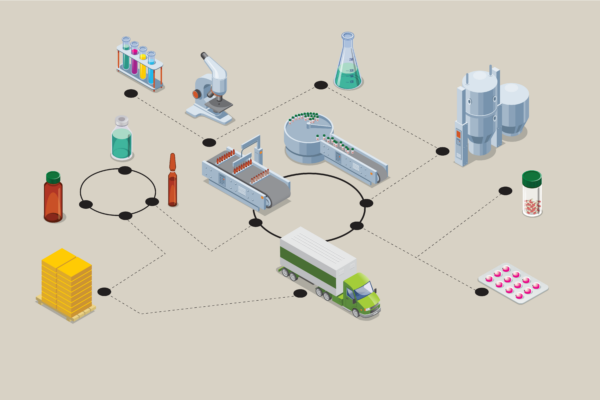
High prescription drug prices are not caused by any single company or practice, but by the system itself, said an expert on prescription prices at Washington University in St. Louis.
If Congress wants to lower drug prices, it needs to understand the structure and incentives of the entire supply chain, said Rachel Sachs, a professor of law and of public health.
Sachs testified Feb. 11 before the U.S. House Energy & Commerce Health Subcommittee during a hearing titled “Lowering Health Care Costs for All Americans: An Examination of the Prescription Drug Supply Chain.”
“Too many Americans cannot afford important medications,” she told the subcommittee, with many patients reporting that they “have not taken medication as prescribed due to its costs.”
High drug prices are not driven by a single factor, said Sachs, who is also research co-director of WashU’s Cordell Institute for Policy in Medicine & Law.
“Many actors in the prescription drug supply chain play key roles in setting and maintaining high drug prices,” she said.
For example, U.S. law provides pharmaceutical companies with exclusive rights to market their branded products through patents and regulatory restrictions while also guaranteeing insurance reimbursement, Sachs said.
“The combination of exclusive rights and guaranteed payment has allowed manufacturers to set and maintain high prescription drug prices over time,” she said.
Pharmacy benefit managers (PBMs), wholesalers and group purchasing organizations have been criticized for steering patients toward pricier drugs, Sachs said. There are concerns that PBMs in particular limit access to lower-cost alternatives and bring in revenue through arrangements that weaken incentives to reduce prices, she argued.
Sachs urged Congress to pursue a package of reforms rather than a single solution. “There is no single way to address these issues,” she said.
Reforms should focus on making competition more effective, increasing transparency and oversight into the opaque supply chain, and considering policies that address reimbursement directly, Sachs said. Strengthening the Inflation Reduction Act’s Medicare Drug Price Negotiation Program could be part of the solution, she said.
“Every actor in the supply chain plays a role in keeping prices high, and every actor has a role to play in ensuring affordability for both patients and our overall health-care system,” Sachs said.
With sustained oversight and targeted reforms, she said, Congress can help restore balance to a system that too often leaves patients facing impossible choices between their health and their finances.