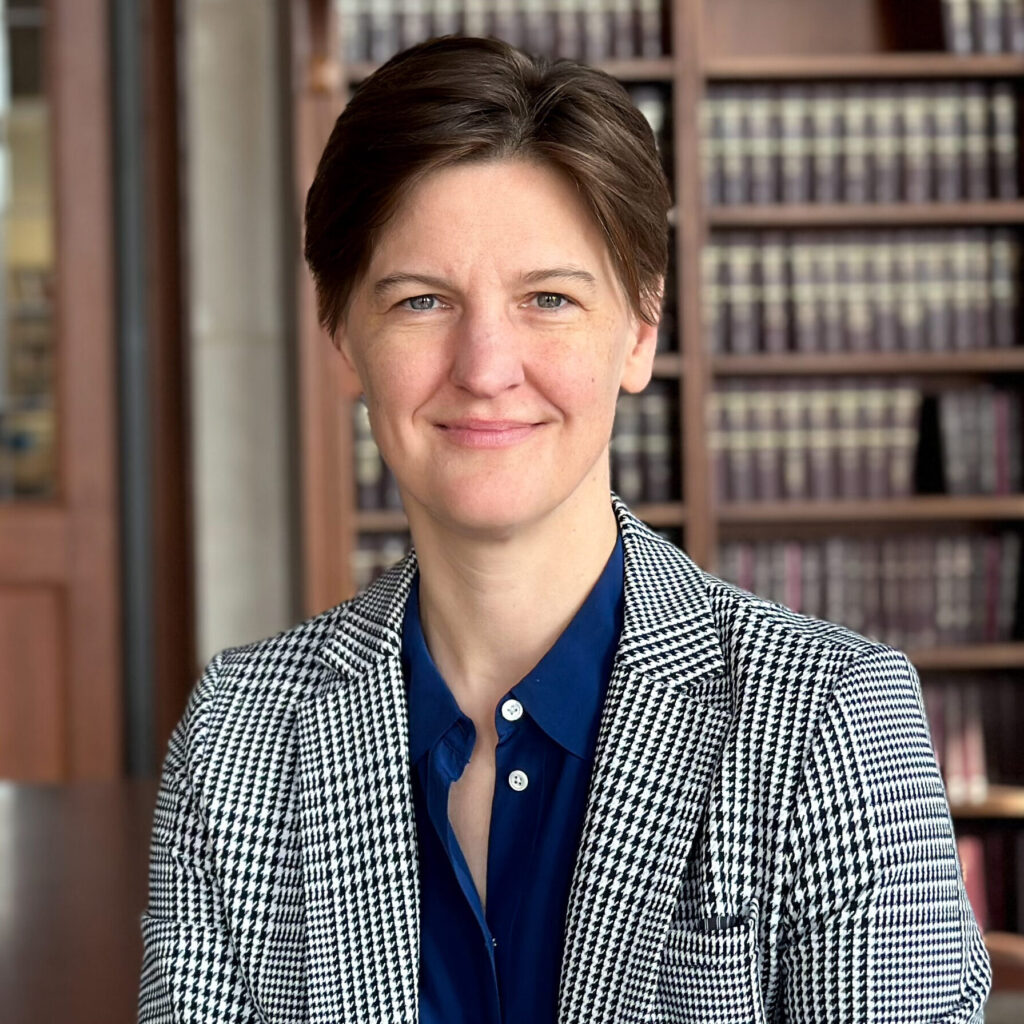
Under international law, one of the clearest red lines for states is the use of force to take another sovereign’s territory — a prohibition that sits at the heart of the modern global legal order, said MJ Durkee, a law professor at Washington University in St. Louis.
President Donald Trump recently removed the president of Venezuela and is contemplating taking over Greenland and potentially other nations.
“A state cannot lawfully seize territory belonging to another sovereign without that state’s consent,” said Durkee, the William Gardiner Hammond Professor of Law and director of the Whitney R. Harris World Law Institute. “That rule is foundational. It’s not a gray area and it’s not optional.”
Durkee points to Article 2(4) of the United Nations Charter, which bars the threat or use of force against the territorial integrity or political independence of any state. Adopted in the aftermath of World War II, the provision was designed to prevent exactly the kind of coercive territorial change that had fueled global conflict in the first half of the 20th century.
“This prohibition is one of the cornerstones of the postwar international legal system,” Durkee said. “It reflects a collective commitment by states to resolve disputes without resorting to conquest.”
In the case of Greenland, the legal protections are even more layered, she said. Greenland is an autonomous territory within the Kingdom of Denmark, and its status engages not only rules about territorial integrity, but also the right of peoples to self-determination, a principle enshrined in Article 1 of the U.N. Charter and reinforced by decades of international human rights law.
“Self-determination means that the people of a territory — not an outside power — get to decide their political future,” Durkee said. “That principle applies regardless of a state’s size or strategic importance.”
In theory, enforcement of these rules falls to the U.N. Security Council, which has authority under Chapter VII of the U.N. Charter to respond to threats to international peace and security. But Durkee noted that enforcement can be political.
“The Security Council’s powers are real, but they’re constrained by politics,” she said. “Because the United States is a permanent member with veto power, it could block any binding enforcement action directed at itself.”
That does not mean, however, that violations would be legally inconsequential. Even absent Security Council action, other states could respond through coordinated diplomatic, economic or political measures. Durkee also pointed to customary international law on state responsibility, reflected in the International Law Commission’s Articles on State Responsibility.
“For serious breaches of peremptory norms — like the prohibition on acquiring territory by force — international law obligates other states not to recognize or assist the unlawful situation,” she said.
For the United States, Durkee argued, the most immediate consequences would be reputational and systemic rather than territorial.
“The biggest costs would likely be damage to U.S. credibility, alliances and the international rules the United States has long relied on to advance its own interests,” she said. “More broadly, it would further weaken the prohibition on coercive territorial change.”
That erosion would have ripple effects far beyond any single dispute, she said.
“When powerful states disregard these constraints, the rules break down” Durkee said. “And when that happens, smaller and more vulnerable states are the ones who lose the most protection under international law.”