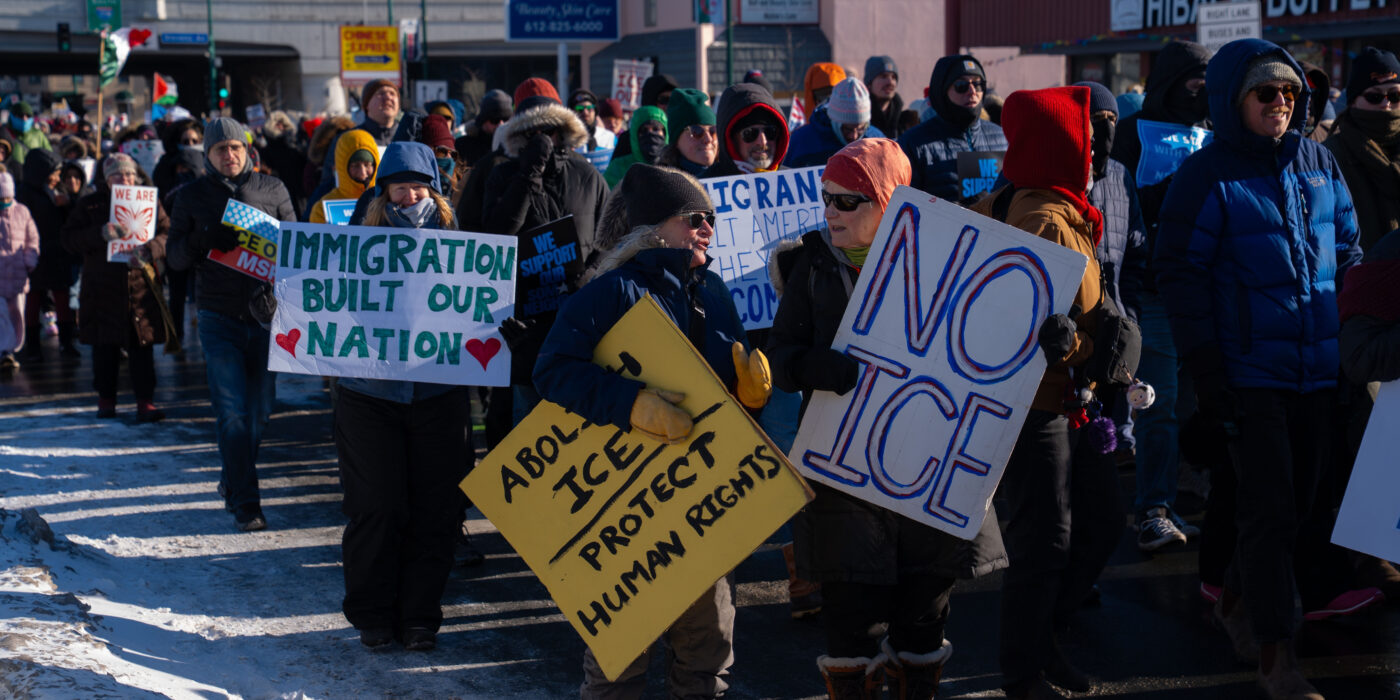
Thanks to social media and traditional news outlets, people around the world have had a front-row seat to the immigration raids and clashes between protesters and U.S. Immigration and Customs Enforcement (ICE) officers in the Twin Cities over the last few weeks.
One thing that has stood out in these protests has been the presence of faith leaders. At least 200 leaders from various faith traditions have joined protesters to observe and document the actions of ICE. Social media videos show them on the front lines, praying and quoting Scripture to encourage unity, justice and peace. They’ve planned rallies and held press conferences to express concerns about human rights violations. And like many protesters, they’ve been arrested for their actions.
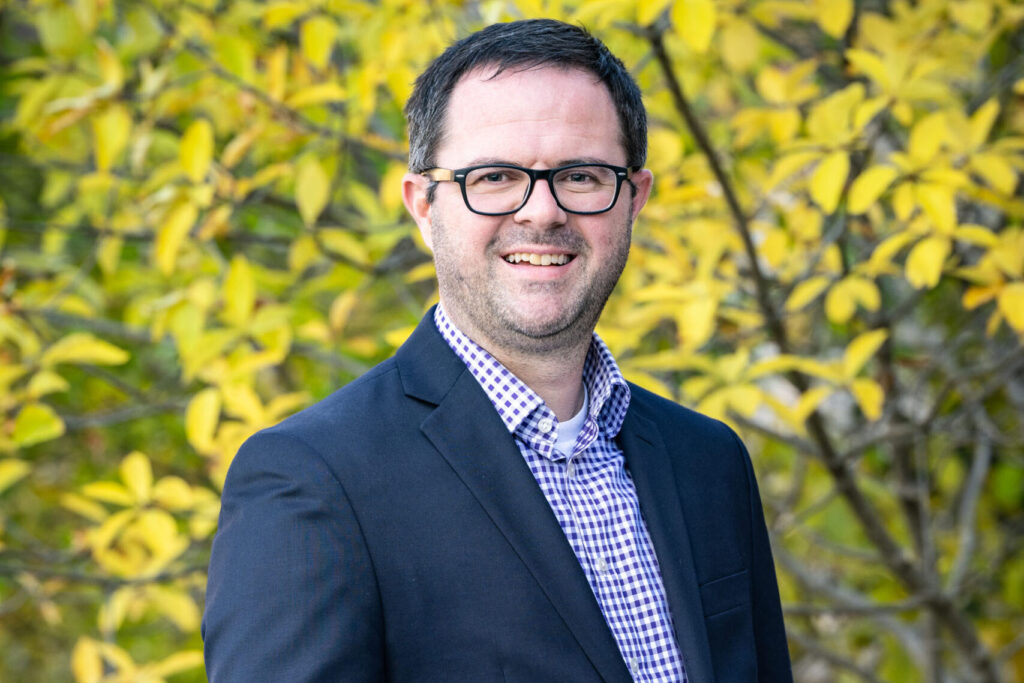
This is the most active mainline ministers have been in recent memory, according to Ryan Burge, a professor of practice at the John C. Danforth Center on Religion and Politics at Washington University in St. Louis.
“The mainline has always held a strong tradition of social justice, and that’s on display through media stories and social media posts right now,” said Burge, who is also author of the popular data-based Substack Graphs About Religion.
“One of the real benefits of the mainline in times like this is that these institutions have spent millions of dollars and decades building communication and relief networks for times just like this. They are helping to organize protests and messaging campaigns that would be difficult to accomplish through any other means. In many ways, they are showing the next generation of American young people that there are multiple ways to be a Christian.”
Below, Burge discusses the role of faith leaders in America and how this historical moment could affect religious participation in America, public opinion and the remainder of President Donald Trump’s term.
How should faith leaders respond in contentious times like these?
There are no right answers in times like this. In the Hebrew Scriptures, there’s a passage from the prophet Micah that says, “What does the Lord require of you? To act justly and to love mercy and to walk humbly with your God.” That’s the difficult balance that many Jews and Christians are facing right now. We must be a country of laws and order. But we must always understand that mercy is one of the most oft-repeated commands in not just Judeo-Christianity but in every major religion in the world. But that last phrase is key: walk humbly. We may hold opinions and believe in them very strongly, but others may respond to events in a totally different fashion. Having the humility to try and understand someone on the other side of the debate is key in times like this. We must always see the humanity in the other. Whether that “other” may be someone who is afraid of deportation or an ICE agent who is in charge of that operation — each are human beings.
While mainline church leaders have been very active in recent days, most prominent evangelical leaders have not been on the ground in the Twin Cities. Many have issued tepid statements of approval for President Trump’s immigration enforcement actions, but in the last few days that’s been strained with the death of Alex Pretti.
In recent years, many churches have become closely aligned with the GOP. But throughout American history, clergy leaders have been vocal advocates for progressive issues like civil rights. Are we at a turning point?
One of the forgotten parts of American religious history is the role American Christianity played in the progressive era. Because of industrialization, the quality of life for many Americans suffered significantly as they moved from rural farms to urban factories. The Social Gospel movement was organized in response to those indignities. The passage of child labor laws, overtime rules, union protections and overtime pay is all due in no small part to the actions of Christian activism. This may be a time when young people see that American Christianity isn’t necessarily conservative. Undoubtedly, the loudest voices in Protestantism have been from the GOP over the last several decades, but these tragic events are a window of opportunity for Americans to see that Christianity has always been a diverse political space.
Can church leaders move public opinion on immigration?
I’ve looked at a lot of social issues over the last few years on my newsletter. I can classify them in two camps: clearly religious and those that are often seen as more political. The first group are culture-war issues like abortion, same-sex marriage and questions regarding gender identity. The second category is things like environmental protection, gun control and Medicare for all. That first bucket is clearly influenced by religious leaders. Frequency of religious attendance has a clear impact on views on social issues. The second set of issues is not really impacted by the frequency of attendance. I think that’s largely because those aren’t discussed that much from the pulpit. I’m not sure where immigration really falls on that continuum. Until the last year, I would put it in the “clearly political” category. But with all the events of the last few weeks, I am wondering if pastors are not going to feel compelled to speak out on these topics.
What, if any, long-term effects could this cultural moment have on American Christian churches and religious participation?
As someone who is always analyzing long-term trends, I’m skeptical of any single event (or even series of events) that will have a demonstrable impact on religiosity in America. Even 9/11 didn’t have a long-term impact on the level of church attendance among young people. So I’m not inclined to believe that anything happening right now will really move the needle on American Christianity. I do see some evidence in the data that secularization is slowing down in America, but that’s more about macro-level demographic factors than any specific moment.
How might this historical moment impact the remainder of Trump’s term?
In watching the discourse around these last few events in the Twin Cities, I am getting the sense that some of Trump’s supporters have seemed to lose some of their patience with ICE and their enforcement strategies. There’s also evidence that Trump’s approval rating has started to drop even further. We always expect the president’s party to lose a significant number of seats in the midterm elections, and that’s certainly how things are setting up right now. If the Democrats manage to win back the House, the ability of Trump to enact policies will be severely curtailed in the last two years of his presidency, and his lame-duck status will make his own party less willing to bend to his desires. So, the Trump era may be over years before he manages to leave office.