The National Academy of Inventors (NAI) has elected two Washington University in St. Louis faculty members to its 2025 cohort of fellows: Jennifer N. Silva, MD, the James G. Berges and Elizabeth Mannen Berges Professor of Pediatric Cardiology at WashU Medicine, and Lan Yang, PhD, the Edwin H. & Florence G. Skinner Professor of Electrical & Systems Engineering at the McKelvey School of Engineering.
Election as an NAI fellow is a prestigious professional distinction and is accorded solely to inventors in university, governmental or nonprofit organizations. Silva and Yang join 21 other WashU faculty members who have been named fellows since the program began in 2012.
Silva and Yang are among 169 inventors inducted as fellows this year. Collectively, the fellows of the NAI hold more than 86,000 U.S. patents, which have generated more than 20,000 licensed technologies. The 2025 fellow class will be officially inducted at the National Academy of Inventors meeting in June in Los Angeles.
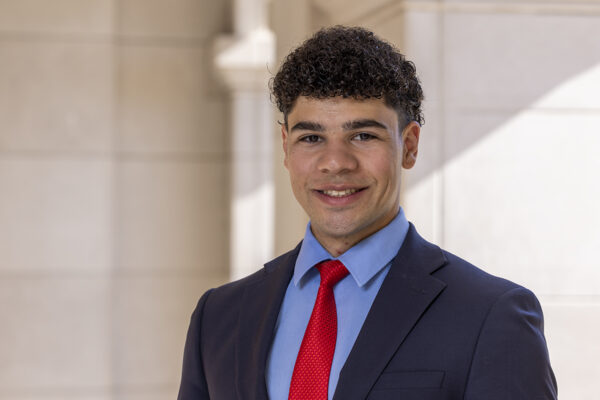
Jennifer Silva
Silva is a professor of pediatrics and of biomedical engineering whose clinical specialty of treating children with irregular heartbeats has informed her career as a medical leader, inventor and entrepreneur. Her research seeks to identify clinical applications for new and emerging technologies within cardiac electrophysiology — the electrical activity in the heart that governs its rhythms.

Silva was recognized by the academy for her work using mathematical computer models of the heart’s electrical circuitry to create visual tools to improve the accuracy of doctors operating on patients with abnormal heart rhythms. The 3D augmented-reality model of the heart allows the surgical team, wearing special goggles, to track the catheters they are guiding through the heart in real time. The technology, licensed to the WashU startup company SentiAR, which Silva co-founded and is based in St. Louis, was FDA-cleared in 2020 as the first holographic technology for invasive cardiac procedures. It has been used in hundreds of procedures in the U.S. since.
Silva also founded Excera, a subsidiary of SentiAR, which is developing tools to improve outcomes for minimally invasive procedures guided by ultrasound imaging. She holds 10 U.S. patents and serves as a consultant to several medical device companies.
Silva is the director of pediatric electrophysiology at St. Louis Children’s Hospital and is the Pediatric Electrophysiology Faculty Fellow in Entrepreneurship at WashU Medicine. She is a leader in several professional organizations, including the Heart Rhythm Society, where she has led initiatives on artificial intelligence (AI), digital health and physician entrepreneurship. She is the president of the Pediatric and Congenital Electrophysiology Society and has a leadership role in both the Innovation Council and the Industry Advisory Forum of the American College of Cardiology. She also provides internship and mentorship opportunities to student entrepreneurs through WashU’s Skandalaris Center for Interdisciplinary Innovation and Entrepreneurship.
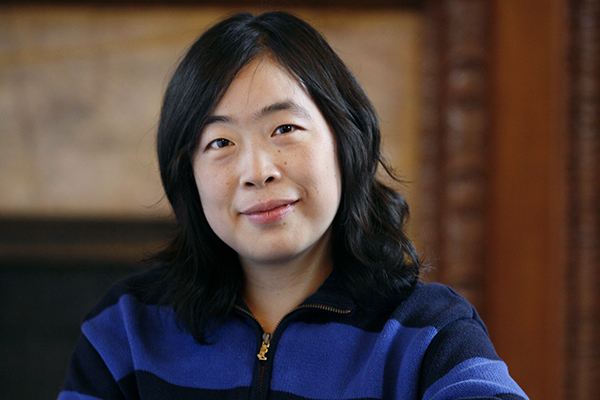
Lan Yang
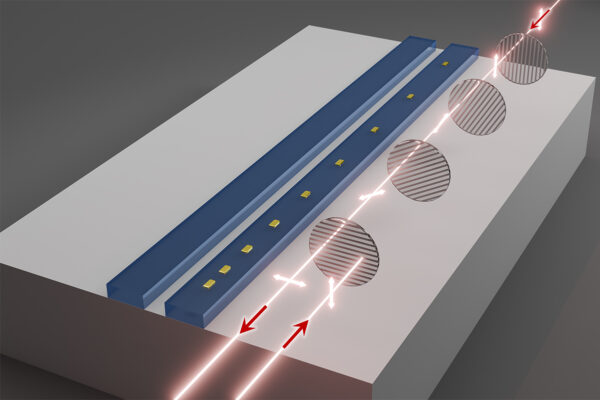
Yang is an internationally renowned leader in nanophotonics, who has made fundamental advances in understanding and controlling light–matter interactions at the nanoscale and applying them to sensing, spectroscopy and imaging.
In her Micro/Nano Photonics lab, Yang and her team use these optical resonators as an ideal platform for further exploring light-matter interactions.
She pioneered optical microresonators as ultra-sensitive sensors, applying them to a broad range of detection and diagnostic needs, including the real-time, label-free detection and measurement of nanoparticles, viruses and biomolecules. Her research opened new frontiers in utilizing photonic technologies to address unmet needs in health care and beyond, and it has profoundly influenced research across physics, engineering and biomedical science.
Yang is also a widely recognized translational innovator. She is the co-founder and chief technology officer of DeepSight Technology, a medical tech company developing transformative imaging systems that integrate novel sensor technologies with advanced hardware, software and AI. DeepSight’s first platform, the NeedleVu LC1 ultrasound system, recently received FDA 510(k) clearance, marking a major milestone toward improving the precision and safety of image-guided procedures.
Yang’s record of sustained scientific achievement has earn numerous recognitions, including the Presidential Early Career Award for Scientists and Engineers in 2011, the highest honor bestowed by the U.S. government on science and engineering professionals in the early stages of their independent research careers, for her pioneering contributions to microlasers and ultra-sensitive optical sensing; the Institute of Electrical and Electronics Engineers (IEEE) Sensors Council Technical Achievement Award in Sensors – Advanced Career in 2025; and being named a Highly Cited Researcher by the Institute for Scientific Information at Clarivate consistently since 2019.
Yang joined the faculty at WashU in 2007 and is also a fellow of the IEEE, Optica (formerly the Optical Society), the American Physical Society, the American Association for the Advancement of Science and the American Institute for Medical and Biological Engineering. Her election as an NAI fellow recognizes not only her seminal scientific advances but also her sustained commitment to translating research into technologies that improve human health and advance engineering innovation.