Refugees receiving interventions in local communities are far more likely to regain stability and independence than those confined to traditional camps, according to new research from the Washington University in St. Louis School of Public Health.
The study, published Dec. 11 in BMJ Global Health, draws on data from programs operating in 16 countries and is one of the largest cross-country examinations of refugee self-reliance conducted to date. In total, researchers analyzed data from 7,850 households, collected by 10 humanitarian organizations between 2020 and 2024. The data included responses from refugees, asylum seekers and people displaced within their own countries.
The researchers found consistent, measurable progress among households receiving services and living outside camps, including higher employment, increased savings, reduced debt and stronger overall self-reliance. Camp-based households saw no comparable improvements despite significant humanitarian investment. Restricted mobility, limited job opportunities and continued reliance on aid appeared to blunt families’ ability to build autonomy.
Advancing self-reliance, the authors said, will require strong coordination across humanitarian, development and government partners, a commitment to data-driven programming and policies that prioritize dignity, autonomy and long-term stability.
Across the globe, an estimated 117 million people are currently displaced by conflict, persecution and climate-related disasters — with many spending years or even decades in search of stability.
Hundreds of refugee camps have been established worldwide by host-country governments working with United Nations agencies and international humanitarian organizations, often with funding from donor nations and multilateral institutions. Although originally intended as temporary emergency sites, many now function as long-term settlements. During large displacement crises, refugees often are directed to camps for immediate food, shelter and basic services and may stay for decades with no viable alternatives.
A substantial share of displaced people settle instead in nearby towns and cities, seeking independence, looking for work or joining relatives. Some perceive camps as unsafe, overcrowded or distant from jobs.
Host countries have the ultimate responsibility for determining official settlement policy. In many cases, national policies, alongside personal circumstances, dictate whether refugees are required to remain in designated camps or permitted to live within the local population in urban or rural areas. The authors warn that current approaches — particularly policies that restrict refugees’ legal right to work, move freely or access services — may unintentionally hold families back from the very independence the international system aims to support.
A path forward
The authors said the results highlight the potential for targeted programming in non-camp settings to strengthen household resilience. Community settings that combine multiple approaches, such as housing assistance, vocational or skills training, access to legal documentation, support for education or health care and opportunities for economic and social inclusion, have demonstrated success. The authors point to examples in countries including Ethiopia, Uganda, Burkina Faso and Colombia.
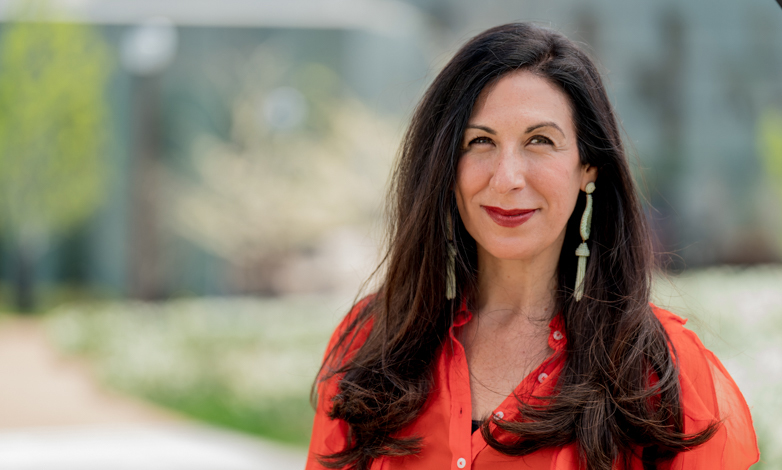
“Our data shows that progress is possible when the enabling policies are in place,” said first author Lindsay Stark, a professor in the School of Public Health and an academic adviser to the Refugee Self-Reliance Initiative. “We’re investing heavily in systems that isolate people, even though the data are clear that integration is what helps families regain stability. Our findings show the path forward — now we need the political will to follow it.”
Stark co-authored the paper with senior author Ilana Seff, a research associate professor at the School of Public Health. Together, the researchers have helped lead the development of rigorous, culturally grounded tools — including the Self-Reliance Index (SRI), now used by more than 68 humanitarian agencies — to better understand how displaced families fare over time.
Self-reliance, the researchers emphasized, extends well beyond income. The study used the SRI, a standardized tool that assesses 12 domains of self-reliance, including housing, food security, employment, financial resources and health-care access. The analysis also examines how humanitarian programs, policy frameworks and service delivery systems could be strengthened to better support long-term well-being.
Research analyzed both baseline scores and longitudinal changes, comparing outcomes for households in camp and non-camp settings. Baseline SRI scores were low across all groups (2.21 on a 1-5 scale), indicating that most could not meet essential needs at first without external assistance. Households in camps scored slightly higher on average, likely reflecting easier access to basic services despite restrictive autonomy. Results diverged over time, with those receiving interventions or services outside camps showing significant gains over those within camps.
Seff said the results reinforce a simple conclusion: “If we want families to rebuild their lives, they need the chance to participate in the social and economic systems around them,” she said.
The global context
These pressures are unfolding as the global humanitarian system faces persistent funding shortfalls, forcing difficult decisions about how to structure aid and where to focus investments. With many assistance models still built around camp-based delivery, questions about which environments best support families’ long-term well-being have taken on new urgency.
There is broad agreement that emergency aid alone cannot support sustainable futures. The study suggests that in emergency settings it may be more realistic to focus on intermediate outcomes, such as psychosocial well-being, language and skills development and social cohesion, while also investing in pathways to future integration.
In addition to Stark and Seff, the study was co-authored by Kari Jorgenson Diener, Ned Meerdink and Simar Singh, of the Refugee Self-Reliance Initiative and Kellie Leeson, of the Women’s Refugee Commission.