Episode overview
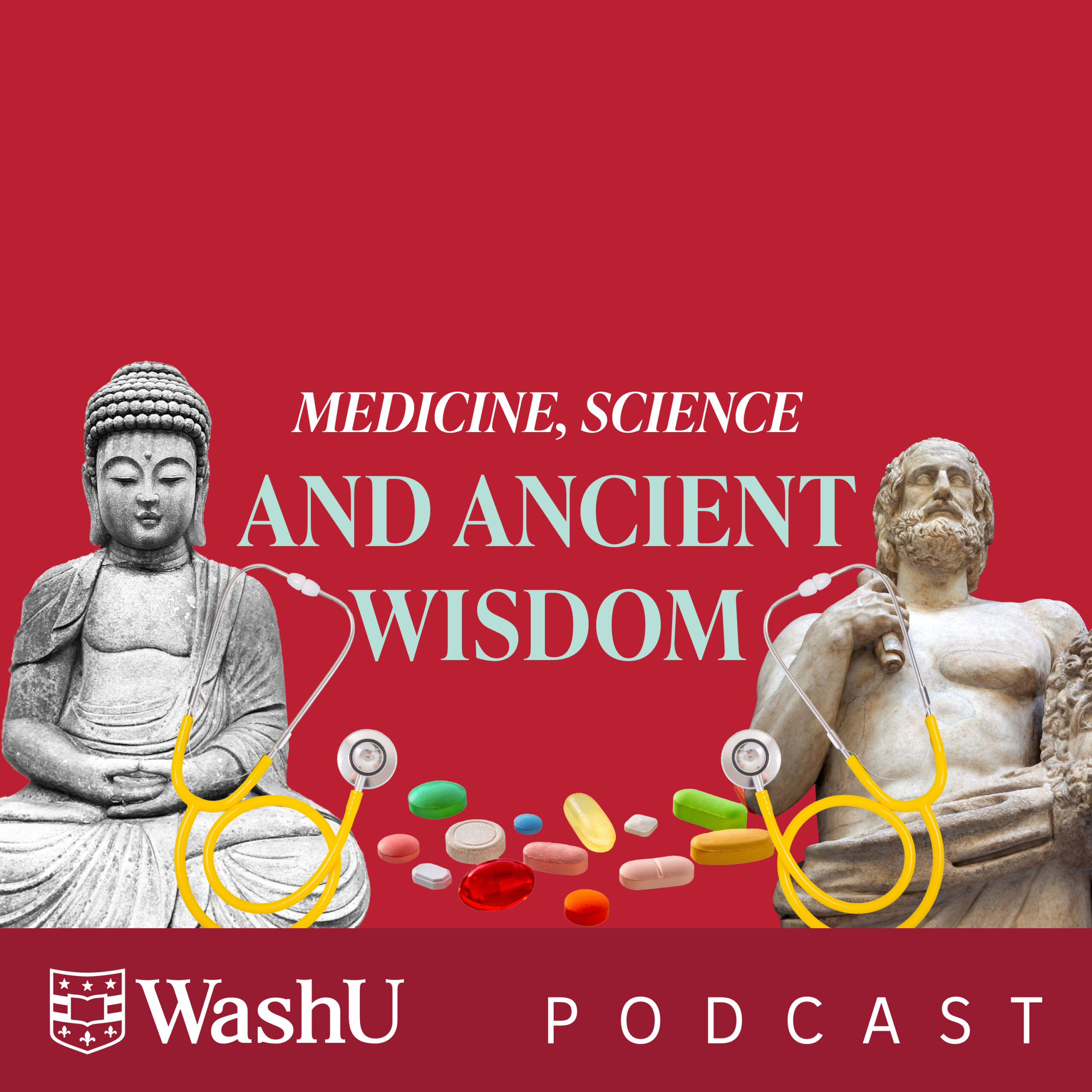
Should medicine be more broadly defined? Can an emphasis on our shared humanity lead to better treatments? And what about joy?
In this episode of Ideas Matter, WashU’s Sandro Galea, dean of the Bursky School of Public Health, and the University of Chicago’s Geeta Maker-Clark, a physician and expert on integrative nutrition, explore how a more holistic approach to medicine can benefit us all.
Transcript
[Sandro Galea]
Welcome to Ideas Matter, a podcast hosted by WashU. I’m Sandro Galea. In health, everything is connected. This is true at the population level, it is true for individuals. Your health depends on my health, mine depends on yours, just as the health of the body depends on the well-being of its constituent parts. Integrative health is an approach to health that recognizes this connectivity, applying a holistic frame to sustaining health and preventing disease. In a medical system, which can sometimes reduce patients to parts, integrative medicine insists on seeing the whole person. Today I have the privilege of speaking with someone deeply versed in integrative medicine and its contemporary applications. Dr. Geeta Maker-Clark is a healer, physician, educator, and activist. She is a family doctor at Endeavor Health, where she supports wellness through personalized treatment plans and addresses a range of acute and chronic health concerns. She also serves as director of integrative nutrition and advocacy at Endeavor Health, Director of the Food Is Power Program at Chicago Public Schools in Montessori Englewood, and is a clinical assistant professor at the University of Chicago’s Pritzker School of Medicine. Her new book is Medicine for All People: Science and Ancient Wisdom for Revolutionary Healing. I’m delighted to be speaking with her today. Doctor Maker-Clark, Geeta, welcome.
[Geeta Maker-Clark]
Thank you so so much for having me. It’s a pleasure.
[Sandro Galea]
So your book is called Medicine for All People. I really like the title. lead us through. What does the title mean? Why did you choose it?
[Geeta Maker-Clark]
Yeah, yeah. So the title really for me reflects a belief, and it also reflects a paradigm shift. The belief is that medicine should belong to everyone, not just to the people who can afford the best health care, who can navigate a complex health system, who live in communities with abundant resources.
But it also means that we’re thinking about what medicine itself actually is. How can we expand the meaning of medicine itself? So not just limited to what happens in a clinic or in a hospital or comes from a prescription bottle, but how food can be a medicine, how movement and connection and relationships with nature and plants and cultural traditions and the feeling of belonging can also be medicine, as well as safe housing and clean air and economic security and freedom from racism. These are also deeply medicinal. Actually I chose the title before I even started writing the book. The title was what I framed the entire book around: Medicine For All People, because many of the practices that support healing are ancient, they’re accessible, they are already present within communities, they are often dismissed or made available only to a privileged few, but I want to reclaim that much broader understanding of healing that respects science, that honors traditional wisdom, that recognizes that every person deserves an opportunity to thrive and not just survive. So it’s a very aspirational title, it’s a very hopeful title, but I believe it can be true and invites us to imagine and create a different kind of culture of health.
[Sandro Galea]
I think you do a terrific job in the book of arguing about our need to expand the definition of medicine. And in many respects, of course, that puts you squarely in the public health tradition. Public health has long recognized that health is shaped by the conditions of the world around us. So how does your book connect these broader determinants, the social-economic determinants, with the daily choices people make?
[Geeta Maker-Clark]
Yeah. I feel like public health and the way the healthcare system has been designed are sort of, you know, medicine and public health are friends who are in parallel play. You know, like they respect each other and they like to be around each other and like they like to watch each other do each other’s work, but we haven’t turned and faced each other and played together in the way that we should be. Because public health has long known the social determinants of health and the environment in which a person lives and works and is born, that these are the actual determinants for their long-term health, that the ZIP code is more important in many ways than the genetic code. And yet our healthcare system has really shaped itself around individual responsibility I believe. And so we’re very good at recognizing medicine that can be prescribed and measured, and very good at interventions, excellent at it, in fact. I think we save many lives, and these tools are very essential. But we’re overlooking the forms of medicine that sustain life before a crisis develops, right? So, like the healthcare system is wonderful once the crisis develops, but how do we prevent the crisis and how do we restore after an illness? This is where these other medicines come into play and where I think public health also has a lot to offer in terms of a paradigm. For me, I’ve spent a lot of my career in food and culinary medicine and nutritional science. And I think food is one of the clearest examples of this. Like food is not simply calories or nutrients. It’s an experience. It’s an experience of sharing food, making food, eating with another person, eating with family and community and you know not everyone has the same access to food. So we can’t talk about it as if we’re all standing in the same grocery store with the same decisions model to follow.
Movement is medicine, sleep is medicine, and nature is medicine, and that even having a sense of purpose is a deep medicine. So I think we’re overlooking some of the wisdom that is already existing within our families, within our cultures and our communities, our traditional healing systems. And that actually I think is deeply seated in the social determinants of health, of like how do we live, how do we work, where do we live, what is the state of our neighborhood, what is the state of our community, and how important that really is. So I don’t think of those as alternative medicines as they have been coined in the past, but I think they’re actually fundamental to human biology.
[Sandro Galea]
I like how you’re you know shifting the frame from, that’s not alternative, this is actually what should be in the center of medicine. You know you have another cool concept like this where you talk, you write that health is not the absence of disease, which is I think accepted in public health, but you talk about health is about the presence of vitality. So how does our healthcare system change if vitality became one of our primary goals?
[Geeta Maker-Clark]
Oh my gosh, I love that question.
[Sandro Galea]
This is one of my favorite parts of the book, so
[Geeta Maker-Clark]
Yeah So, you know, I think joy and vitality is one of the most undervalued, under prescribed forms of medicine, so to speak. Again, our conversations are often focused on like what we should reduce or what we should avoid and what is the risk reduction and what could go wrong. And that’s very understandable, that we’ve created sort of a paradigm around this. But a life organized around risk avoidance is not necessarily a healthy life, and you and I know that, right? A healthy life comes from a feeling of vitality and from having joy. And joy actually creates energy for change.
So that to me is one of the most important things that we can remind people, we can remember, that we have access to vitality and joy in many, many ways on a daily basis. And I think it’s not frivolous and it’s not simply the denial of pain. It’s an opportunity to even live in unjust times and have an act of resistance by being joyful anyway and not allow all of the repressive forces in our lives to claim the entirety of our lives. I write a chapter on dance, and I believe dance, you know, to be a very powerful medicine and the neuroscience backs that up.
And, one of the most important things that dance provides us is a sense of vitality and joy. We tap into our bliss and it’s right there for us. It’s waiting. It’s waiting to be released. So if we can access those kinds of feelings every day through our practices, I truly believe that sense of vitality can overcome many other challenges that we have in our lives.
[Sandro Galea]
A concept that threads its way through the book is that healing is both personal and collective. What does that mean?
[Geeta Maker-Clark]
Well, I think that individual healing can certainly help people recover energy and clarity and a sense of agency. And it’s very important to make good personal decisions for one’s own personal health. But I also don’t believe that health relies on individual choices. We live in a mycelium, we live in community, we live in an environment and an ecosystem, if you will. We are part of the ecosystem of nature. And so I think there’s been a great burden placed upon the individual to be entirely in control of their own health when there are so many other factors that come into play that are out of our hands. So when I think about the collective, which is how humans are truly meant to live, you know, really our neurobiology is based upon us being herd animals. We don’t do well when we are alone. We usually have much shorter lifespans when we are lonely and socially isolated. So when we accept and embrace community care and collective care and taking care of each other, I think our outcomes, and I know our outcomes because the science shows it, are much better than if we take that entire responsibility upon ourselves. So in that sense, the healthcare system is, I think, focused a little bit in the wrong space. We’re kind of like, hey, you need to be making better food choices and sleeping better and exercising every day and making sure you’re getting eight servings of vegetables. Well, that’s a big to-do list for a lot of people who are working multiple jobs and have the various strains and struggles of daily life. So how do we make a healthy life, sustainable for all? We do it together. We share responsibility and we move out of a paradigm where we are only thinking about our own health and our own families. Honestly, that’s where all of us came from. This is our ancestral cultures. We all came from this. So it’s nothing new, you know, it’s a remembering of the older ways of survival.
[Sandro Galea]
Now you talk about loneliness, social isolation, lack of belonging, but how do these phenomena become biologic experiences that actually become health?
[Geeta Maker-Clark]
Yes, so there’s a great deal of research on loneliness and social isolation actually now being comparable to being a heavy smoker in its health outcomes. The stress response that comes from being alone, feeling lonely in particular, is akin to the stress response we have from chronic disease. You know, our cortisol levels go up, our sympathetic nervous system stays in a state of overdrive.
And we lose our sense of safety and our sense of belonging. And in truth, that is what our nervous system is doing all day long. The science shows that we are constantly scanning for safety and for a sense of belonging. And when we don’t have it, the sympathetic nervous system stays in the fight, flight, or freeze response. And the cortisol stays elevated. And it is not only exhausting for our spirit and our soul, it is extremely unhealthy for our bodies and leads to depression of immune system health, cardiometabolic risk, the stress response gets dulled, and there’s just a greater wear and weathering. So people can actually become biologically older than their chronological age would suggest, not because of a personal failure, but because of loneliness and social isolation and what their bodies are enduring as a result of that. I find that science to be very not surprising, but very poignant and profound because we can prevent that. We can prevent people from feeling lonely and isolated, and we can do that in community. And some communities do it quite well. So it’s just a matter of having an intention and also shaping some of our policies, our public health frameworks, our communities, and our self-responsibility to care for others we know, our elders living alone maybe are more vulnerable than others. This is our responsibility.
[Sandro Galea]
I think in the public conversation we continue to think of medicine as what happens in the clinic. So community, relationships, trust, how do they play into healing?
[Geeta Maker-Clark]
Mm-hmm. Yeah, and this is what the work really focuses on, is that actually I’ve worked with so many patients over the years who have been diagnosed correctly and have been given the correct treatment, but they don’t feel a great sense of trust in their healthcare partners.
And that trust is actually one of the foundational elements on which all care needs to exist. Trust in any relationship needs to be the foundational element. Without it, we don’t have that sense of safety or belonging or dignity. So I view all of my interactions with my patients as establishing trust first. Before I’m diving into what exactly you need, how am I going to establish trust so that any recommendations I make will be actually honored and received and welcomed. Because it’s a relationship, right? And so trust is one of the medicines. Community is another one of the medicines that we’ve been talking about, being not just involved in your community, but also contributing to the way our communities work. And there are many ways to do this, as small as putting your grocery cart back in the rack when you’re done at the grocery store, and as large as, you know, helping stock your food pantries for those who are food insecure. So I think these medicines are not thought of as such, but they are actually the pillars in which we build a healthier society. And I actually do feel that the moment that we’re in right now in human history, which is quite dark in many ways, is a result of the fact that we don’t have trust in some of our institutions in the way that we did before. So even if they’re serving us, if we don’t have the trust, that nervous system stays on. And I think that can change. I feel very hopeful about that, and it can change even in small, meaningful ways on a daily basis.
[Sandro Galea]
So you’re a doctor, you’re an author activist, but you’re also a physician and you see patients. What has surprised you most as a doctor about what actually helps people get well?
[Geeta Maker-Clark]
Well, it kind of ties into what we were just talking about. I’ve been surprised over the years by how profoundly healing it is to be listened to and heard. There have been visits that I’ve had where I have mostly listened, nodded, affirmed, you know, really integrated what a person was saying, spoken it back to them to make sure I understand, and not much else. And they leave saying, I feel so much better, thank you. I feel hopeful for the first time. And I wonder, wow, what was the medicine that I gave them? Because we didn’t create much of a treatment plan, I didn’t give them a prescription. I may not have even ordered anything. But that profound relationship building of listening is deeply, deeply healing and surprisingly absent in many relationships that people have. So I feel very lucky as a family doctor that, you know, this is why I went into family medicine, is I like to listen to people. I love the stories that people tell, and I like to figure out through that story where it is that I can do my best work to help them. But it is often just that absolute affirmation of a person’s pains that is healing in and of itself. And it’s very beautiful and profound.
[Sandro Galea]
Your book talks about nature, movement, dance, gratitude, play, service as forms of medicine. What does the science tell us about why these experiences matter for health?
[Geeta Maker-Clark]
Mm-hmm. Oh, there’s so much science in the book. Some of my favorite aspects of writing this book was doing the research to support these medicines because you know we don’t really need science to tell us that taking a walk outside is better than being cooped up inside. We know that, we feel that, but the science is there. I’ll just point to that one because I think that that science is particularly profound. I think most people can understand when you go for a walk in a forest, there’s that smell, right? There is that smell that you don’t smell anywhere else that really smells like soil, it smells like earth, it smells like nature in a way that no other smells in one’s indoor life can replicate. No tree-scented air freshener can replicate. And that smell is actually medicinal. It is filled with chemical compounds that are being exuded from the trees called phytoncides. And these are very, very powerful antibacterials, antivirals, antifungals that the trees use to protect themselves and the forest floor and are putting out into the air. And when we breathe them in, it does the same for us. So to walk in nature is not only to allow our nervous systems to, you know, regulate, to allow that parasympathetic nervous system to finally bloom and to take the rest and digest in deeper breaths. It is also truly protecting our immune system. It is increasing the natural killer cell count, which are the white blood cell lines that do the most frontline fighting when we have an infection or a threat of infection. So that research is so powerful, and it is part of why in Japan they have made forest bathing a practice that is prescribed by physicians. They treat that as a prescription that people must take to be well. And I love that, you know, and we are adopting that in certain places in America and in Canada, park prescriptions. But these sensibilities that we have when we’re in a place where we feel good are our body’s way of reminding us that there is medicine here.
When we are in community, when we’re having a shared meal with people that we like or love, and it feels so good, that is a medicine. When you’re breathing in that beautiful air in a forest, that is a medicine. And the science is continuing to back it up. It’s amazing. Gratitude as well, you mentioned gratitude. the practice of being grateful, of focusing on what you have rather than what you don’t have, is actually neurologically protective. So we see neuronal expansion in the regular practice of gratitude. It’s profound. And I love that when we take the time to do the science, it backs up what our ancestors already knew, that these are good and free and accessible ways of living.
[Sandro Galea]
So in many respects your book is sort of radical, and in other respects you’re leaning on ancient wisdom, ancient traditions. What can traditional healing systems teach us about modern science? And perhaps conversely, what can modern science learn from these ancient healing traditions?
[Geeta Maker-Clark]
Well, I appreciate that you consider the work radical. I do too. It’s why I put the word revolutionary in the title. But not because I think revolutions and being radical is something that’s meant to be shocking. I think that it speaks to the power of people and the power of humanity to continually remind and remember what is the most powerful way for us to show up in the world. And I think that modern medicine clearly has done much to improve our health outcomes, our lifespans. We’ve eradicated diseases. We’ve certainly shortened the span of certain cancers to the point where now they’re livable, you can live with the cancer versus dying from it. These are massive outcomes that I think have been also embedded deeply in ancient practices, and we’ve sort of forgotten about that piece. And I write a bit in the book about how many of our chemotherapies, many of these pharmaceuticals that work so well in modern medicine come from plants and are derived from plants and they have their base in ancient roots. So it’s just a, it’s a reminder to me. And that’s why I call the parts of the book, instead of parts, I call them remembrances, because I think modern medicine would do well by remembering where we came from, what the roots of medicine were and are, and what we still base a lot of our treatments on: plant medicine.
And I think the traditional medical systems that much of the world still relies on has a lot to benefit from modern healthcare utilizing them properly. I would love to see clinics where there are a variety of healing modalities offered to patients so that they can prevent disease rather than just come in when they’re sick.
[Sandro Galea]
So I think of you as a pretty joyful person. What about joy? What role does joy play in health and why is it often missing from conversations about medicine?
[Geeta Maker-Clark]
When we were speaking about dance as a joyful medicine, you know, again, I think it’s a very under-prescribed form of medicine. And I try to make sure I bring that into all of my interactions with not just patients, but with everyone, because I think it’s difficult to measure and prescribe it, and that’s why it’s absent from medicine. Like I think it’s just sort of disappeared as something that physicians in particular don’t think about as an intervention that could lead to a very positive healthcare outcome. I think it might also feel less serious. And we tend to be very serious in medicine, you know, for better or for worse. But I don’t think joy is something that’s frivolous. I think it is a serious topic. I think joy is a very vital aspect of living and that joy and grief and pain can live together at the same time.
And my book isn’t really about saying, hey, let’s dance our way out of stress, or like, you know, let’s meditate our way out of poverty. I know those things aren’t going to happen. It’s more like how can we retain our joy and our humanity and our gratitude and our connections to the most powerful aspects of our healing in spite of what’s happening so that we can build resilience to change and imagine something different. And I think it’s important to ask people what makes them feel alive.
[Sandro Galea]
That joy and pain and grief can exist at the same time, that’s a lovely line. It reminds me of some of the lines which I really like about, you know, living is about the essence of people, which is joy and pain and grief and pleasure and sorrow. That’s living and ultimately medicine should be there to restore us to living. Your book has these explicit and implicit undertones of thinking about social change as a intrinsic part of healing. What is this relationship between individual healing and social change?
[Geeta Maker-Clark]
Well, I think they are deeply, deeply intertwined because social change only happens when we all come together in community and use our power as a people. And that comes from each individual considering themselves powerful in the first place. So I do think that this book is a call for social change. It’s a call for social justice. And it’s also a call to ask people to remember what brings them the greatest sense of satisfaction and health and healing in their own lives. When we tap into that well, when we find the medicines that feed us and are aligned with the way that we want to live. There is a certain peace in that from which we can then imagine something better. And I do believe social change and all revolutions, you know, throughout human history have happened when people have come together from their places of strength and power. So I think it’s a both-and. We can be striving for individual health and also want social change for all of us to be able to be healthy. I think it’s very possible.
[Sandro Galea]
If you had all the power in the world, or maybe in the country, and you could redesign one aspect of our healthcare system tomorrow, what would it be?
[Geeta Maker-Clark]
My gosh. Wow, that’s an incredible ask. I would like to reward the creation of health over the treatment of disease. I would want to invest resources in food and movement and nature connection. And I would want to do that in a way that would make it very easy for physicians to be in connection with their patients and community so that it could all seamlessly flow. I think this is possible. And if we had a national health plan, a science-based plan of what matters most for people to be healthy, and could unfold that plan on a state-by-state level, into communities, I think we could realize a very, very different state of health than our country is currently in. But we need a vision. We need a unified vision around that. And we have the science. And actually, I think we have the ability to have this be very low cost.
[Sandro Galea]
What do you hope readers will do differently after reading Medicine for All People?
[Geeta Maker-Clark]
What I really hope in this book is that people will take this as a love letter to humanity. We’ll take this as a sign of hope and imagination and imagine themselves with a medicine pouch where they are gathering what medicines serve them and leaving out what they don’t think serves them. I want them to leave feeling that everything they need is available to them and all around them already and no one needs to come in and intervene or bring it to them. I want that feeling of power and love to be the overwhelming sense when someone is finished with this book, because that is the intention with which I wrote it. And I do truly feel after 25 years of practicing in the conventional medical systems and practicing integrative medicine, and seeing, actually, many times seeing people heal in states that many other people didn’t think they would be able to. Understanding that healing is something that is accessible to all of us and that truly it is all around you and it just needs to be remembered.
[Sandro Galea]
My last question, what gives you hope about when you look at the future of medicine and public health?
[Geeta Maker-Clark]
What gives me hope is that I do think people are beginning to understand that the current model isn’t enough. I think people are all asking the larger questions now about what health really requires. And I see growing interest in food as medicine. The movement has really grown leaps and bounds. Community health workers are growing. I see more trauma-informed care. I see more nature-based interventions. Culinary medicine is no longer something that people don’t know what that means. I see partnerships between hospitals and communities. So that does give me a lot of hope. I do think that there’s a lot of inspiration coming from communities, even those with limited resources right now.
I also feel very hopeful that people have always cared for one another, always, you know. We’ve always protected traditions, we’ve always shared food, we’ve always created gardens and built networks of mutual aid. So I don’t think innovation needs to come just from institutions, I think innovation comes from communities that have to imagine something better. And I see that happening.
[Sandro Galea]
I’m Sandro Galea. I have been talking with Dr. Geeta Maker-Clark about integrative health. Thank you, Geeta, for this conversation.
[Geeta Maker-Clark]
Thank you so much for having me.
[Sandro Galea]
And thank you, everybody, who joined us for Ideas Matter. I look forward to continuing the conversation.