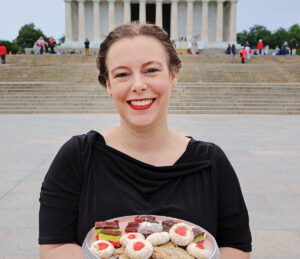
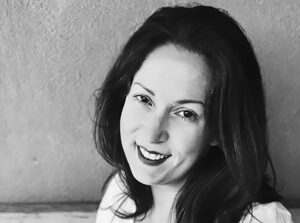
Alumna Amy DuVall, BS ’95, a lawyer turned environmental lobbyist turned pastry chef, bakes purpose into whatever she pursues, including her service to Washington University.
Andrew and Barbara Taylor are two of the institution’s staunchest supporters. They cherish the opportunity to serve WashU, whether by leading a comprehensive campaign, fostering student success or sponsoring new areas of medical research.
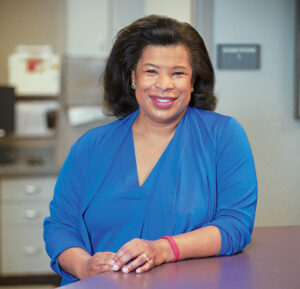
Monique Williams, AB ’95, MD ’99, MSCI ’08, is a physician with expertise in geriatric medicine and an advocate for including underrepresented populations in medical studies.
As a student, JD Ross, BSBA ’11, BS ’11, ran two businesses. Ever entrepreneurial, after graduating from the university, Ross created a new way to sell homes with Opendoor.
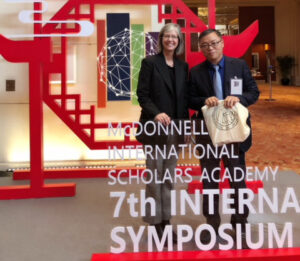
Now, Lidong Pan, LLM ’04, is a managing partner at a Chinese law firm, where he excels at dealing with international clients. He says it’s in part thanks to the education and practical experience he got through Washington University.
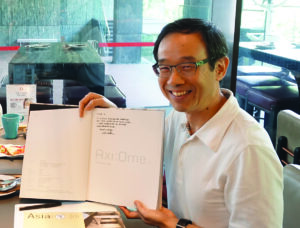
Xiaohua Fei, MArch ’00, founded X-urban Associates, an architecture firm in China, after earning his master’s in architecture from Washington University.
The School of Law’s Access to Justice Public Interest Law & Policy Speaker Series spring lineup features lawyers, judges, authors and academics who will address a spectrum of high-profile issues. Journalist Amy Sullivan will present on religion in the 2020 presidential election on Jan. 30.
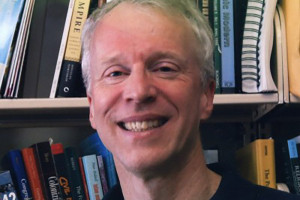
A book by John Bowen, professor of anthropology and the Dunbar-Van Cleve Professor in Arts & Sciences at Washington University in St. Louis, received an honorable mention for the 2019 Laura Shannon Prize in Contemporary European Studies.