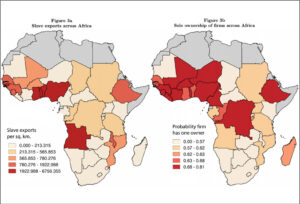
While closely held ownership isn’t necessarily bad, research co-authored by a faculty member at Washington University in St. Louis’ Olin Business School suggests some African firms may miss 21st century growth opportunities without the ability to raise capital through shared ownership.
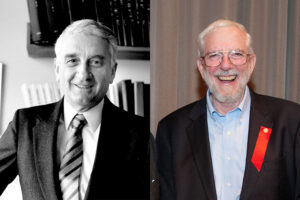
Washington University’s Jerome Cox and Jack H. Ladenson join a small but distinguished group of fellows of the National Academy of Inventors, the highest professional distinction accorded solely to academic inventors.
Regardless of whether women who were sexually assaulted maintained a connection with their perpetrator, or whether they initially did not accurately acknowledge it as rape, it is time our culture stopped blaming women and redeeming perpetrators.
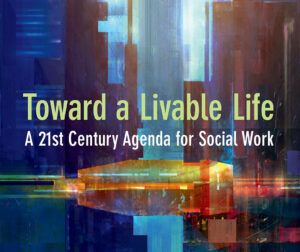
Including the insights of more than 35 leading social work scholars from the Brown School at Washington University in St. Louis and beyond, a new book grapples with 13 key areas in the profession in an effort to identify innovative solutions toward achieving a “livable life — a life in which individuals are able to thrive and reach their full potential.”
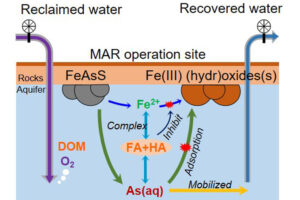
Researchers from Washington University in St. Louis have solved a mystery: How did arsenic show up in aquifer water that had been triple purified? Dissolved organic compounds.
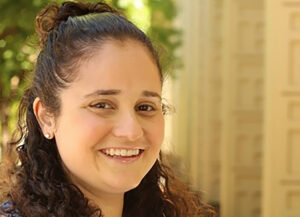
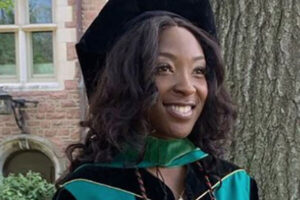
Taevin Symone Lewis, a recent graduate of the Program in Occupational Therapy at the School of Medicine, died Jan. 1 in a motor vehicle accident in St. Louis. She was 26. A funeral service will take place Saturday, Jan. 11, in Memphis, Tenn.
Many questions remain following the Jan. 3 death of Qassem Soleimani and Iran’s potential retaliation. Chief among them: Was the strike legal? “Unless there is much more to the story than meets the eye, the answer seems to be no,” said Leila Sadat, director of the Whitney R. Harris World Law Institute and an expert on international criminal law.
Valeria Cavalli, professor of neuroscience at the School of Medicine, received a $300,000 Stein Innovation Award from Research to Prevent Blindness to explore ways to support the survival or regeneration of cells in the eye in order to prevent blindness caused by glaucoma.
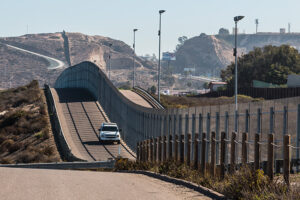
Political scientist David Carter co-authored a study of more than 50 barriers erected around the world, most of which have emerged since 2001. He and his co-author at the University of Chicago found that legal trade plummets up to 31% as a result of constructing a wall between two neighboring countries.
William Kwang-Yeh Tao, an emeritus trustee of Washington University, died Dec. 17, 2019, in Franklin, Tenn. He was 102. A memorial service will be held at 3 p.m. Saturday, Jan. 11, in Graham Chapel.