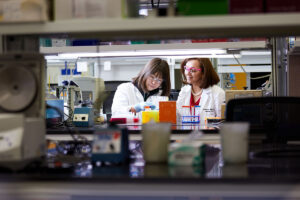
Researchers at Washington University School of Medicine have received two grants from the National Institutes of Health (NIH) totaling more than $5 million to study two types of parasitic worm infection that cause devastating illness in millions of people worldwide.
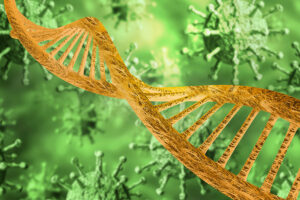
Washington University School of Medicine is one of more than 30 genome sequencing hubs worldwide participating in a study to sequence the DNA of young, healthy adults and children who develop severe COVID-19 despite having no underlying medical problems.
It is time to bring this kind of real-time outcome data to America’s addiction crisis and make it available to the public. It’s the only way of knowing if what we’re doing to address the problem is making a difference.
If we truly wish to support working families — during this pandemic and beyond — we must recognize that limited access to quality child care is one of the greatest obstacles.
The coronavirus pandemic has shattered and shuttered businesses. As businesses gradually continue to reopen across the United States, three Olin Business School experts at Washington University in St. Louis offer insights into potential opportunities that could help businesses to emerge from the economic storm.
Timothy M. Lohman, the Marvin A. Brennecke Professor of Biophysics and professor of biochemistry and molecular biophysics at the School of Medicine, received a new five-year Maximizing Investigators’ Research Awards grant totaling nearly $3.8 million from the National Institute of General Medical Sciences of the National Institutes for Health (NIH) for his research titled “Mechanisms of Helicases, […]
As we look toward the post-COVID-19 future, I can only hope that this pandemic will lead to a shift in what we want, expect, and even get from the news. I want to continue to see newscasters we can connect to as real.
Someday we will return to the classroom. In the meantime, the calling of learning continues. Education is a vital endeavor, and we will always do whatever we can with whatever we have.
Until recently, researchers have not inspected the interplay between three common chemicals found in drinking water. Research from the McKelvey School of Engineering at Washington University in St. Louis has found they all affect each other and a closer look is needed.