Genevieve “Jane” Reuter Hitzeman, who with her late husband, Herbert F. Hitzeman Jr., was a longtime supporter of Washington University in St. Louis, died Saturday, July 11, 2020, at Brookdale West County Senior Living in Ballwin, Mo. She was 89.
Healthcare in rural Missouri faces an uncertain future, but Medicaid expansion offers us an opportunity to keep hospitals afloat, improve rural health, and bring tax dollars back to our state. Our neighboring states are seeing the benefits of Medicaid expansion, and August 4th is Missouri’s chance to join them.
Cancelling the Fulbright programmes between China and the US eliminates one of the most doable paths to future successes. President Trump’s executive order should be rescinded immediately.
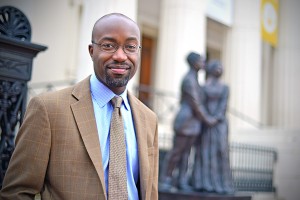
Jason Purnell, associate professor at the Brown School, has been named vice president of community health improvement at BJC HealthCare. He will remain on the Brown School faculty.
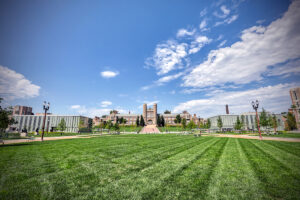
The Society for College and University Planning recently honored Washington University in St. Louis’ East End Transformation with its Excellence in Planning Honor for a district of campus component.
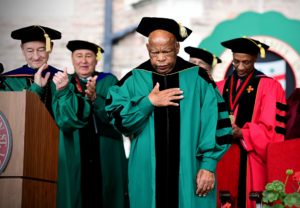
Graham Chapel at Washington University in St. Louis will join houses of worship across the nation in honoring the legacy of civil rights leader Rep. John Lewis, who died July 17, 2020. At 10 a.m. Thursday, July 30, Graham Chapel will ring its bells for 80 seconds, one second for every year of Lewis’ life.
Having a personal higher purpose promotes well-being, more happiness and even lower stress from the COVID-19 pandemic, according to findings from a new survey by two Washington University in St. Louis researchers from Olin Business School. Also, employees of organizations with higher-purpose statements are happier and prouder of their organizations than are employees at workplaces without a statement, the results show.
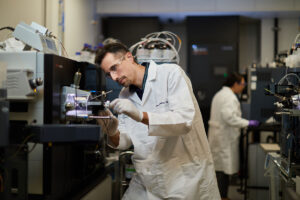
Researchers at Washington University School of Medicine have shown that levels of a specific protein in the blood rise as amyloid plaques form in the brain. The discovery could pave the way toward a blood-based test to diagnose Alzheimer’s disease before symptoms appear.
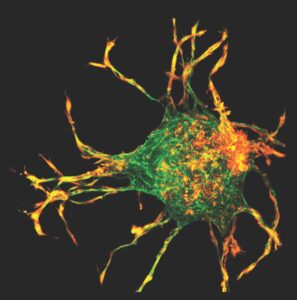
Research from a multidisciplinary team led by Washington University in St. Louis may provide new insights into wound healing, fibrosis and cancer metastasis.
For a companion piece to a recently published study, PNAS editors asked Fiona Marshall of Arts & Sciences to quickly author a commentary about the global context of cat domestication, published July 20 by the journal. Titled “Cats as predators and early domesticates in ancient human landscapes,” the commentary related to a study published a week earlier from a […]