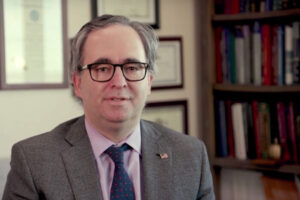
Justin M. Sacks, MD, a highly respected microvascular surgeon with expertise in complex surgeries involving cancer and trauma, has been named director of the Division of Plastic and Reconstructive Surgery at the School of Medicine. Sacks also has been installed as the Sydney M. Shoenberg Jr. and Robert H. Shoenberg Endowed Chair in Plastic and Reconstructive Surgery, an endowment supported through The Foundation for Barnes-Jewish Hospital.
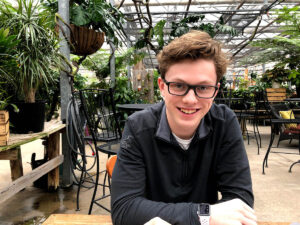
Jackson Butler, a junior studying physics in Arts & Sciences, received the Barry Goldwater Scholarship, a prestigious award that honors students who conduct research in the natural sciences, mathematics and engineering.
Moving scientific research results into public health and patient care more quickly could have a significant impact on health equity, finds a new paper from researchers at the Brown School at Washington University in St. Louis.
Thom Wall started out as a busker, juggling in the street. Then he performed around the world with Cirque du Soleil. His next act is all about preserving the art form he loves.
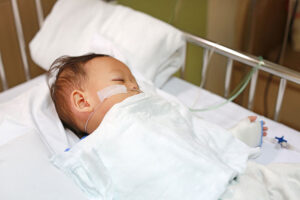
Children hospitalized with breathing problems due to infection with respiratory syncytial virus (RSV) are likely to get sicker and remain hospitalized if they have high levels of defective copies of the virus, according to a new study by researchers at the School of Medicine.
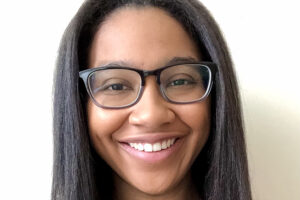
Virologist Autumn Holmes, a postdoctoral researcher at the School of Medicine, has been named a Hanna H. Gray Fellow by the Howard Hughes Medical Institute (HHMI). The fellowship provides up to $1.4 million over eight years to outstanding early-career scientists.
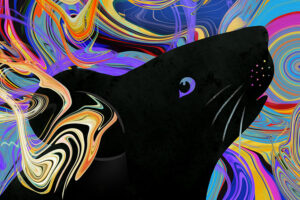
A computer game that induces mice to experience hallucination-like events could be a key to understanding the neurobiological roots of psychosis, according to a School of Medicine study.
The Mellon Mays Undergraduate Fellowship program has announced its next cohort of undergraduate scholars. In addition, Jonathan Fenderson, associate professor of African and African American studies in Arts & Sciences, will take the helm of the program this fall.
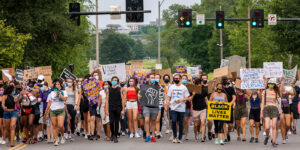
In a new episode of the “American Democracy Lab” podcast, Washington University experts discuss the social and political consequences of anger and how it can be constructive.