Washington University has established the Committee to Examine Remembrance and Commemoration to evaluate professorships, buildings and other honors named for people to ensure such recognition aligns with the university’s values and, where needed, to confront history and to learn from the past.
The Astronaut Scholarship Foundation has named Washington University rising senior Avital Isakov an Astronaut Scholar. The prestigious fellowship is for college juniors and seniors who are studying science, technology, engineering or mathematics.
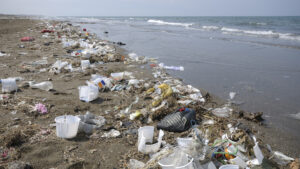
Washington University is leading a new effort to address the grand challenge of developing the next generation of high-performance, sustainably sourced and biodegradable plastics that advance engineering while also protecting the environment.
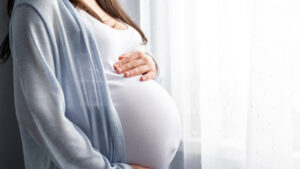
Researchers at the McKelvey School of Engineering are developing better ways to predict preterm birth by analyzing electrical activity during pregnancy. Arye Nehorai’s lab uses electrical activity and deep learning to make predictions.
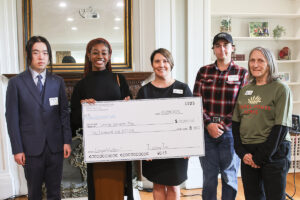
Students in the “Philanthropy Lab” course granted $40,000 to four local nonprofit groups. The course, offered by Arts & Sciences in partnership with the Gephardt Institute, gives students a theoretical and practical understanding of philanthropy today.
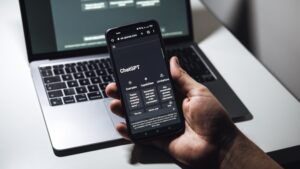
Artificial intelligence can turn from a mere tool into a full-fledged partner in the research process. A new book from a faculty member at the Brown School at Washington University in St. Louis serves as a guide to the future of research.
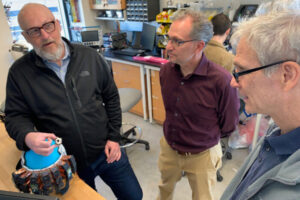
Wearable brain-imaging tech aims to reveal how the brain works in natural, realistic situations. Washington University researchers received a National Institutes of Health (NIH) grant to develop and commercialize a brain-imaging cap that uses LED light to gauge brain activity.