Student Johnny Lee is bringing a taste of Washington University to his native Daejeon, South Korea. Lee just opened Johnny’s Pub, a place for pizza and pint. Beers on tap include Olin, Danforth, Wydown and Brookings. Lee studied business as a freshman, but returned home fulfill his military service obligation. He plans to come back (hopefully with a few growlers of the Brookings) once his service is complete.
Wild Wednesdays are getting underway at Bear Necessities in the Umrath House. Starting this week, Oct. 2, save an extra 20 percent on already-marked-down merchandise.
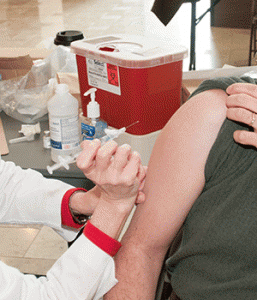
Beginning Tuesday, Oct. 1, seasonal flu vaccines will be available to School of Medicine employees and students. Vaccines also will be available to students and some employees on the Danforth Campus. New this year is that the vaccine is required for all students and employees who engage in patient care or work in buildings where patient care is provided or clinical research occurs. Shown is registered nurse Melanie Dill administering a flu shot.
A technology proposed by Lihong Wang, PhD, professor of engineering, may hold the key to detecting tumor cell circulation, potentially enabling earlier therapeutic interventions and curative surgical treatment and improving survival of patients with cancer.
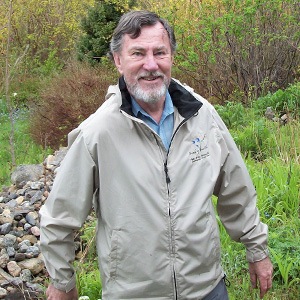
Debra Haire-Joshu, PhD, associate dean for research in the Brown School at Washington University in St. Louis, is looking for mothers between the ages of 18-45 with a child 2-4 years old to participate in a study. She wants to investigate whether new Parents as Teachers family wellness information encourages families to lead more active lifestyles and lose weight.
Ernest Moniz, PhD, U.S. Secretary of Energy, will speak
about President Barack Obama’s Climate Action Plan, at 2:30 pm on Oct. 4
in Laboratory Sciences Building, Room 300. Moniz’s talk is the
52nd annual Joseph W. Kennedy Memorial Lecture sponsored by the
Department of Chemistry in Arts & Sciences. A reception will follow.
The Brown School community celebrated its expansion Sept. 24 with a ceremonial groundbreaking for an innovative new building of approximately 105,000-square feet set to open in the summer of 2015. When completed, the new facility will double the Brown School’s footprint on the Danforth Campus and bring the school, as Lawlor said in his remarks, into a “new era.”
Scientific discoveries in understanding how body structures change and advance over time are relatively recent and are the result of scientific trailblazers working in the field of evolutionary developmental biology (evo-devo).
One of those pioneers, Brian K. Hall, will visit Washington University and give an Assembly Series lecture at 4 p.m. Monday, October 7 in McDonnell Hall Room 162.