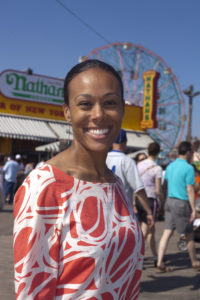
After Superstorm Sandy left many major East Coast cities underwater and upturned, Adria Crutchfield, AB ’03, positioned herself at the center of the recovery efforts.
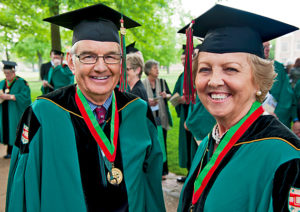
Alumni celebrating a milestone Reunion — 1st, 5th, 10th, 15th, 20th, 25th, 30th, 35th, 40th, 45th, 50th, 55th, 60th, 65th and 70th — returned to Washington University during two spring weekends to reminisce and enjoy events both on and off campus.
Many deplore the vast scope of the National Security Agency sweep of private phone and electronic communications and question the balance and fairness of Foreign Intelligence Surveillance Court decisions about such activities. Others contend protection against terrorism requires such activities and that they must remain secret. Reacting to the public debate, President Obama seeks balance by establishing a spokesperson with the court to advocate for constitutional protection. A recent Huffington Post piece by Merton Bernstein, JD, professor of law emeritus at Washington University in St. Louis, says this move is desirable but not sufficient.
Ever wish there was a single place where you could find all of the great stories and content from Washington University’s major publications? Look no further than the WUSTL Reader. The new, free mobile app just launched for iPhone and iPad users, and an Android version is in the works. It’s a great one-stop shop to connect with the intellectual work that makes Washington University stand apart.
Global Health Week featured a visit with the former president and health minister of Ecuador, an international fair, and education about outreach efforts of Global Health Scholars and others. Pictured is Alfredo Palacio, MD, Ecuador’s former president and health minister, while visiting with Washington University students.
New alternative Transportation Coordinator Andrew Heaslet is meeting with departments and individuals to help commuters find workable options. A new website also helps commuters discover easy ways to get from there to here.
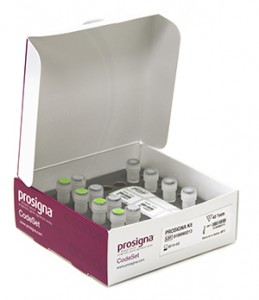
A laboratory testing kit that estimates the risk of breast cancer returning after anti-hormone treatment has received approval from the U.S. Food and Drug Administration (FDA). The technology is a step toward personalized medicine and could help standardize breast cancer diagnosis around the world. Researchers at the School of Medicine led the test’s development.
George Pepe, PhD, professor of classics in Arts & Sciences, received the David Hadas Teaching Award for his commitment to and excellence in teaching first-year undergraduates. On the WUSTL faculty for nearly 50 years, Pepe received the award Sept. 9 during the annual Arts & Sciences reception, held to celebrate the start of a new academic year, introduce new faculty and recognize the Hadas award winner.