Cancer genetic counselor Jennifer Ivanovich helps bridge the gap between what genome sequencing can tell patients and what patients and their families want to know.
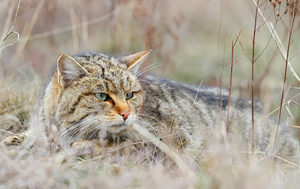
Five-thousand years before it was immortalized in a British nursery rhyme, the cat that caught the rat that ate the malt was doing just fine living alongside farmers in the ancient Chinese village of Quanhucun, a forthcoming study in the Proceedings of the National Academy of Sciences has confirmed.
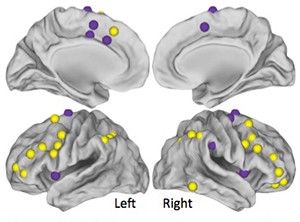
Patients who experience ‘chemobrain’ following treatment for breast cancer show disruptions in brain networks that are not present in patients who do not report cognitive difficulties, according to School of Medicine researchers.
Huntington’s disease is a devastating, incurable disorder that results from the death of certain neurons in the brain. Rohit Pappu, PhD, and colleagues in the engineering and medical schools are conducting studies to learn from nature’s own strategies to battle the disease.
Students from the School of Medicine and Division of Biology & Biomedical Sciences recently shared their musical talents at the fall coffeehouse at the Farrell Learning and Teaching Center. Coffeehouses are hosted by the School of Medicine Arts Commission. Shown are Charise Garber (on piano) and her sister, Kristen Garber.
Today’s issue marks the last Record of the calendar year. Publication will resume in January 2014. For the latest WUSTL news, visit news.wustl.edu. The Record staff wishes everyone a safe and happy holiday season.
Mark S. Wrighton, chancellor of Washington University in St. Louis and the holder of 16 patents, has been named a Fellow of the National Academy of Inventors. He will be inducted during the academy’s annual conference in March.
Robert (BS ’60, MBA ’62) and Barbara Frick have made a $5 million commitment to support the Washington University Olin Business School’s new building expansion, a $90 million project for two connected buildings – the Knight and Bauer halls – that will add 175,000 square feet and span five levels. The buildings will be dedicated May 2.
Human breast tumors transplanted into mice are excellent models of metastatic cancer and are providing insights into how to attack breast cancers that no longer respond to the drugs used to treat them, according to research led by Matthew J. Ellis, MD, PhD, from Washington University School of Medicine in St. Louis.