For patients with an often-deadly form of leukemia, new research by Timothy J. Ley, MD, and colleagues suggests that lingering cancer-related mutations – detected after initial treatment with chemotherapy – are associated with an increased risk of relapse and poor survival.
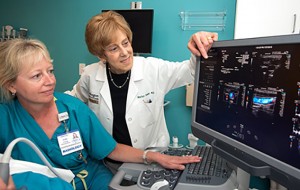
Marilyn Siegel, MD, a professor of radiology and of pediatrics, loves solving the puzzles her field presents and the opportunities it has given her. But most of all, she loves helping patients.
A new study shows that quitting smoking after a heart attack has immediate benefits, including less chest pain, better quality of daily life and improved mental health. Many of these improvements became apparent as little as one month after quitting and are more pronounced after one year, according to the research led by Sharon Cresci, MD, at the School of Medicine.
As the use of e-cigarettes has risen dramatically in the United States in recent years, so have calls to poison centers about them. Yet many parents who use e-cigarettes – or “vape” – aren’t aware of the dangers to children, according to a study at the School of Medicine.
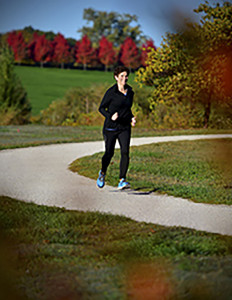
It’s time to get up and get moving. Washington University in St. Louis faculty, staff members, clinical fellows and postdoctoral appointees can sign up to participate in the next wellness challenge, WashU Moves. The program launches Sept. 2 and runs through Dec. 10, and each person’s goal is to take 10,000 steps, or roughly 5 miles, each day.
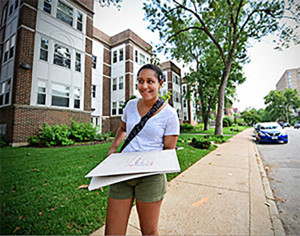
It has been a busy week for the newest members of the Washington University in St. Louis community. These videos capture the sights and sounds of first-year students moving in to their new homes, celebrating Convocation and sharing what they learned on their first day of class.
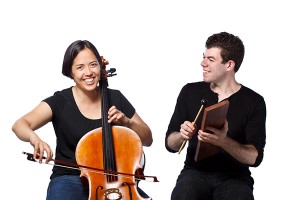
Isabel Trautwein, violinist for the Cleveland Orchestra, will launch the Danforth University Center Chamber Music Series at Washington University in St. Louis with a free concert Sept. 21. Also featured this fall will be early music ensemble The Newberry Consort; a world premier by Washington University composer Christopher Stark; and the Songs of Africa Ensemble.
The Gephardt Institute for Civic and Community Engagement at Washington University in St. Louis is celebrating its tenth anniversary with a new name, new initiatives and new funding for its acclaimed Civic Scholars program. The mission, however, remains the same.
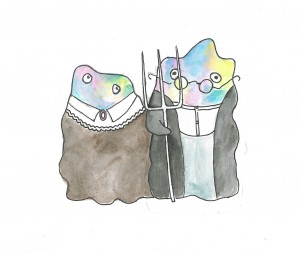
A bacterial infection turns non-farming social amoebae into farmers, Washington University evolutionary biologists report in the Aug. 24 issue of Proceedings of the National Academy of Sciences.