
Lu named Association for Computing Machinery Fellow
Chenyang Lu, the Fullgraf Professor of computer science and engineering at the McKelvey School of Engineering, has been named a fellow of the Association for Computing Machinery

The first 100 Biden/Harris days
Faculty experts from across Washington University in St. Louis draw upon their research, their instruction, their experience and their thought leadership to proffer insight and ideas for the new administration, the new beginning.

Biden energy plan is aggressive, but much can be done
Geophysicist Michael Wysession, professor of earth and planetary sciences in Arts & Sciences at Washington University in St. Louis, teaches a popular undergraduate course called “Energy and the Environment.” He breaks down President-elect Joe Biden’s 9-point Energy Plan, point-by-point.
Put a flake on it: A new way to add electrical charge
Gaining control of the flow of electrical current through atomically thin materials is important to potential future applications in photovoltaics or computing. Physicists in Arts & Sciences at Washington University in St. Louis have discovered one way to locally add electrical charge to a graphene device.
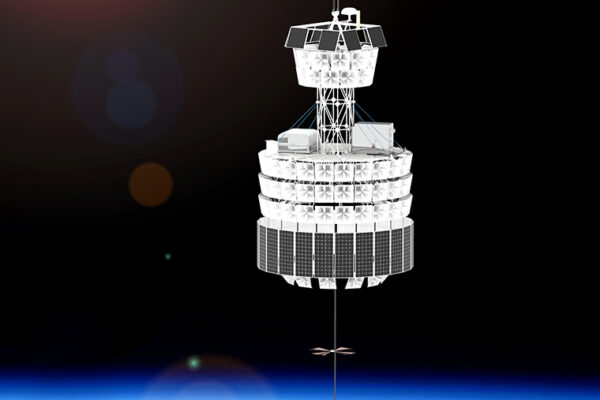
NASA selects astrophysics mission to detect ultrahigh-energy neutrinos
Physicists in Arts & Sciences, including Brian Rauch, are part of a team funded by NASA to develop the concept for the most sensitive survey of cosmic ultra-high energy neutrinos ever conducted.
Sinopoli named IEEE Fellow
Bruno Sinopoli, the Das Family Distinguished Professor and chair of the Preston M. Green Department of Electrical & Systems Engineering at the McKelvey School of Engineering, has been named an IEEE Fellow of the Class of 2021, one of the organization’s most prestigious honors.
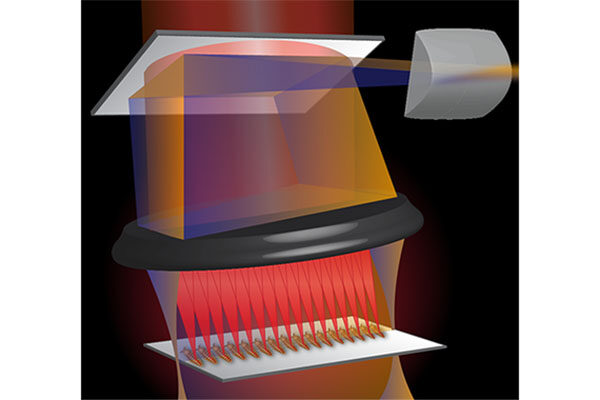
Colored light investigated to control irregular heartbeat noninvasively
The National Institutes of Health (NIH) has awarded a $2.1 million four-year grant for cardiac optogenetics research led by Chao Zhou, associate professor of biomedical engineering at the McKelvey School of Engineering.
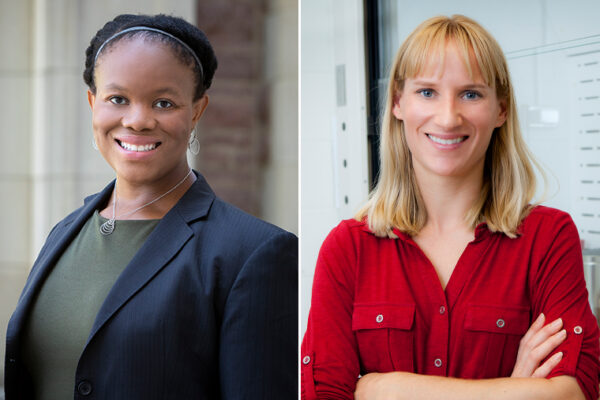
New roles for Imoukhuede, Wagenseil
Princess Imoukhuede, associate professor, has been named director of diversity initiatives for the McKelvey School of Engineering. In addition, Jessica Wagenseil, associate professor, has been appointed vice dean for faculty advancement at the school, and she will serve as associate chair of the McKelvey Faculty Committee on Diversity, Equity and Inclusion.
Orange is the new ‘block’
New research from Washington University in St. Louis reveals the core structure of the light-harvesting antenna of cyanobacteria — including features that both collect energy and block excess light absorption. Orange carotenoid protein plays a key protective role, according to Haijun Liu, research scientist in chemistry in Arts & Sciences at Washington University in St. Louis.
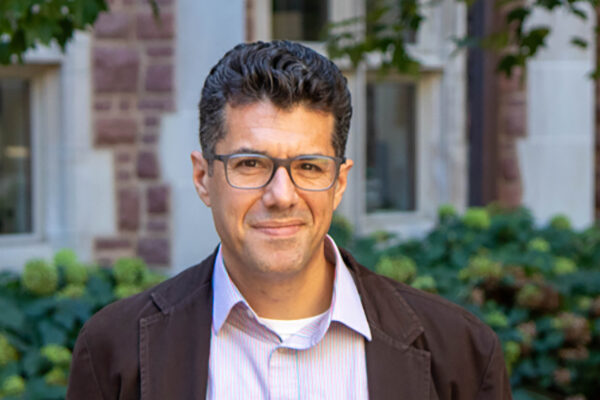
Psychonomic Society recognizes Zacks with Mid-career Award
Jeffrey Zacks, associate chair and professor of psychological and brain sciences in Arts & Sciences, and of radiology at the School of Medicine, received the Mid-career Award from the Psychonomic Society.
Older Stories