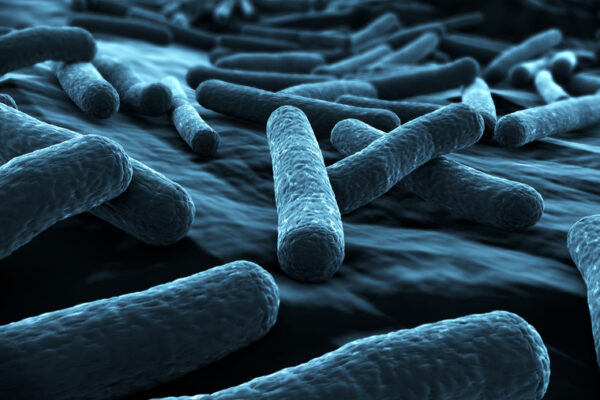
Building bacteria to keep us well
Tae Seok Moon, associate professor at the McKelvey School of Engineering, has engineered bacteria that can detect specific molecules in the gut.
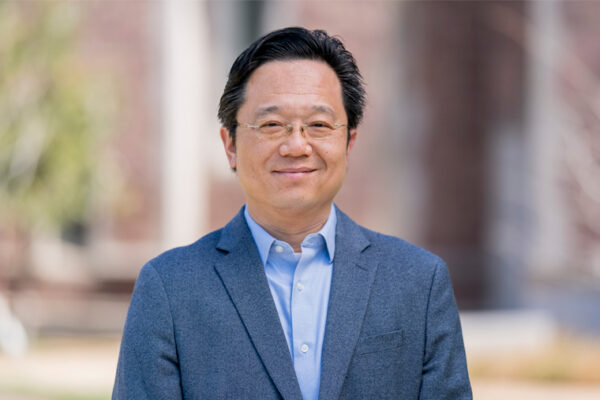
Building bridges with computer science
Computer scientist Chenyang Lu at the McKelvey School of Engineering has been building bridges with doctors to improve patients’ health outcomes using engineering.
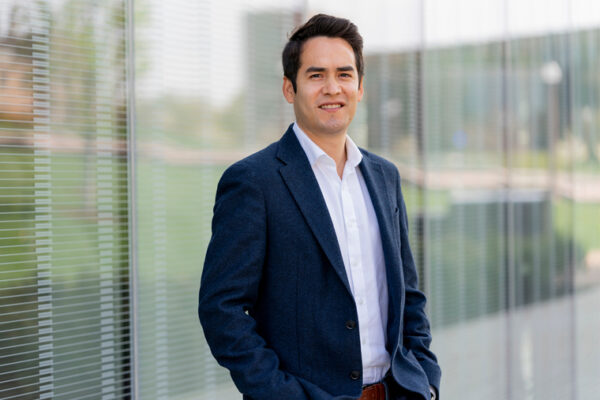
Seáñez receives NIH-funded research career development award
Ismael Seáñez, assistant professor at the McKelvey School of Engineering, has been selected as a K12 scholar in a program funded by the National Institutes of Health (NIH).
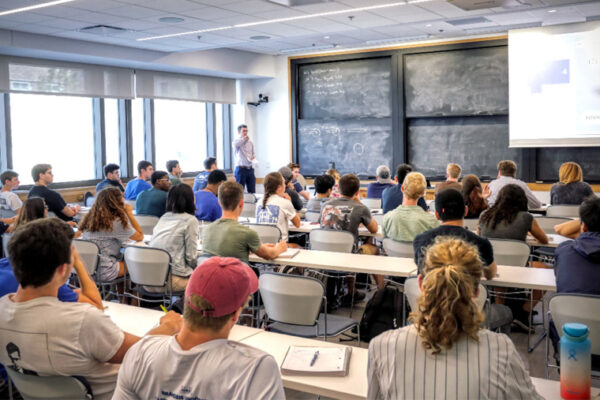
McKelvey School of Engineering launches education division
The McKelvey School of Engineering has launched a new Division of Engineering Education, headed by Jay Turner, to focus on world-class education for students and tools for faculty.

Using microbes to make carbon-neutral fuel
A team led by biologist Arpita Bose in Arts & Sciences modified a microbe so that it can produce a biofuel using only carbon dioxide, solar panel-generated electricity and light.
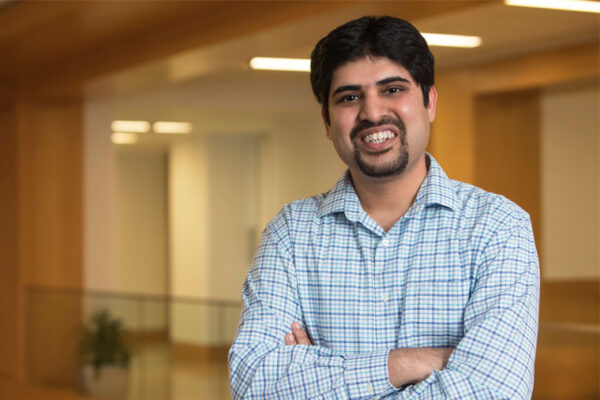
Jha’s NIH grant to support cancer research
The latest National Institutes of Health (NIH) grant for Abhinav Jha at the McKelvey School of Engineering is another step toward early prediction of therapy response in patients with lung cancer.

Stretchy, bendy, flexible LEDs
Chuan Wang’s lab at the McKelvey School of Engineering has developed a way to print stretchy LEDs on unconventional surfaces using an inkjet printer.
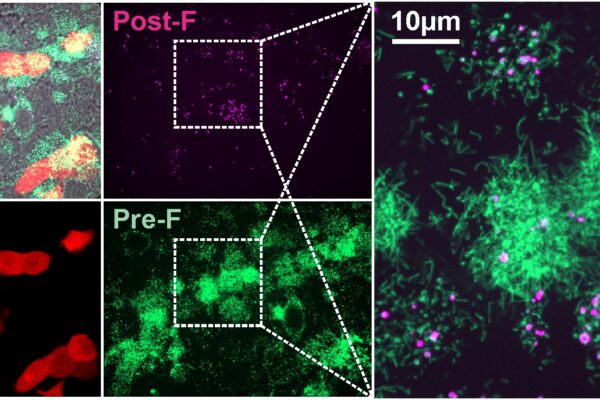
Shape of virus may determine RSV infection outcomes
Using a novel technology, the lab of Michael Vahey at the McKelvey School of Engineering uncovered shape-shifting properties of a common respiratory virus.
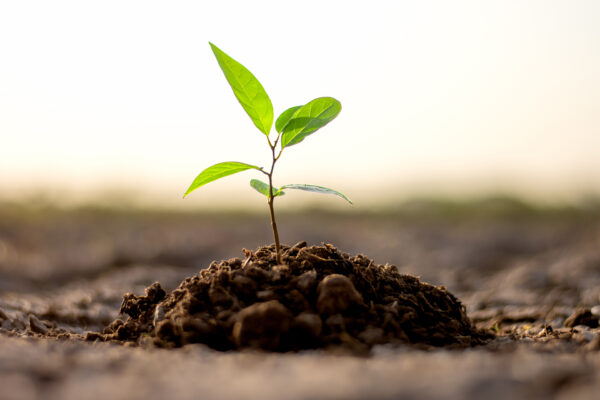
First artificial scaffolds for studying plant cell growth
Ryan Calcutt and Ram Dixit in Arts & Sciences and their collaborators created the first artificial scaffolds that can support the growth of individual plant cells — a discovery that will make it possible to study how forces such as gravity affect the way that plant cells form and grow.

Environmental injustice, population density and the spread of COVID-19 in minority communities
Research from the lab of Rajan Chakrabarty at the McKelvey School of Engineering connects environmental injustice to the spread of COVID-19 in communities with high minority populations.
Older Stories