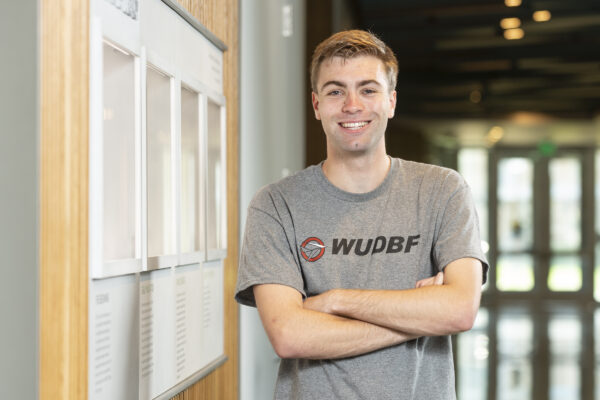
Class Acts: Miles Petersen
Miles Petersen always knew he wanted to work in the aviation field. He has been building airplanes with Design Build Fly. Soon, he’ll be building them with aerospace giant Boeing Co.
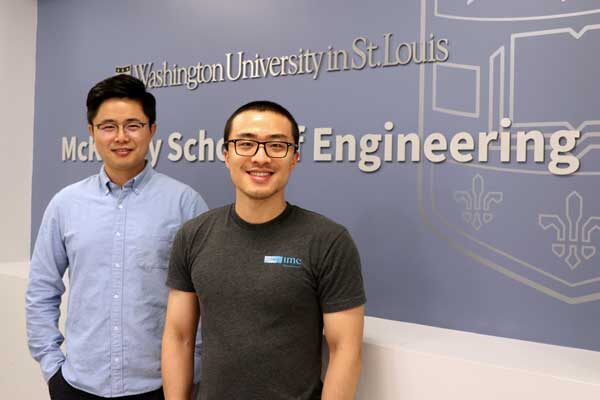
Doctoral engineering students win poster awards
Two students from the McKelvey School of Engineering were honored at a joint conference of the American Water Works Association and the Missouri Water Environment Association.
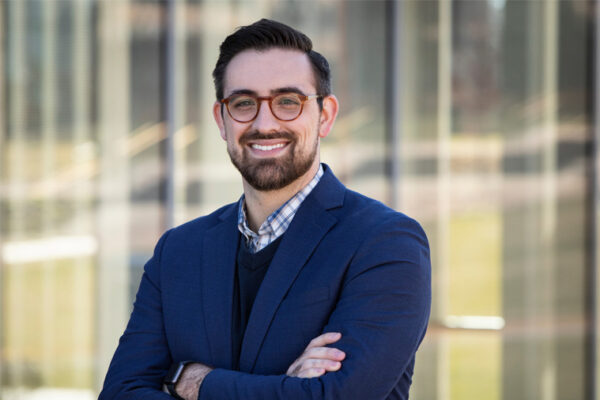
Bersi wins American Heart Association Career Development Award
Matthew Bersi, assistant professor at the McKelvey School of Engineering, will use tools from engineering and biology to investigate blood vessel stiffening from high blood pressure with a three-year $231,000 Career Development Award from the American Heart Association.
Washington University joins effort to launch Taylor Geospatial Institute
Washington University in St. Louis is among eight research institutions that came together to help launch the Taylor Geospatial Institute, a hub for big data analytics and computing.

Field Notes: Researching air pollution in Fairbanks, Alaska
The latest edition of Field Notes travels to Fairbanks, Alaska, where Karolina Cysneiros de Carvalho, a PhD student at the McKelvey School of Engineering, studied how cold and dark conditions impact air pollution.
Protecting everyday superheroes
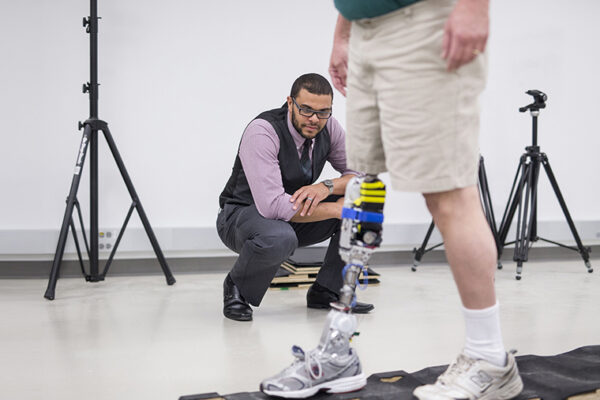
Alumnus Karl Zelik is taking on common back pain with wearable technology that helps reduce back strain and injury risk.
Cui to seek better drugs for irregular heartbeat
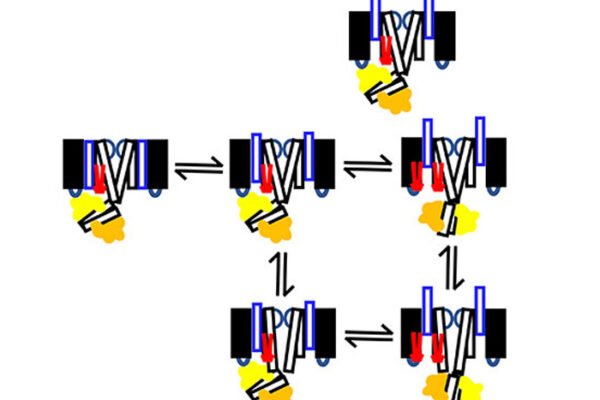
Biomedical engineer Jianmin Cui at the McKelvey School of Engineering is going deep into the basic mechanisms that lead to arrhythmia to ultimately find potential new drug candidates with an NIH grant.
A nature-driven solution for more efficient AI
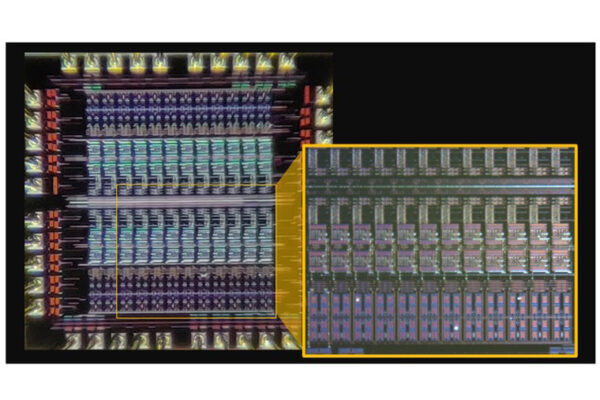
A new computer memory prototype developed by Shantanu Chakrabartty at the McKelvey School of Engineering may significantly reduce the energy needed to train artificial intelligence.
Fangqiong Ling
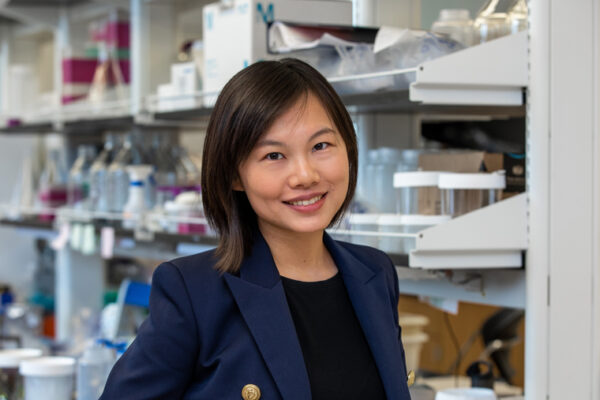
Fangqiong Ling shares her love for science both inside the classroom and outside in the St. Louis community. Her commitment to impactful research has earned her recognition from associations, mentors and colleagues.
Bayly-led team to study mechanical strains, stresses in traumatic brain injury
The McKelvey School of Engineering’s Philip Bayly and a team of collaborators will study the mechanical causes behind traumatic brain injury using models and images.
Older Stories