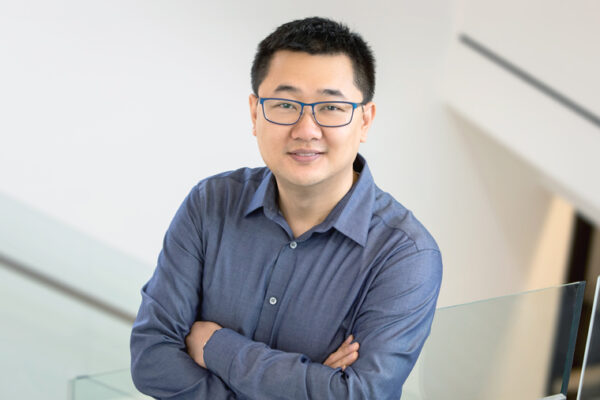
Zhang wins CAREER award to address cyber-physical security threats
Ning Zhang, an assistant professor of computer science and engineering at the McKelvey School of Engineering, received a National Science Foundation CAREER award to address threats to the availability of cyber-physical systems, like the systems behind self-driving cars or energy production pipelines.
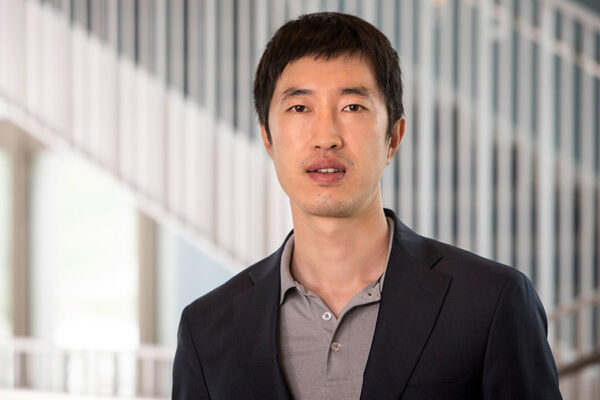
Bae pushes past the limits of traditional semiconductors
Sang-Hoon Bae, an assistant professor of mechanical engineering and materials science at the McKelvey School of Engineering, won an award from Samsung’s Global Research Outreach Program to explore next-generation semiconductor materials and fabrication.

Securing edge-enabled cyber-physical systems
Ning Zhang, an assistant professor of computer science and engineering at the McKelvey School of Engineering, won a three-year $180,000 award from Intel to support work to assure availability of the Intel Trusted Edge Platform.

Synthetic biology meets fashion in engineered silk
Fuzhong Zhang, at the McKelvey School of Engineering, developed a method to create synthetic spider silk at high yields while retaining strength and toughness using mussel foot proteins.

Distinguishing real from fake in the age of synthetic images
Abhinav Jha, an assistant professor at the McKelvey School of Engineering and the School of Medicine, and his collaborators developed and evaluated two methods to quantitatively determine the realism of synthetic, or computer-generated, medical images.
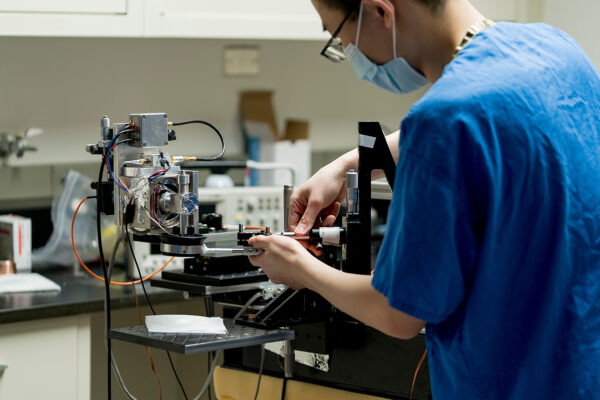
New imaging technology may reduce surgeries for rectal cancer patients
Quing Zhu, at the McKelvey School of Engineering, and Matthew Mutch, MD, at the School of Medicine, have been working together to develop a new imaging technology that can help doctors determine which colorectal cancer patients’ treatments have been successful, helping some to avoid surgery. Their efforts received a $1.75 million National Institutes of Health (NIH) grant.
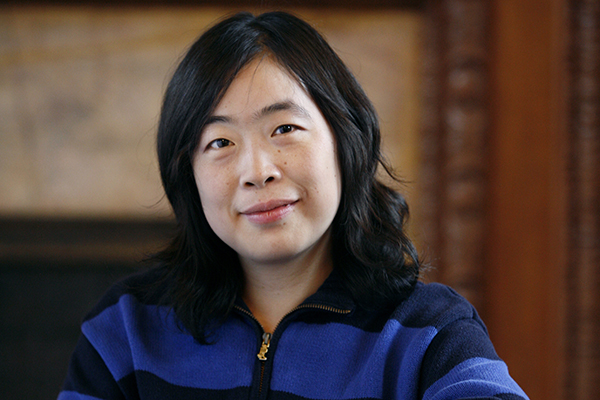
Yang elected senior member of National Academy of Inventors
Lan Yang, the Edwin H. & Florence G. Skinner Professor at the McKelvey School of Engineering, has been elected a senior member of the National Academy of Inventors. She is among 95 new senior members who will be honored in June at the NAI’s annual meeting,
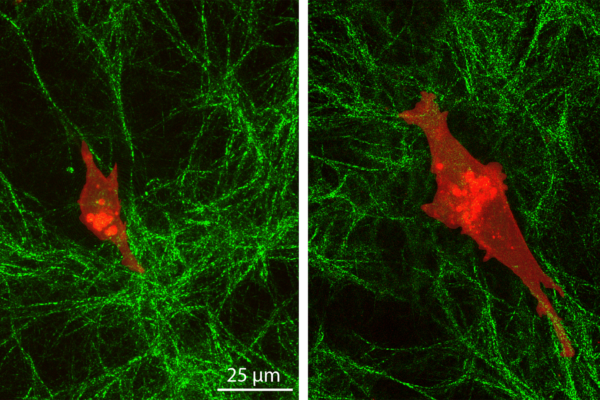
Cancer cells penetrate deep into their environment
Researchers from the laboratory of Amit Pathak at the McKelvey School of Engineering found that cancer cells can sense a layer of cells beneath the top collagen layer on which they normally travel, while normal cells cannot. Their new study was published in Cell Reports.

WashU faculty awarded Taylor Geospatial Institute seed grants
Faculty from Arts & Sciences, the McKelvey School of Engineering and the School of Medicine received seed grants and other funding from the Taylor Geospatial Institute totaling more than $950,000. The grants are designed to encourage collaborative research and provide resources to advance geospatial science through innovative projects.
Multiplication without multiplying to improve computing efficiency
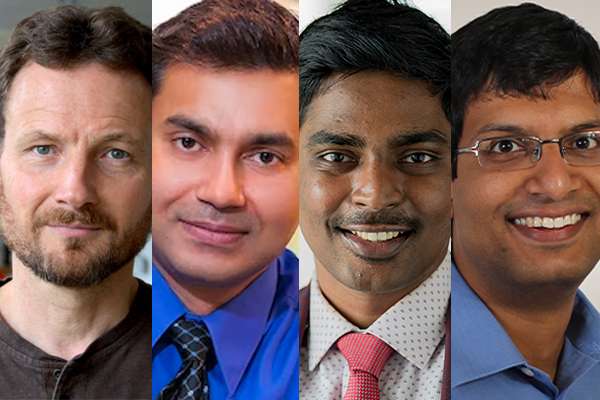
A multi-institutional team of researchers led by Aravind Nagulu, at the McKelvey School of Engineering, has secured a four-year $2 million grant to enhance the computational efficiency of radio-frequency correlators, like those used in radar systems.
Older Stories