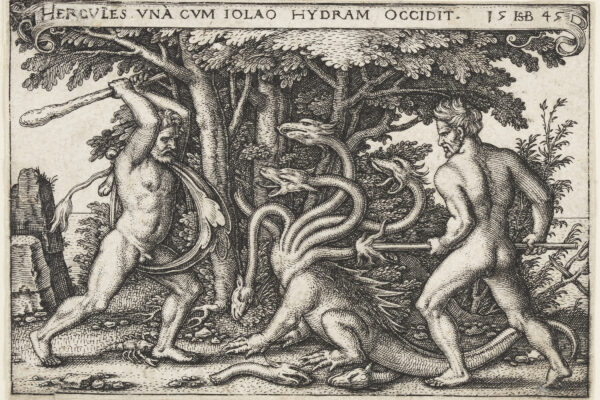
Behold the humble water flea, locked in a battle of mythological proportions
Biologist Rachel Penczykowski in Arts & Sciences sizes up an unlikely natural phenomenon: when parasitism actually causes the number of hosts to increase, an effect known as a hydra effect. Her study of common water fleas and their fungal parasites includes laboratory components and an analysis of 13 fungal epidemics in nature.
Yang leads $1.8M quantum physics research project
Li Yang, professor of physics in Arts & Sciences, leads a team that won a four-year $1.8 million grant from the National Science Foundation to help develop new quantum materials called artificial multiferroics.
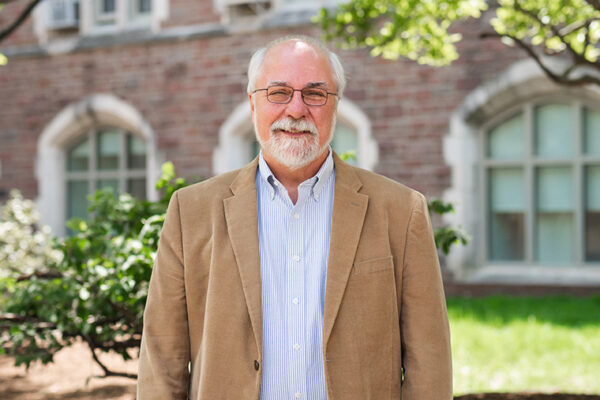
Physicist Kelton awarded $1.5M for fluid study on space station
Kenneth F. Kelton, the Arthur Holly Compton Professor of Physics in Arts & Sciences, won a five-year grant from NASA to study fundamental fluid processes in the microgravity environment of the International Space Station.
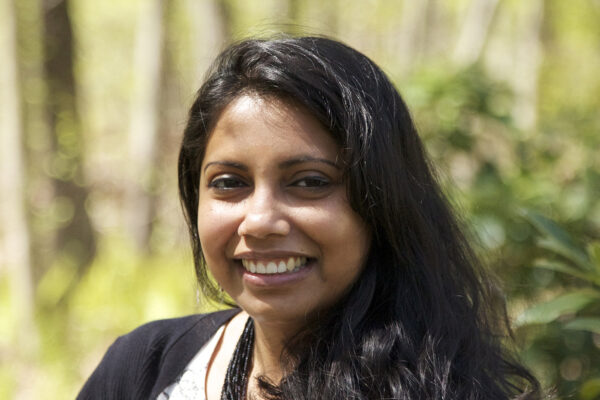
Biologist Bose awarded Anant Fellowship for Climate Action
Arpita Bose in Arts & Sciences, whose research is connected to carbon sequestration and sustainable bioproduction, was selected to participate in the Anant Fellowship for Climate Action, a global program for climate change “solutionaries.”
Geoscientist Catalano awarded $2M to investigate critical elements
Jeffrey Catalano, professor of earth and planetary sciences in Arts & Sciences, received a three-year Department of Energy grant to support research on elements and minerals essential for the production of electric vehicles, cellphones and computers.
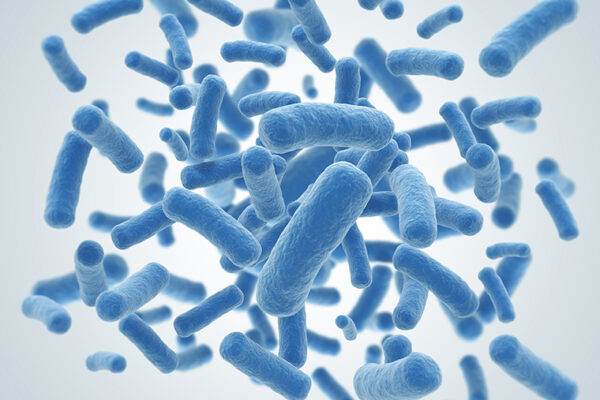
Bacteria could learn to predict the future
Using computer simulations and a simple theoretical model, physicist Mikhail Tikhonov in Arts & Sciences showed how bacteria could adapt to a fluctuating environment by learning its statistical regularities — for example, which nutrients tend to be correlated — and do so faster than evolutionary trial-and-error would normally allow.
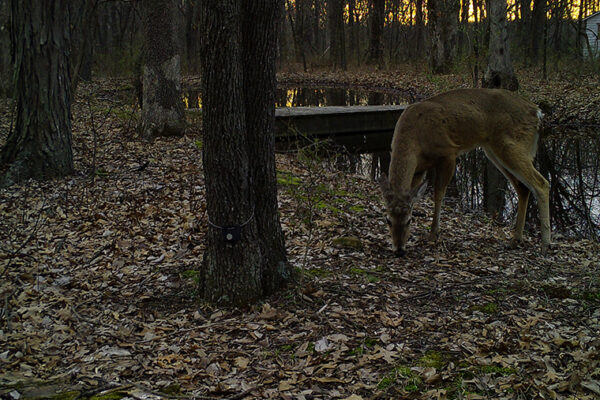
Patterns of income, urbanization impact mammal biodiversity in the concrete jungle
St. Louis shows the strongest correlation between biodiversity and income of the 20 major U.S. cities included in a recent study. Solny Adalsteinsson, staff scientist at Tyson Research Center and a lecturer in the environmental studies program in Arts & Sciences, is a co-author of the new research published in Global Change Biology.

Neurons in visual cortex of the brain ‘drift’ over time
New research from physicists in Arts & Sciences reveals that neurons in the visual cortex — the part of the brain that processes visual stimuli — respond differently to the same kind of stimulus over time.
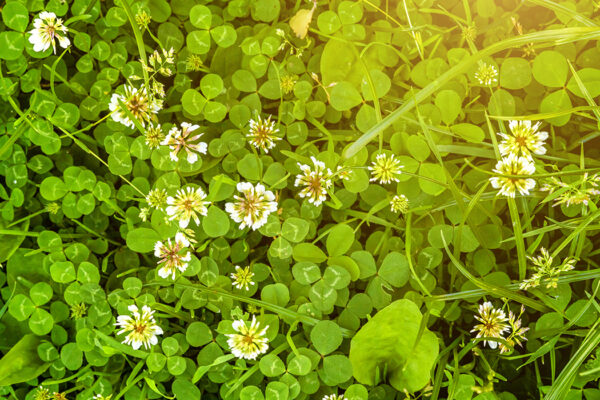
White clover’s toxic tricks traced to its hybridization
White clover is a weed that grows the world over. Biologist Kenneth M. Olsen in Arts & Sciences discovered how white clover developed its anti-herbivory superpower with input from both of its seemingly innocuous parents.
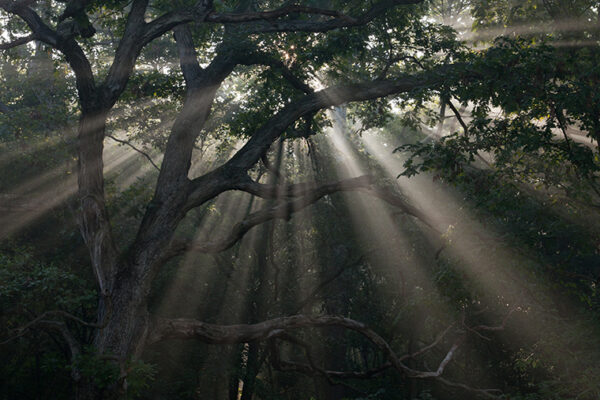
For larger, older trees, it’s all downhill from here
Jonathan Myers, associate professor of biology in Arts & Sciences, and William Farfan-Rios, a postdoctoral research fellow of the Living Earth Collaborative at Washington University, are co-authors of a study that found that trees’ fecundity — or physical potential to reproduce — peaked or plateaued as they reached an intermediate size.
View More Stories