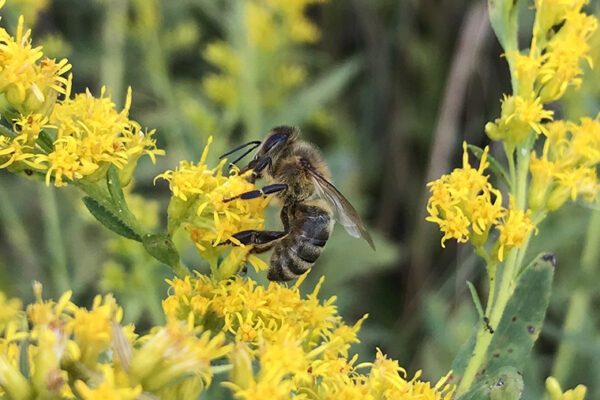
Urban bees collaboration wins USDA grant
A team that received early support from the Living Earth Collaborative was awarded a $633,000 grant from the U.S. Department of Agriculture to evaluate pollination in orchards across the city of St. Louis. They will examine how factors such as human population density, socioeconomic status, soil type and surrounding vegetation impact insect numbers and fruit yield.
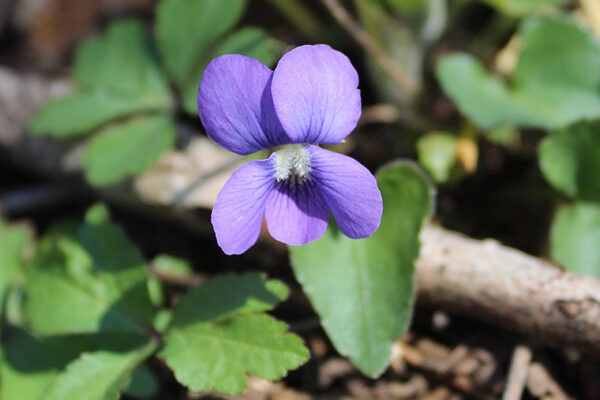
Climate change is affecting when, how violets reproduce
Living Earth Collaborative postdoctoral fellow Matthew Austin published new research finding that climate change is affecting how violets reproduce.
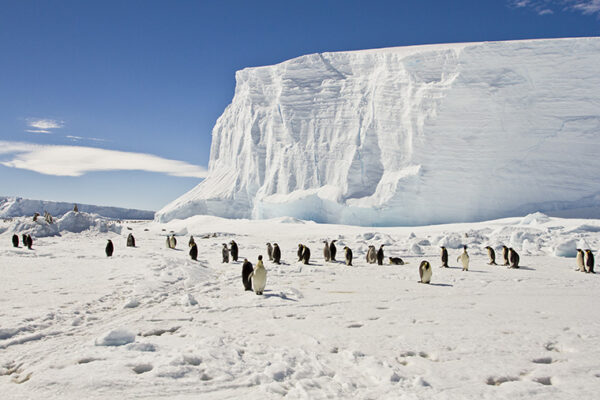
Geoscientists to study structure and properties of Antarctic lithosphere
Geoscientists Walid Ben Mansour and Douglas A. Wiens in Arts & Sciences received a grant from the National Science Foundation to determine the thermal and compositional structure of Antarctica using seismic, gravity and topography data and petrological modeling.
Interlocking rings unlock new material properties
Researchers working with Jonathan Barnes, assistant professor of chemistry in Arts & Sciences, published new research showing how molecules with interlocking ring architectures can be functionalized and incorporated into three-dimensional polymer networks and materials.
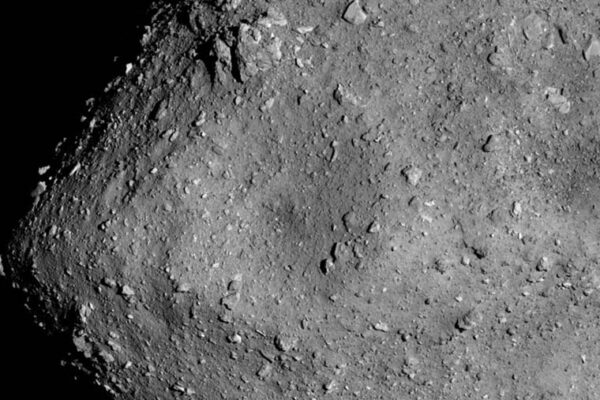
Asteroid samples offer chance to study chemically pristine solar system materials
Sachiko Amari, research professor of physics in Arts & Sciences, is part of the international team that described results from the first sample-return mission to a carbonaceous asteroid, the JAXA Hayabusa2 mission to asteroid Ryugu. The study was published June 9 in Science.
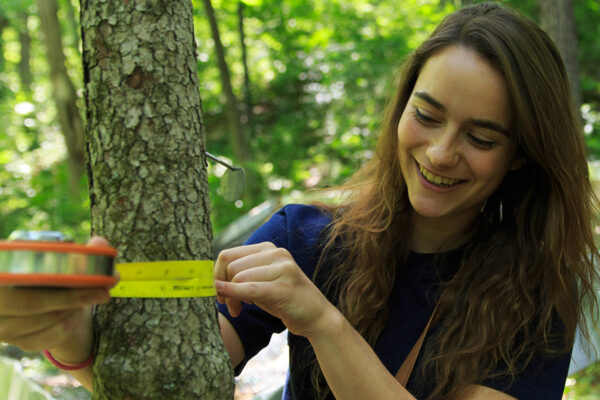
The space between us
Arts & Sciences biologists from the lab of Jonathan Myers determined that tree beta diversity — a measure of site-to-site variation in the composition of species present within a given area — matters more for the ecosystem than other components of biodiversity at larger scales.
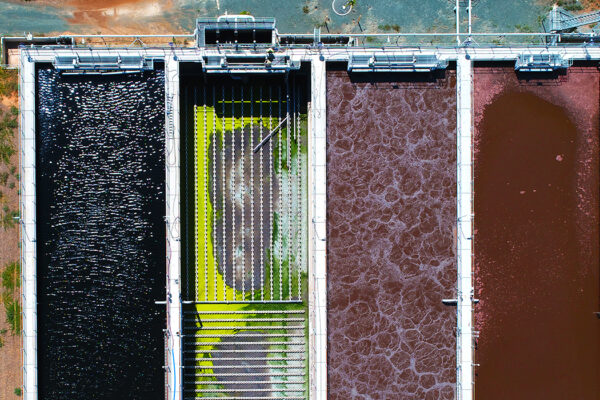
When more complex is simpler
A new modeling framework proposed by physicist Mikhail Tikhonov in Arts & Sciences demonstrates how a more complex microbial ecosystem can be more coarse-grainable, making it potentially easier for scientists to understand, than one with only a few microbes interacting.
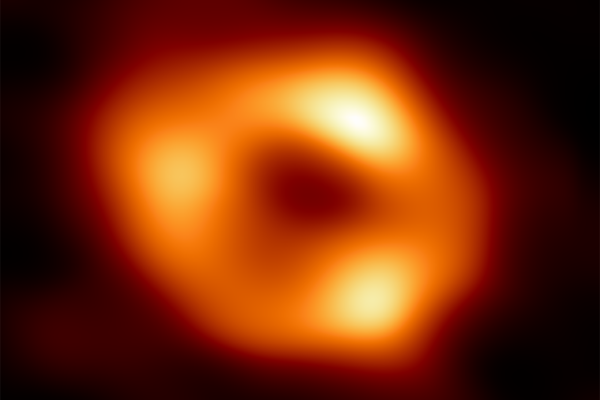
Astronomers unveil first image of Milky Way’s black hole
Michael Nowak, research professor of physics in Arts & Sciences, is part of the global research team that shared the first image of the supermassive black hole at the center of our own Milky Way galaxy.
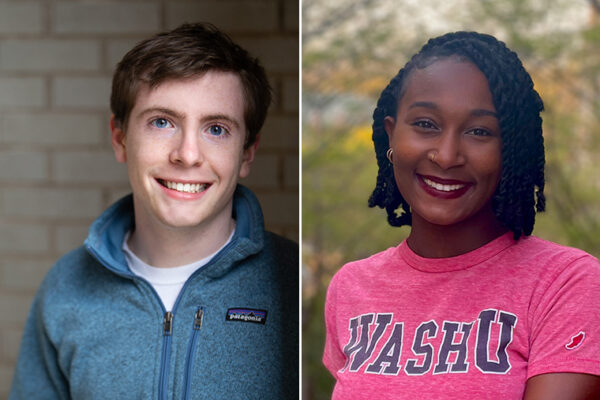
Undergraduate biologists awarded 2022 Quatrano, Spector prizes
Ethan Lowder, a December 2021 graduate who majored in the biochemistry track of biology in Arts & Sciences, won the Ralph S. Quatrano Prize; Kayla Wallace, a senior majoring in environmental biology with a minor in anthropology in Arts & Sciences, received the Spector Prize.
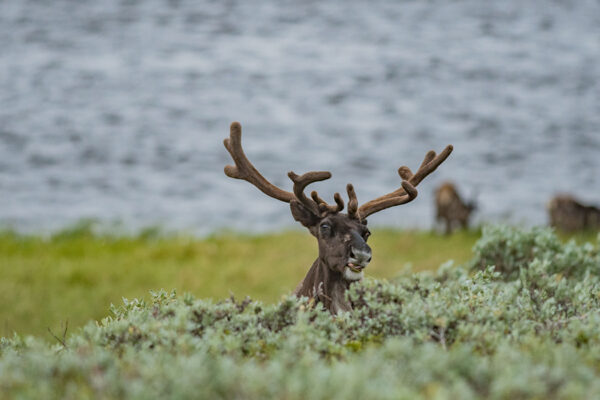
Nonlethal parasites reduce how much their wild hosts eat, leading to ecosystem effects
Research from the Living Earth Collaborative highlights the cascading consequences of common parasitic infections. Although many of these infections are not lethal, they can still impact health or animal behavior, leading hosts to eat less vegetation. The study led by biologist Amanda Koltz in Arts & Sciences is published in the Proceedings of the National Academy of Sciences.
View More Stories