
Natural compound helps reverse diabetes in mice
Researchers at Washington University School of Medicine in St. Louis have restored normal blood sugar metabolism in diabetic mice using a compound the body makes naturally. The finding suggests that it may one day be possible for people to take the compound much like a daily vitamin as a way to treat or even prevent type 2 diabetes.
Genetic variant linked to blocked heart arteries in patients with diabetes
Researchers have identified the first genetic variant associated with severity of coronary artery disease in patients with type 2 diabetes. Though this variant is not likely the cause of more severe coronary disease, the researchers say, it implicates a gene that could be. Such a gene has promise as a future target for treating coronary artery disease in diabetic patients.
Sanchez named Sicard professor of vascular surgery
Luis A. Sanchez, MD, has been named the inaugural Gregorio A. Sicard Distinguished Professor of Vascular Surgery at Washington University School of Medicine in St. Louis. Sanchez, the recently named chief of the section of vascular surgery at the School of Medicine and Barnes-Jewish Hospital, is highly regarded for his expertise in vascular and endovascular surgery.
Volunteers needed for study of vitamin D’s role in asthma
Washington University School of Medicine in St. Louis asthma specialist Mario Castro, MD, is seeking volunteers for a study investigating whether taking vitamin D can make asthma medication more effective. Study participants must be 18 or older and have a physician’s diagnosis of asthma. They also must have been taking some type of therapy to control their asthma for at least one year.
Washington People: Douglas L. Mann
Though some cardiologists may have dabbled in musical pursuits from an early age, few have opened for Aerosmith. How does one who dropped out of college to play drums and follow dreams of being a professional musician end up chief of cardiology at a major medical school? “I needed a day job,” says Douglas L. Mann, MD. Today, Mann studies inflammation and its role in heart failure.
Multi-center partnership aims to better diagnose, treat cancer
Washington University School of Medicine in St. Louis, the University of North Carolina at Chapel Hill, and Boise State University have been named partners in one of five U.S. centers that will use genetic data to search for proteins that are abnormally made by cancer cells. The partnerships form the new Clinical Proteomic Tumor Analysis Consortium (CPTAC) supported by the National Cancer Institute.
New center fosters bench-to-bedside medicine
Washington University School of Medicine in St. Louis has launched a new center devoted to turning innovations developed in the laboratory into improved treatments at the patient’s bedside. Led by David T. Curiel, MD, PhD, the Biologic Therapeutics Center will foster translational medicine and support a quicker transition of knowledge from the lab to the clinic.
WU studies obesity, cancer link with $9.2 million grant
Researchers at Washington University School of Medicine in St. Louis have been awarded a $9.2 million grant from the National Cancer Institute to study the relationship between obesity and cancer. The five-year grant will fund the new Transdisciplinary Research on Energetics and Cancer Center. Led by Graham A. Colditz, MD, PhD, the Center’s researchers will study the effect of diet, weight, physical activity and the environment on cancer and cancer survivorship.
Vitamin D relieves joint, muscle pain for breast cancer patients
High-dose vitamin D relieves joint and muscle pain for many breast cancer patients taking estrogen-lowering drugs, according to a new study from Washington University School of Medicine in St. Louis.
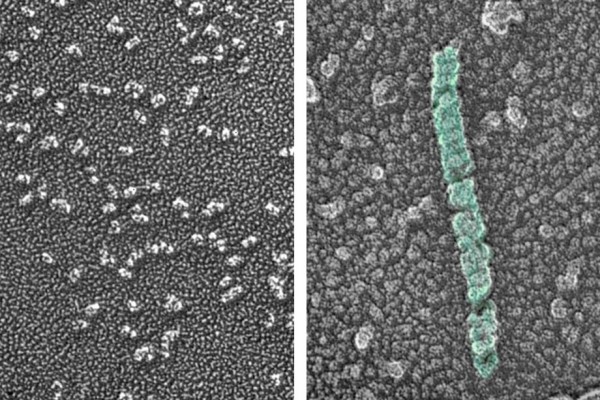
Evolution provides clue to blood clotting
A simple cut to the skin unleashes a complex cascade of chemistry to stem the flow of blood. Now, scientists at Washington University School of Medicine in St. Louis have used evolutionary clues to reveal how a key clotting protein self-assembles. The finding sheds new light on common bleeding disorders.
View More Stories