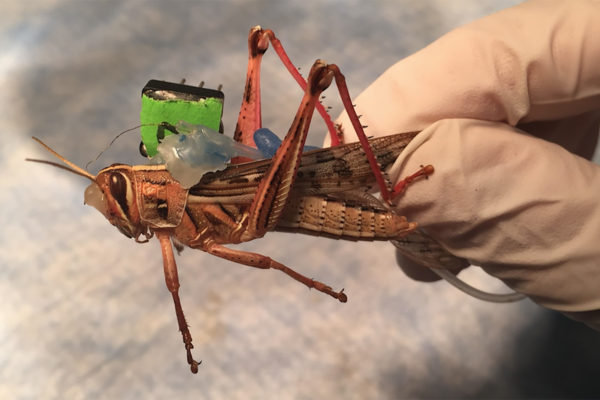
A new use for insects: biorobotic sensing machines
Using a locust’s sense of smell, a team of engineers from Washington University in St. Louis is developing new biorobotic sensing systems that could be used in homeland security applications, including bomb and chemical detection.

Turner to serve on EPA Scientific Advisory Board posts
The U.S. Environmental Protection Agency has appointed Jay Turner to its Scientific Advisory Board.
Agarwal honored by American Society for Engineering Education
The American Society for Engineering Education (ASEE) has awarded Ramesh Agarwal, the William Palm Professor of Engineering at Washington University in St. Louis, the 2016 Isadore T. Davis Award.

Giving photons their marching orders
Researchers in the School of Engineering & Applied Science have found a way to give photons, or light packets, their marching orders. The researchers have capitalized on the largesse of an energy state in an optical field to make photons in their lasing system travel in a consistent mode, either clockwise or counterclockwise.

WashU Expert: The impact of Russia’s Rio ban
With Rio’s Olympic Games rapidly approaching, today the International Association of Athletics Federations upheld its ban on Russia’s track teams. Sports business expert Patrick Rishe says the move illustrates the economic effect and lasting impact of cheating in sports of all kinds.
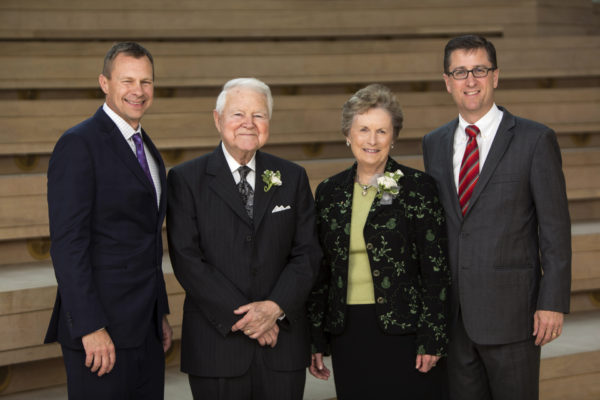
$5 million gift to fund new George and Carol Bauer Leadership Center at Olin Business School
With a $5 million commitment, Washington University in St. Louis has announced it will establish the George and Carol Bauer Leadership Center at the Olin Business School. The announcement came May 10, as George Bauer, an emeritus trustee and alumnus of the university, and his wife, Carol, delivered a keynote address about values-based leadership in Knight Hall on the Danforth Campus.
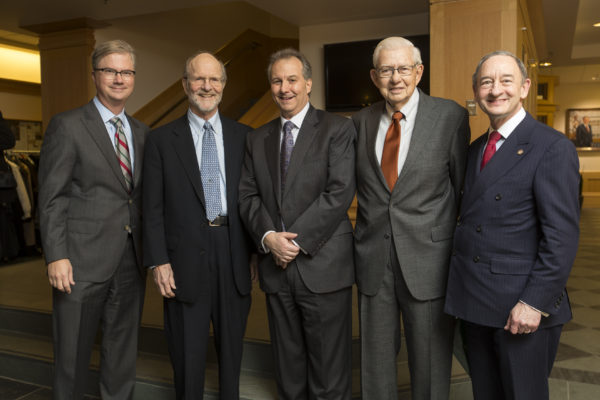
Bobick installed as James M. McKelvey Professor
Aaron F. Bobick, dean of the School of Engineering & Applied Science, was installed as the James M. McKelvey Professor Jan. 21. Bobick joined the university July 1, 2015.
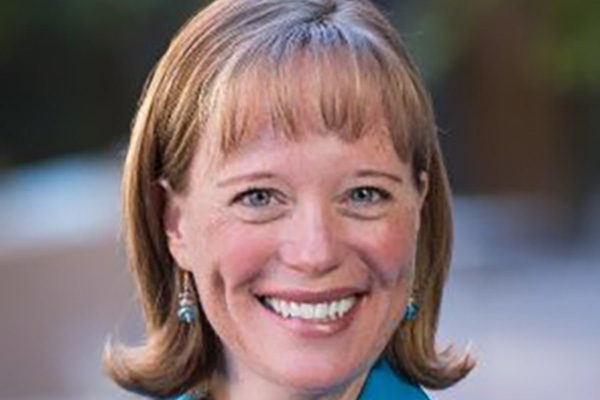
Olin names new assistant dean
The Olin Business School announced that Ruthie Pyles will join the school as assistant dean and director of graduate programs admissions and financial aid.
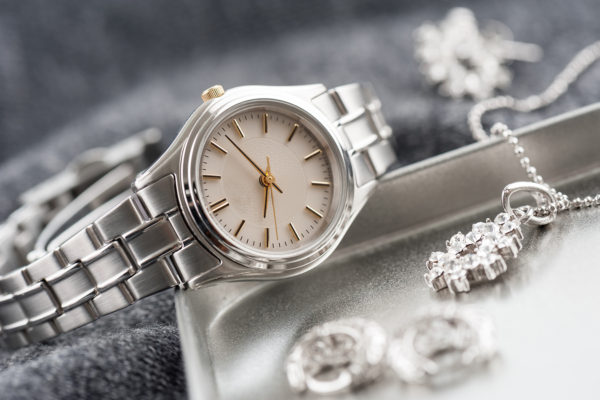
Celebrate or commemorate?
Recent research has indicated a general consumer preference for experiences over material goods when it comes to giving and receiving gifts. But new findings from researchers at Olin Business School at Washington University in St. Louis show that major life events might be the exception to that rule.

Decoding buyer’s regret, and its effect on business competition
Researchers at Washington University in St. Louis found competing companies should carefully consider both the risks and rewards that can result when reminding consumers of buyer’s regret.
View More Stories