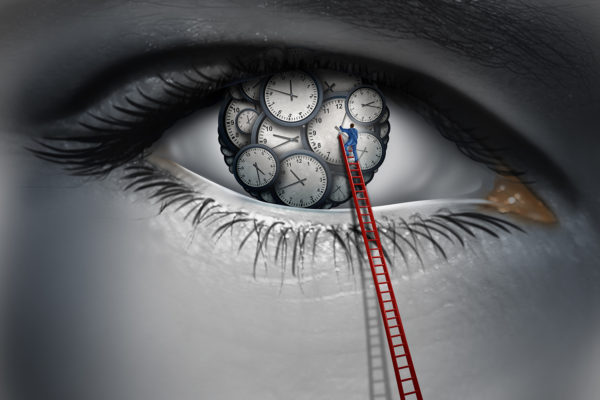
In sync: How cells make connections could impact circadian rhythm
If you’ve ever experienced jet lag, you are familiar with your circadian rhythm, which manages nearly all aspects of metabolism. Every cell in the body has a circadian clock, but until now, researchers were unclear about how networks of cells connect with each other over time. Researchers at Washington University in St. Louis and collaborating institutions have developed a new method that sheds light on these circadian rhythm networks.
Leading the way
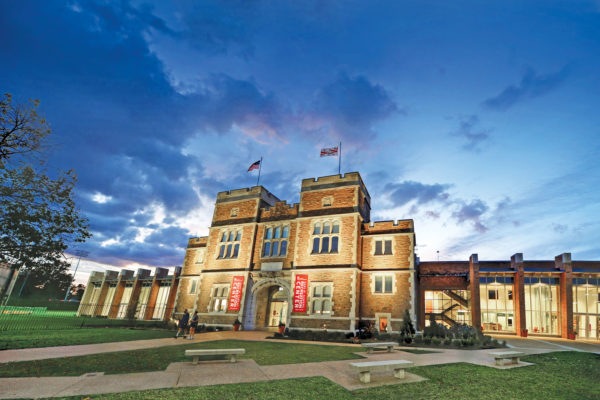
Washington University in St. Louis is being recognized nationally for its institution-wide sustainability efforts: the school recently earned a gold STARS rating from the Association for the Advancement of Sustainability in Higher Education.
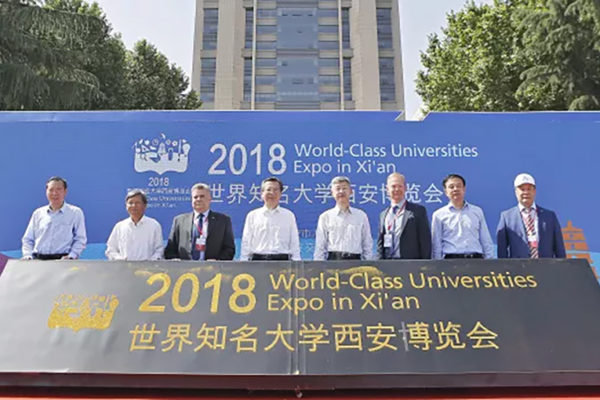
Washington University represented at University Alliance of the Silk Road meeting
This summer, representatives from Washington University took part in an executive council meeting of the University Alliance of the Silk Road, held at Xi’an Jiaotong University (XJTU) in China. A member institution of the McDonnell International Scholars Academy, XJTU is a key strategic international partner for Washington University.

Africa initiative seeks campus input
Washington University’s Africa initiative is asking faculty members to offer ideas and input through a new online survey.
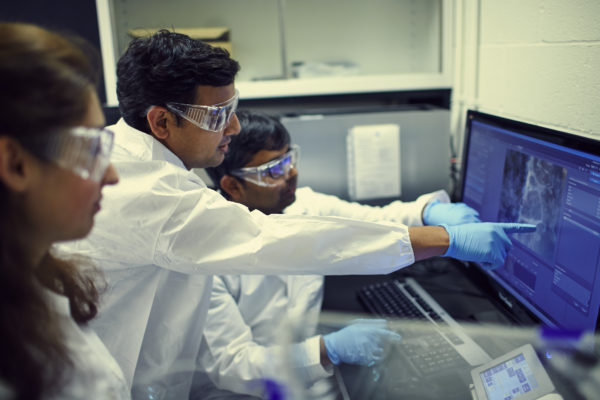
Role of cell group behavior target of $1.9 million award
Amit Pathak, a mechanical engineer at Washington University in St. Louis who specializes in mechanobiology, plans to take a closer look at various aspects of cell group behavior — and their implications for diseases such as cancer — with a prestigious five-year, $1.9 million grant for early-stage investigators from the National Institutes of Health (NIH).
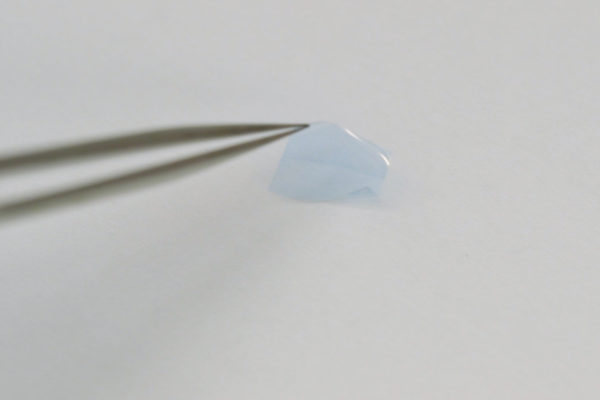
New patch boosts brightness in medical diagnostic tests
A multidisciplinary team from Washington University in St. Louis and the Air Force Research Laboratory at Wright-Patterson Air Force Base has developed a high-tech fix that brings some medical diagnostic tests out of the dark and into the light.

New imaging technique to use bioinspired camera to study tendon, ligament damage
Tommy John surgery, or reconstruction of the ulnar collateral ligament (UCL) in the elbow, has been dubbed an epidemic among Major League Baseball pitchers. A mechanical engineer at Washington University in St. Louis plans to develop a bioinspired imaging technique to study how damage accumulates in the UCL during loading, or the stress of activating the ligament. This could provide insight into what is progressively happening to these soft tissues when pitchers throw fastballs dozens of times during a game.
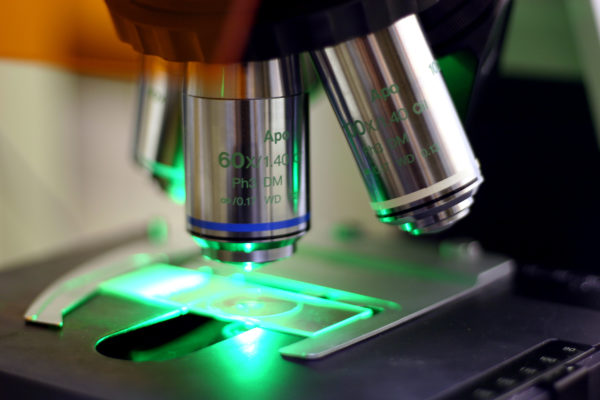
Building a better microscope
Like our eyes, microscopes are limited in what they can see because of their resolution, or their ability to see detail. An engineer at Washington University in St. Louis plan to use funding from the National Science Center to build a more precise microscope.

New tools reveal prelude to chaos
Engineers at Washington University in St. Louis have developed tools that mathematically describe the kinetics in a system right before it dissolves into randomness.

The future of energy
So what does the future have in store for us in regard to energy resources, consumption and technology? Aaron Bobick, dean of the School of Engineering & Applied Science, breaks down the issue in his blog, “The Observational Engineer.”
View More Stories